Arts & Entertainment
Artist Wants To Return Rosa Parks’ Detroit Home To US
"There are very, very few monuments to the civil rights movement," notes artist Ryan Mendoza, who saved Rosa Parks' home from demolition.


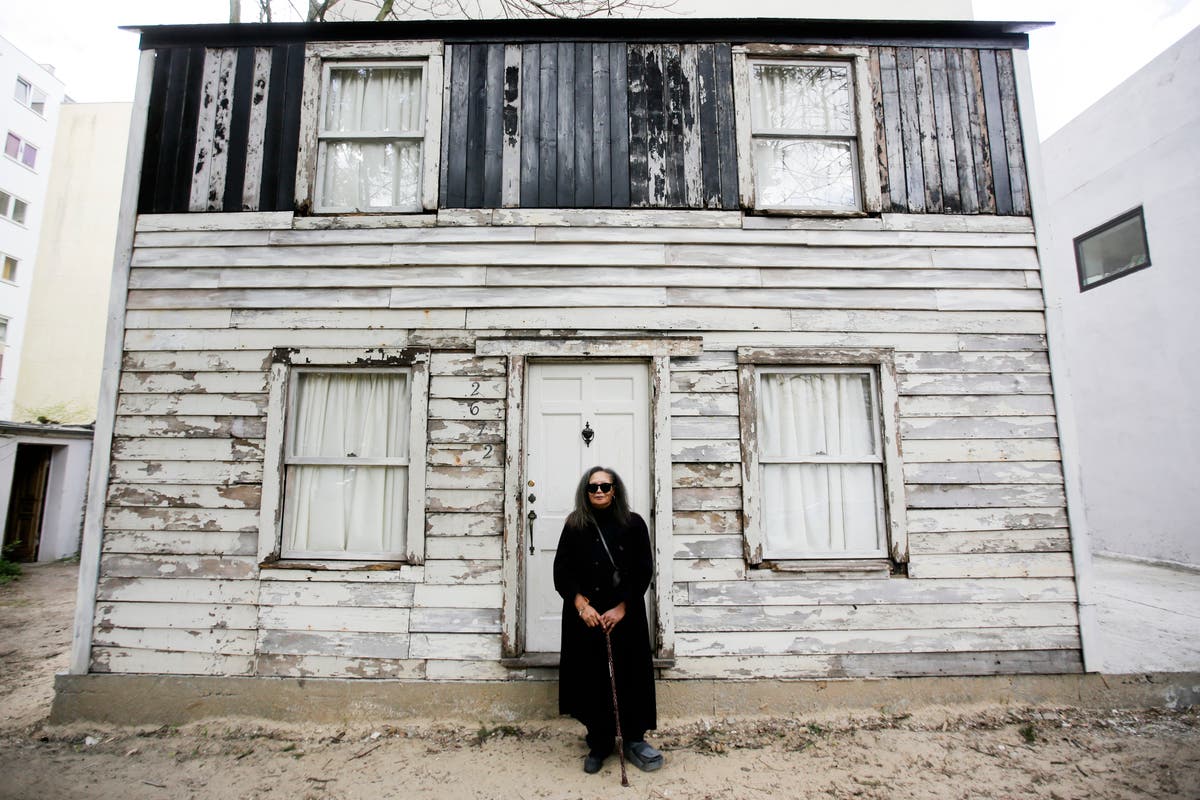
DETROIT, MI — An American artist living in Berlin, Germany, wants to bring the Detroit home of civil rights pioneer Rosa Parks back to the city where she spent most of her life. Parks, known as the “first lady of the civil rights movement,” moved to Detroit in 1957, two years after she was arrested for refusing to give up her seat to a white passenger on a bus in Montgomery, Alabama, setting off a bus boycott by 17,000 black citizens and reinvigorating the struggle for racial equality.
Parks’ former home on South Deacon Street was one of about 80,000 derelict houses slated for demolition in 2014. The civil rights icon’s niece, Rhea McCauley, paid $500 to get the house, her childhood home, off the demolition list, but the structure was in such bad shape that McCauley couldn’t find anyone interested in committing financially to preserving it as a memorial.
That’s when Ryan Mendoza, who makes his living as a fine arts painter, stepped in. He was looking for homes that resembled his own childhood home in Pennsylvania and made his way to Detroit, where a rich inventory of abandoned, blighted homes could be picked up for little money. (For more local news, click here to sign up for real-time news alerts and newsletters from Detroit Patch, and click here to find your local Michigan Patch. If you have an iPhone, click here to get the free Patch iPhone app.)
Find out what's happening in Detroitfor free with the latest updates from Patch.
Like the Detroit Patch Facebook page below, then continue reading the story.
Find out what's happening in Detroitfor free with the latest updates from Patch.
A local TV personality connected Mendoza, and McCauley, who previously had turned another Detroit abandoned home into an art piece known as “The White House,” currently on display at the Verbeke Foundation in Belgium.
“I could see he was an American who really cared,” McCauley told CNN. “And he loved Auntie Rosa. But he also really cares about Detroit, and that’s important.”
She donated the home to Mendoza, who dismantled it, shipped it to Berlin and rebuilt it. The art exhibit that opened in April features radio recordings of Parks’ strong, clear voice as she talked about that day on Dec. 1, 1955, when, after a long day at work as a department store seamstress, she defied local segregation laws and refused to give up the seat in the middle of the bus, which blacks could sit in but not if it meant whites remained standing.
Mendoza, 45, thinks it’s important for people in Europe to understand Parks’ legacy, but he wants to bring the house back to Detroit, especially as Confederate monuments come down.
“If you look at the current situation in America, you have all these monuments to the Confederacy — which are monuments to slavery,” Mendoza told the Detroit Free Press. “There are very, very few monuments to the civil rights movement, which is antithetical to that.”
The bus where Parks made her stand is part of the permanent collection at the Henry Ford Museum in Dearborn, but Mendoza told the Free Press Detroit cultural institutions so far are disinterested in the house where she lived, meaning it may end up in Washington, D.C., or New York, where museums have already shown interest.
At the time he took possession of the house, Mendoza said Americans didn’t fight hard enough to save it. He raised about $100,000 by selling some of his paintings to dismantle the house and ship it to Berlin.
“What I would like to do is hold this house hostage,” he said at a farewell ceremony in Detroit. “America, you lost this house … you gotta get it back. And it’s going to cost you. And I want that money to go to the Rosa Parks Foundation.”

Parks and her husband, Raymond, moved to Detroit in 1957 to escape harassment and threats in racially segregated Alabama. Both had lost their jobs, and they moved in with her brother and his large family. About 13 children and other relatives lived in the tiny two-story house, one of three places she lived in Detroit. Parks also lived in a home on Widemere Street, where she was assaulted and robbed by an intruder, and in an apartment in Riverfront Towers downtown, where she lived until her death in 2005.
In Detroit, Parks found work again as a seamstress and continued to speak about civil rights. From 1965-1988, she worked for U.S. Rep. John Conyers, a Detroit Democrat who remains in office today, and was active in the Black Power movement. She continued to insist through her retirement that the struggle for equality and justice was not over.
Parks received the NAACP’s 1979 Spingarn Medal, the Presidential Medal of Freedom in 1996 and the Congressional Gold Medal in 1999. A statue of Parks was placed posthumously in the U.S. Capitol’s National Statuary Hall. When she died in 2005, she was the first woman and the third non-U.S. government official to lie in state at the Capitol Rotunda.
Feature photo: In this April 6, 2017 photo Rhea McCauley, a niece of Rosa Parks, poses in front of the rebuilt house of Rosa Parks in Berlin. McCauley donated the former Detroit house of Rosa Parks to American artist Ryan Mendoza, who has taken apart the Michigan house and rebuilt it in the German capital to raise awareness about the late civil rights activist and her legacy. (AP Photo/Markus Schreiber)
Get more local news delivered straight to your inbox. Sign up for free Patch newsletters and alerts.