Community Corner
Perseid 2017 Meteor Shower Peak Dates: Michigan Parks’ ‘Meteors & S’Mores’
State parks across Michigan are offering "Meteors & S'Mores" shooting star parties for annual Perseid meteor shower.


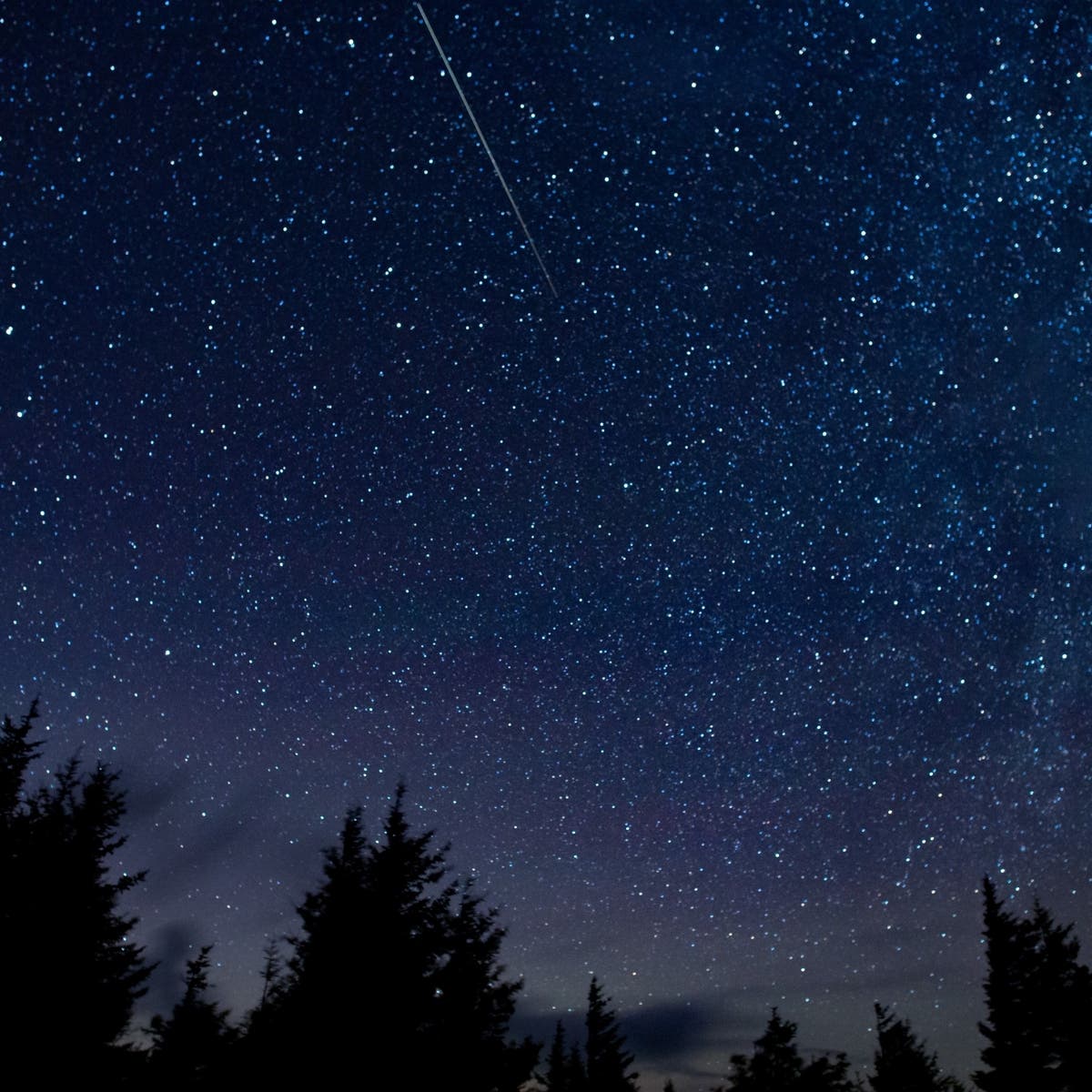
The annual Perseid meteor shower peaks next week, and state parks across Michigan are holding “Meteors & S’mores” viewing parties Aug. 11-12. The Perseids, are considered the best shooting star show of the year with blazing fast meteors at a rate of about 150 meteors per hour.
“Many consider themselves lucky if they catch a shooting star, but the Perseid meteor shower is one of the best opportunities to see them with the naked eye,”d Elissa Buck, a Michigan Department of Natural Resources event coordinator, said in a news release.
At parks from southeast Michigan to the Keweenaw Peninsula, day-use visitors and campers can enjoy a night of stargazing with complimentary s’mores and campfires. Participating parks will stay open later than their normal closing times.
Find out what's happening in Detroitfor free with the latest updates from Patch.
(For more local news, click here to sign up for real-time news alerts and newsletters from Detroit Patch, and click here to find your local Michigan Patch. If you have an iPhone, click here to get the free Patch iPhone app.)
Like the Detroit Patch Facebook page; story continues below.
Find out what's happening in Detroitfor free with the latest updates from Patch.
“We encourage those who want to catch magnificent views with fellow park-goers to bring blankets, seating, bug spray and snacks and take part in one of these Meteors & S’mores events," Buck said.
The Perseid meteor shower happens every summer, as the Earth passes through the debris trail of Comet Swift-Tuttle. Perseids frequently leave long “wakes” of light and color behind them as they streak through Earth’s atmosphere, according to the NASA website.
The shower peaks Aug. 11-12, but may be seen as early as Aug. 9 and as late as Aug. 16.
Buck suggests making camping reservations throughout the week online or by calling (800) 44-PARKS. A full Meteors & S’mores program schedule is available here.
Some of the Meteors & S’mores programs offer added fun, like the one at Warren Dunes State Park in Berrien County, which includes ghost stories around the campfire.
See Also
- Perseids Meteor Shower Peak Dates: Fireballs In The Sky
- Total Solar Eclipse Aug. 21, 2017: How Much Will Michigan See?
- 2017 Patch Guide To Meteor Showers, Total Solar Eclipse, Other Celestial Events
“We start our program around a beach campfire as the sun sets over Lake Michigan. I tell legends and ghost stories around the campfire. I focus on Michigan lore and history. The ghost stories are designed to be fun – and funny,” said Mike Latus, a guide with the DNR’s State Park Explorer Program who works at Warren Dunes.
“We often have more than 100 people viewing the sky,” Latus said. “Throughout the program, we watch for shooting stars. Each streak of light brings ‘oohs’ and ‘ahs.’”
At Fort Wilkins Historic State Park in Keweenaw County – site of a restored 1844 military outpost – astronomy meets history, as Meteors & S’mores visitors get to stargaze inside Fort Wilkins.
Island Lake Recreation Area in Livingston County partners with the local astronomy club to present the annual meteor-viewing event.
“The Ford Amateur Astronomy Club has been viewing the night sky at Island Lake for 25-plus years. Three years ago, I asked the club to participate with Meteors & S’mores,” said Andrew Haapala, DNR unit manager at Island Lake Recreation Area. “Their club agreed to participate and brought several telescopes for members of the public to view, tables with meteorites, and a presentation on the solar system. The club is lined up for their third Meteor & S’mores event to be held on Aug. 12 at Spring Mill Pond.”
See Also
That partnership led to another with the Great Lakes Association of Astronomy Clubs, which is teaming up with the DNR to present Astronomy at the Beach at Island Lake on Sept. 29 and 30. This family-friendly event, featuring a variety of hands-on activities, will give visitors a chance to enjoy the park and the night sky while learning a little about astronomy.
If you’re looking for a place to explore the night sky on your own, many state parks make great stargazing locations.
There are state-designated dark sky preserves – ideal locations for astronomy, as they are protected against light pollution – in six Michigan state parks: Lake Hudson Recreation Area in Lenawee County, Negwegon State Park in Alcona County, Port Crescent State Park in Huron County, Rockport Recreation Area in Alpena County, Thompson's Harbor State Park in Presque Isle County and Wilderness State Park in Emmet County.
Michigan's Upper Peninsula is recognized as a dark sky viewing area and also offers excellent stargazing opportunities across more than 15,000 square miles.
Another great option for viewing the night sky is Headlands International Dark Sky Park in Mackinaw City, the only internationally designated dark sky park in the state.
In March, Headlands International Dark Sky Park was awarded the second annual Pure Award, recognizing Michigan tourism entities that have pioneered innovative and exemplary best practices in natural, cultural and/or heritage stewardship.
"Headlands was selected as this year’s winner based on the importance the park has put on the night sky as a vast and vanishing natural resource," said Maia Turek, DNR statewide recreation programmer and co-chair of the Resources and Environment Implementation Committee of the 2012-2017 Michigan Tourism Strategic Plan, the group that gives the Pure Award.
An Emmet County park, the Headlands International Dark Sky Park property is available to the public thanks, in part, to funding from the Michigan Natural Resources Trust Fund. To learn more about Headlands, visit midarkskypark.org.
Michigan, along with the rest of North America, will get the chance to experience another unique cosmic phenomenon this month – this one during the day – with the solar eclipse on Aug. 21. It will be the first time a total eclipse has crossed the United States, coast-to-coast, since 1918.
Because it’s outside the total eclipse path that runs from Oregon to South Carolina, Michigan will see a partial eclipse, where the moon only covers part of the sun’s disk.
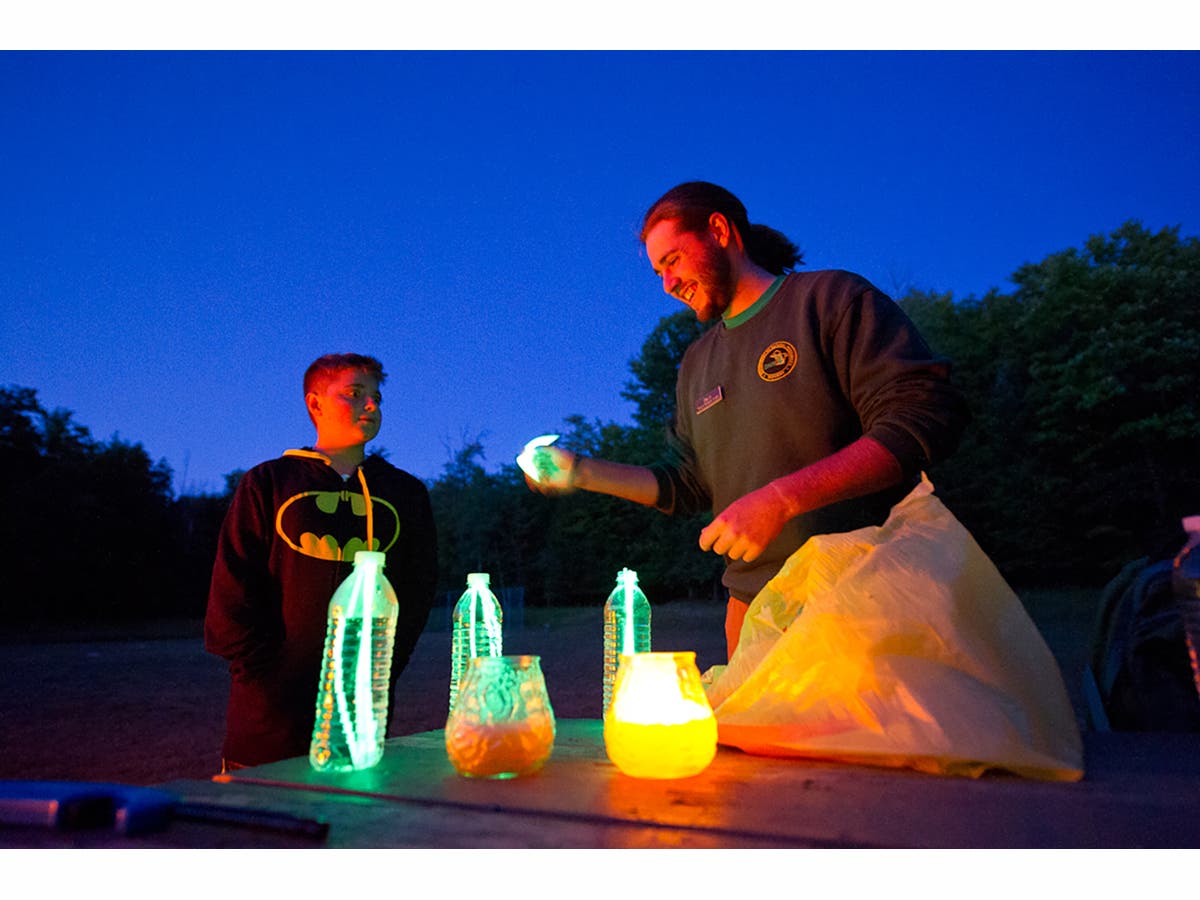
Main photo: Devin Burke, a State Park Explorer Program guide, has fun with a visitor at the Meteors & S’mores program at Young State Park in Charlevoix County. (Photo via Michigan Department of Natural Resources)
Get more local news delivered straight to your inbox. Sign up for free Patch newsletters and alerts.