Community Corner
Home Building in the 1830s
An excerpt from a book written in 1839 tells the story of a frame home building.
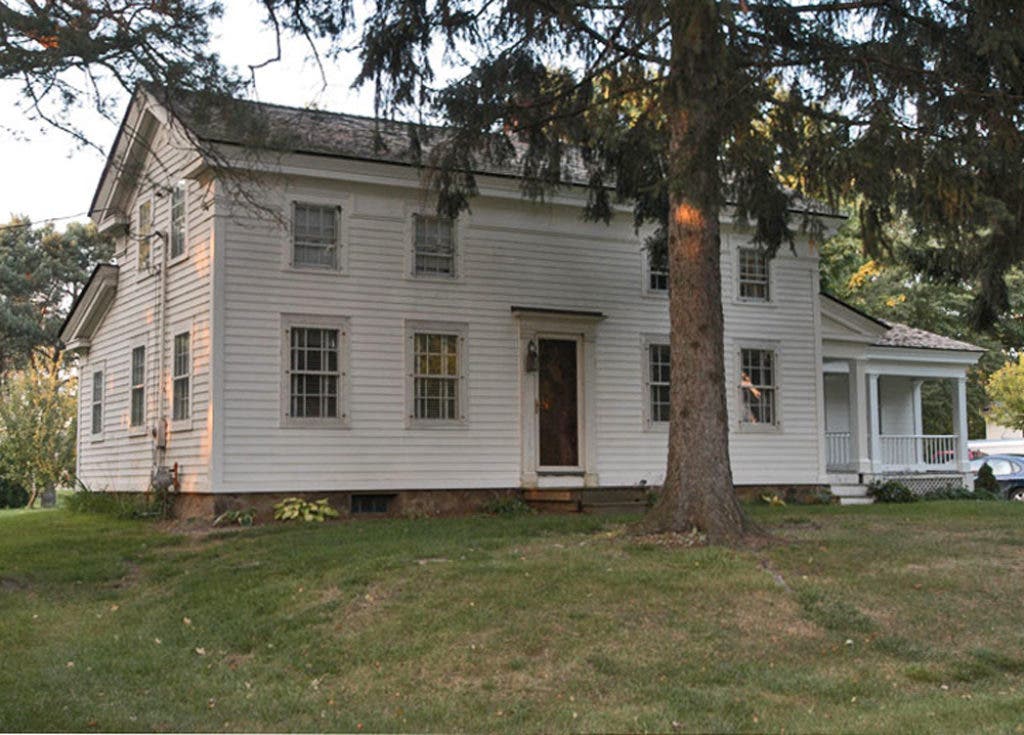

As I noted earlier, antique books written by the early settlers can be an excellent source of interesting detail not available anywhere else. One of the greatest such books is A New Home—Who’ll Follow, written by Mrs. Mary Clavers, who was in reality Caroline Stansbury Kirkland (1801 – 1864).
The book was published in 1839 based on her actual experiences in pioneering Pinckney, MI in 1837. In her book, Pinckney was called “Montacute”. She was an energetic groundbreaking author and mother of seven. So here is the framed home building process of the 1830s as described in this excerpt from Mary Clavers book:
The log-house, which was to be our temporary home, was tenanted at this time; and we were obliged to wait while the incumbent could build a framed one; the materials for which had been growing in the woods not long before; I was told it would take but a short time, as it was already framed.
Find out what's happening in Farmington-Farmington Hillsfor free with the latest updates from Patch.
What was my surprise, on walking that way to ascertain the progress of things, to find the materials still scattered on the ground, and the place quite solitary.
“Did not Mr. Ketchurn say Green's house was framed?” said I to the dame du palais, on my return; “the timbers are all lying on the ground, and nobody at work.”
Find out what's happening in Farmington-Farmington Hillsfor free with the latest updates from Patch.
“Why, la! so they be all framed, and Green's gone to-------for the sash. They'll be ready to raise tomorrow.”
It took me some time to understand that framing was nothing more than cutting the tenons and mortices ready for putting the timbers together, and that these must be raised before there could be a frame. And that “sash,” which I in my ignorance supposed could be but for one window, was a generic term.
The “raising” took place the following afternoon, and was quite an amusing scene to us cockneys, until one man's thumb was frightfully mashed, and another had a severe blow upon the head. A jug of whiskey was pointed out by those who understood the matter, as the true cause of these disasters, although the Fates got the blame.
“Jem White always has such bad luck!” said Mr. Ketchum, on his return from the raising.
The many raisings which have been accomplished at Montacute, without that ruinous ally, strong drink, since the days of which I speak, have been free from accidents of any sort; Jem White having carried his “bad luck” to a distant county, and left his wife and children to be taken care of by the public.
Our preparations for residence were on a very limited scale, for we had no idea of inhabiting the loggery more than six weeks or two months at farthest. Our new dwelling was to be put up immediately, and our arrangements were to be only temporary. So easily are people deluded!
I could not but marvel how so many carpenters had happened to “locate” within a few miles of each other in this favoured spot; but I have since learned that a plane, a chisel, and two dollars a day make a carpenter in Michigan.
Millwrights too are remarkably abundant; but I have never been able to discover any essential difference between them and the carpenters, except that they receive three dollars per diem, which, no doubt, creates a distinction in time. Our millwright was a little round-headed fellow with a button nose, a very Adonis, in his own eyes, and most aptly named Puffer, since never did a more consequential dignitary condescend to follow a base mechanical calling. His statements, when he condescended to make any, were always given with a most magisterial air; and no suggestion, however skillfully insinuated or gently offered, was ever received without an air of insulted dignity, and a reiteration of his own conviction that it was probable he understood his business.
Editor's Note: Due to a technical problem, the credits for the photos in this article are incorrect. The John Garfield House photo should be credited to John Willyard. The Caroline Stansbury Kirkland photo should be credited to Wikimedia Commons.