Schools
Fire Up the Griddle: It's Maple Sugaring Time at Dinosaur Hill
Students and families can enjoy this educational — and delicious — program on maple sugaring.


The squirrels know it.
The Native Americans and pioneers knew it.
And now students from Rochester-area schools know it, too.
Find out what's happening in Oakland Township-Lake Orionfor free with the latest updates from Patch.
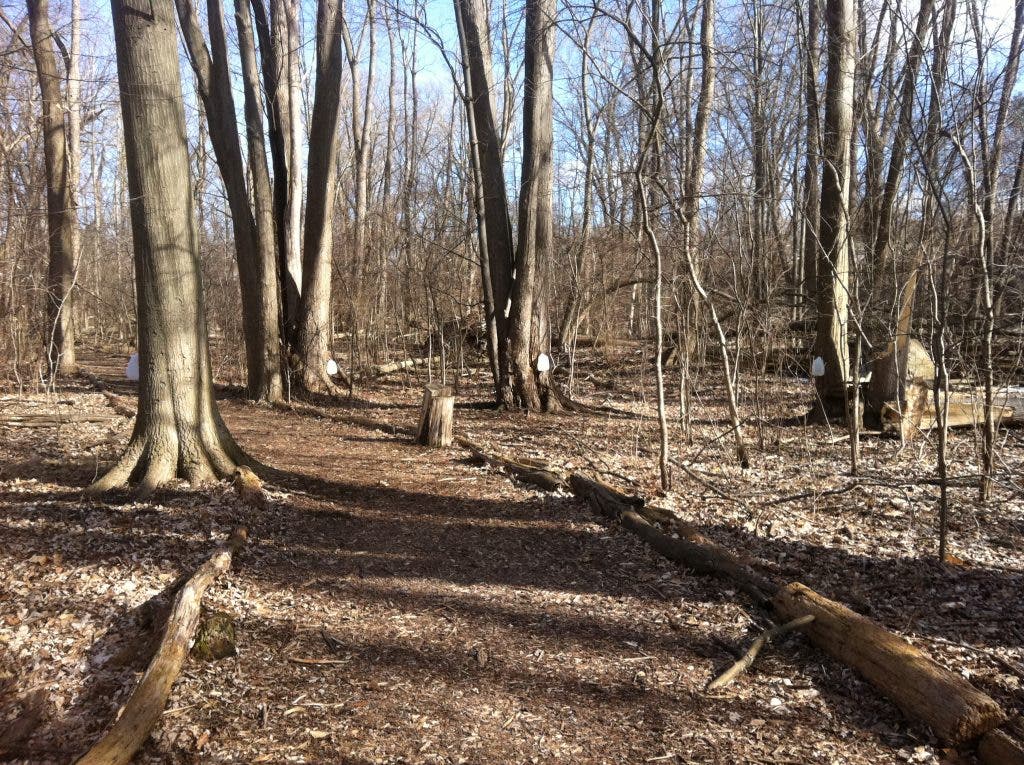
Maple trees in Michigan make good stuff!
A popular program
Michigan is in the middle of maple sugaring season and in Rochester is offering a program that lets local students use all five of their senses to learn more about their favorite pancake topping.
Find out what's happening in Oakland Township-Lake Orionfor free with the latest updates from Patch.
"We've been doing this program since the nature center opened," said Sharon Taber, program director. "Every year, the calendar fills up! We have three to four classes from 10 different schools attending this year."
That's nearly 1,000 kids getting hands-on experience with the drill, bucket and spile.
With the maple sugaring program, the Nature Preserve harvests about 40 gallons of sap every year.
That may sound like a lot, but actually it takes about 40 gallons of sap to make one gallon of maple syrup.
But if you're looking for Dino Hill maple syrup on your grocery store shelves, you're not going to find it.
"We send the sap back to school with the teachers," Taber said. Turning the sap into syrup only takes a carefully-monitored boiling process.
"You boil it, you just have to be careful not to let it burn when it gets close to the bottom."
Engaging the five senses
According to Taber, the program teaches students about nature, food sources, Native American and pioneer history and how to identify maple trees.
But these things are not taught in a boring lecture format.
They are taught with a hands-on experience that engages the students' five senses: from the smells of real syrup versus artificial to the sound of sap's slow drip out of the maple; from the touch of the maple's bark to the sight of the chewed up maple twigs the hungry squirrels have left behind.
"The Native Americans probably learned about maple sap from watching the animals," Taber said. "The squirrels bite right into it!"
And of course the taste test of sap — really it's just like sugar water and not that gooey mess you're thinking of — to the final syrup product.
Whether inside the nature center studying the map of the world's very limited sapping region or out on the trail drilling into a maple, the students are engaged and learning.
Here are some of the fun facts they learn along the way:
- A maple tree trunk resembles an elephant's leg: grayish in color, wrinkly at the bottom and smoother at top.
- To safely tap a tree it must be at least 36 inches around. That's about a 40-year-old tree.
- You need only drill in 2 1/2 to 3 inches.
- On a warm day, you may be able to get a full gallon in about seven hours. The colder the weather, the slower the drip.
- Although there are maple trees all over the world, only a limited region has the right conditions for sapping. The region extends from Minneapolis to Maine and Ohio to southern Canada.
You don't have to be a student
If maple sugaring sounds like a program you'd like to participate in, Dinosaur Hill is offering a family version of it this Saturday from noon to 1:30. The cost is $5 per person or a $20 family maximum. For members the cost is $3 per person or $15 family maximum. Space is limited.
Dinosaur Hill Nature Preserve is located at 333 North Hill Circle. Call 248-656-0999 with questions or to register.