Politics & Government
Historic Preservationists Concerned with Proposal to Remove Paint Creek Dam
The historic Paint Creek Millrace could vanish with the removal of the dam.
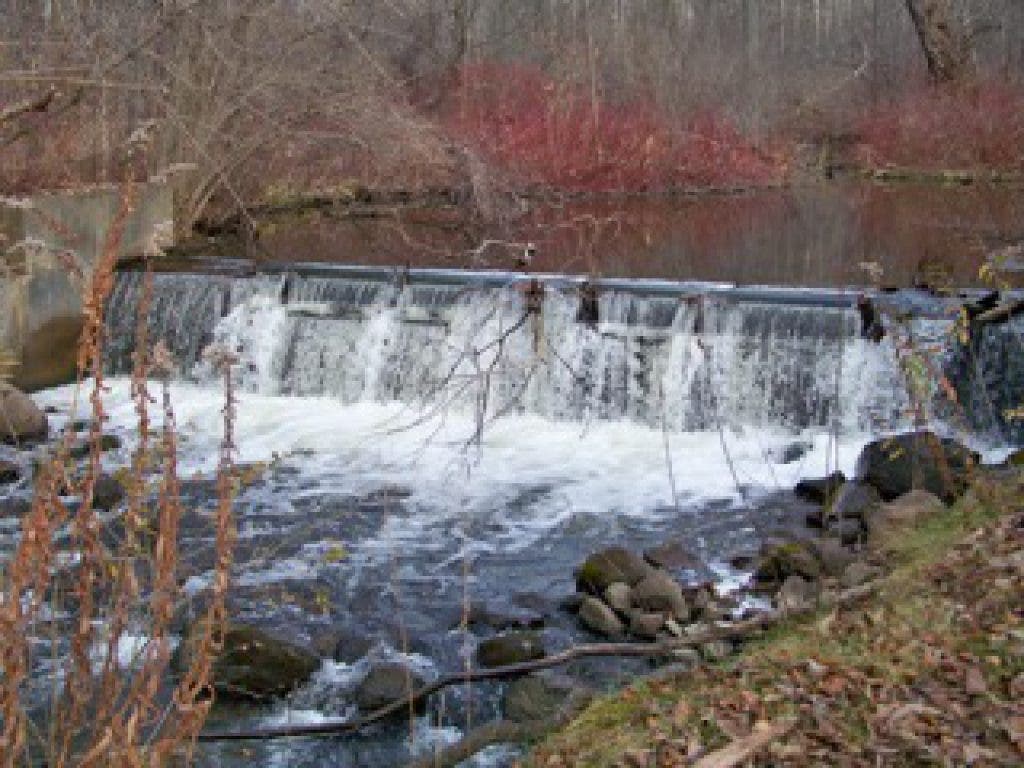
The Oakland Township Board of Trustees is considering a proposal from the Clinton River Watershed Council to remove the Paint Creek Dam in Oakland Township. The dam sits upstream from the Paint Creek Cider Mill in Paint Creek, which flows southeast from Brandon Township to Rochester, where it feeds into the Clinton River.
The Clinton River Watershed Council calls the proposal a “win-win-win,” while township historians see it as yet another challenge to their attempts to preserve the few historical sites left in the area.
At the heart of the opposition to removing the dam is the historic Paint Creek Millrace.
Find out what's happening in Oakland Township-Lake Orionfor free with the latest updates from Patch.
Residents and historic preservationists are concerned that the removal of the dam could cause the millrace to dry up. If that happened, not only could the millrace cease being a scenic attribute in the township, it may no longer be a viable historic site.
The millrace, say those in support of keeping the dam, was crucial to the township’s founding and early success and the reason why settlers were attracted to Goodison, an uncharted hamlet within the township. The millrace led to the creation of mills, homes, schools, shops, a post office and railway station, making Goodison an early center of commerce.
Find out what's happening in Oakland Township-Lake Orionfor free with the latest updates from Patch.
The proposal
The proposal to remove the dam was first introduced to the Oakland Township Board of Trustees more than a year ago. Both the Clinton River Watershed Council and the Michigan Department of Natural Resources and Environment (MDNRE) believe the removal of the dam is necessary for reasons of safety and habitat preservation.
In January 2010, the Clinton River Watershed Council asked the township board for its approval to apply for a $700,000 federal grant from the Environmental Protection Agency (EPA) to remove the dam as part of a habitat restoration project at no expense to the township. The board agreed.
In late 2010, the Clinton River Watershed Council was awarded the EPA grant and since then, has hired Hubbell, Roth and Clark, consulting engineers from Michigan, to handle the dam removal.
How old is the Paint Creek Dam?
Ann Vaara, executive director of the Clinton River Watershed Council, provided an update on the project to the Oakland Township Board of Trustees on March 8. Again citing safety and liability issues, she told the board that, “There are age limits to dams.”
Dan Keifer, also with the Clinton River Watershed Council, agreed, stating during a phone interview on Feb. 25, that the Paint Creek Dam was built at the turn of the last century and is more than 100 years old.
“When [a dam] fails, Mother Nature takes over and you can have real problems such as flooding and bank erosion,” he said, “That dam has probably not been touched for 60, 80 to 100 years. ... It is a structure standing in the way of moving water. Time takes a toll and starts to eat away at the foundation and sides.”
Keifer went onto say, “It’s definitely old and needs to be taken out the right way.”
Yet, members of the Oakland Township Historical Society contend that the Paint Creek dam is merely 57 years old and in fine condition.
“I grew up on that dam, before the dam was there,” JoAnn Kelly Bourez, a lifelong township resident and vice president of the historical society, told the board of trustees on March 8. “I lived at 1575 Gunn Road all my life. I know that (the dam) in fine condition. ... It’s in just the same condition it was when it was built in 1954, when I lived there. It’s not deteriorated in any shape or form. There’s nothing wrong with the concrete. Nothing whatsoever.”
Habitat preservation
In addition to safety, the Clinton River Watershed Council wants to remove the dam to protect the many types of animals that live in and along the creek, as well as their habitats. Currently, there is a nation-wide push to remove dams so that various river and creek features that sustain marine and animal life can be maintained or improved.
“Dams are the source of a lot of ecological impairment,” noted Keifer. “Connectivity is important to rivers and streams so all kinds of critters who use the water can move up and down for food, spawning and different habitats. Dams obviously block that,” he said. “Removing them has become a top priority around the country and in Michigan. They no longer serve a functional purpose.”
On March 8, Vaara, too, pointed out that the MDNRE believes ecological features in Paint Creek are being impeded and that the dam needs to come down for habitat preservation.
But what about the millrace?
In the nineteenth century, Paint Creek was a vital source of waterpower in Oakland Township. In 1835, Needham Hemingway dammed the creek and hand-dug a half mile long millrace upstream to power his grist mill in Goodison.
According to “Heritage of Oakland Township,” written by Delta Kelly and Barbara Kandarian, the “water power was generous and did not require the usual mill pond. ... Instead of the usual waterwheel, a box-flume fed the water under Gallagher Road (then Old Tower Road) into the basement of the mill, where it turned a turbine.”
The mill was purchased in 1877 by William Goodison, who enlarged it and fitted it with modern machinery. With the addition of blacksmith shops, a post office and a railroad flag station, Goodison became the township’s center of commerce.
“It was a busy center,” noted Kelly and Kandarian. “Folks gathered at the store-and-post-office located next to the mill, and there was much activity at Maurice Collin’s blacksmith shop adjacent on the south.”
The mill closed in the 1940s.
“After more than a century of service,” wrote Kelly and Kandarian, “and having passed the point of preservation, it was reluctantly dismantled by its (then) owner, Dale Miller, and the present Paint Creek Cider Mill was built.”
Can the millrace be preserved?
The Clinton River Watershed Council has repeatedly said it has no intention of harming the historic nature of the Paint Creek Millrace or removing the state historical marker that stands alongside it on Gallagher Road.
But many township history supporters believe the millrace’s historic status may be jeopardized if the dam is removed and the millrace dries up.
Some compare it to tearing down a historic home, but leaving the historical marker to show what used to be – the marker remains, but the historic site it was marking no longer exists.
But Keifer and the Clinton River Watershed Council see the proposal to remove the dam as a “win-win-win situation because,” he noted, “it’s a condition (of the proposal) to remove the dam without harming the historical designation of the millrace.”
Keifer went on to say, “With this project, it’ll bring a lot of the local history into appreciation ... (and) shows how important water power was to the local economy.”
Still, Keifer has questions about what part of the millrace is historically significant.
“The millrace is close to a half a mile long,” he said. “Is that the whole historical designation? Is it the bottom half of the water control structure, which is important because it's next to the mill?”
As a result, as well as a condition of the proposal, one of the first tasks is for the dam removal team to determine the historical designation of the millrace. For that, members of the Clinton River Watershed Council and Hubbell, Roth and Clark will meet with representatives from the State Historic Preservation Office (SHPO) in Lansing.
In addition, a historic preservationist has been added to the project team.
“Mr. (Gene) Hopkins has already started the procedure with the SHPO office,” Vaara told the board of trustees on March 8.
According to Janine Saputo, a member of the township’s planning commission, as well as a supporter of historic preservation, Hopkins is an architect accredited with the American Institute of Architects and a noted specialist in historic preservation.
“I’m very pleased to see that,” she told the board of trustees.
Saputo went on to urge the board of trustees to wait for the reports from SHPO before making a final decision.
“Let’s see what comes out of the reports from the State Historic Preservation Office for this historic site.”
While the Clinton River Watershed Council examines the millrace’s historical significance, several township residents and preservationists say they already know why the millrace is historic.
Diana Borrusch, a township resident and president of the Oakland Township Historical Society, told the board of trustees on March 8 that she was concerned about the possible loss of the state historical marker.
“I heard rumors that the millrace was not going to be preserved. I thought is it just a hole in the ground that has served its purpose? No,” she said. “The mill and the millrace made Goodison in Oakland Township. We need to protect the millrace as the board of trustees promised in your meeting minutes of Jan. 12, 2010.”
What’s next?
Vaara was careful to note at the March 8 meeting that a lot of monitoring has to take place before the proposal to remove the dam can proceed. In addition to the historical survey and approval from SHPO, a quality of assurance plan must be formulated and approved.
Vaara went on to reassure the board of trustees, as well as those who attended the March 8 meeting, that they will know what is expected to happen to the millrace before the project goes too far.
Oakland Township Supervisor Joan Fogler said that has been the point all along.
Knowing what will happen to the millrace was one of the reasons the board of trustees told the Clinton River Watershed Council to “get an engineering study done first to be sure that the millrace wasn’t going to dry up, to be sure that the people downstream were not going to be flooded out and to be sure that the people upstream were going to get what benefits they needed.”