Politics & Government
The Barn that Brought a Community Together
Volunteers and donations made the preservation of the 1879 Flumerfelt barn a reality.
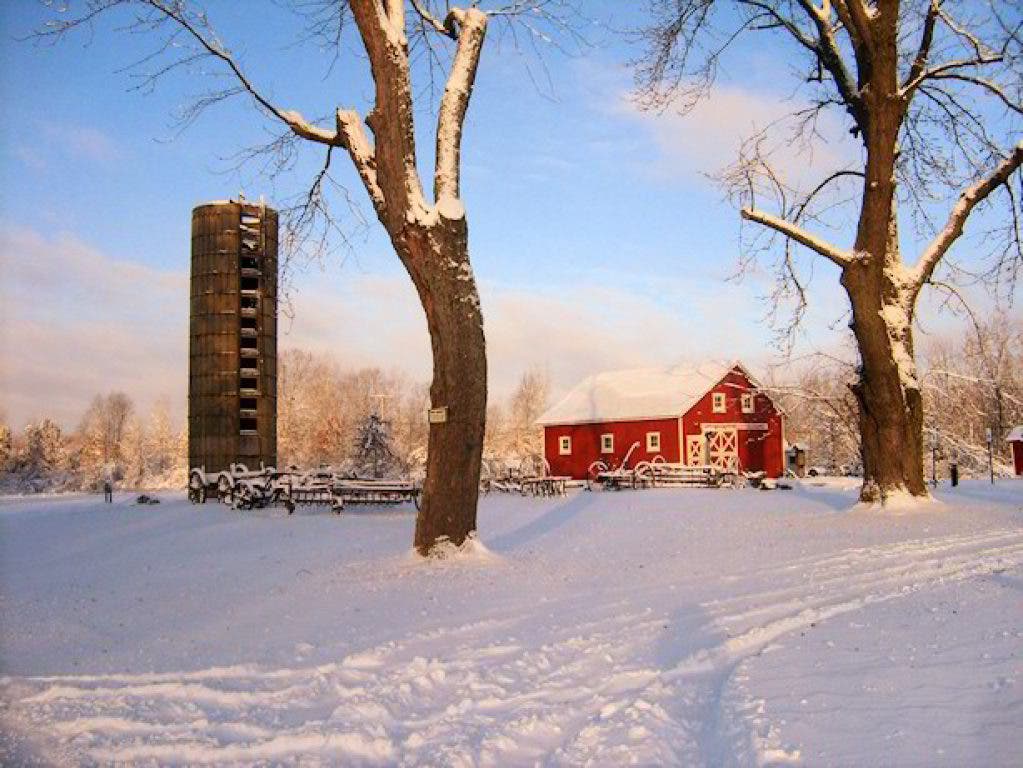


Will your name be spoken in public or make headlines 132 years from now?
If it does, let’s hope it’s for a good reason, as it is for John H. Flumerfelt and his family, who lived and worked in both Oakland and Avon (now Rochester Hills) townships in the 1800s.
They probably never imaged that the Flumerfelt name would be a source of pride among township residents well into the 21st century.
Find out what's happening in Oakland Township-Lake Orionfor free with the latest updates from Patch.
But it is, and the name is being mentioned a lot lately.
Recently, Oakland Township Patch reported that the Michigan Barn Preservation Network (MBPN) – a non-profit organization dedicated to preserving the state’s barns, farmsteads and rural communities – awarded a “” to the township’s historical society, Parks and Recreation Commission and Historic District Commission for their combined efforts in preserving the 1879 Flumerfelt Barn at Historic District on West Predmore Road in Oakland Township.
Find out what's happening in Oakland Township-Lake Orionfor free with the latest updates from Patch.
The honor was the latest in a string of accolades the township has received for saving a vital piece of its history from the wrecking ball.
As noted in a press release issued by the MBPN, the certificate “honors the Oakland Township community for not only saving this unique barn ... but for continuing to preserve and use this barn now and into the future.”
The little barn that could
In 2002, members of the Oakland Township Historical Society began conducting a township-wide barn survey as part of the Michigan State University Museum’s Michigan Barn and Farmstead project.
In the two years it took to complete the survey, which included 60 farmsteads with 90 barns, each more than 50 years old, Oakland Township lost three barns to development. In 2004, the survey team discovered that the Flumerfelt barn, which sat on the site of the former Kern Tree Nursery at 3700 N. Gunn Road, was to be the next historic barn demolished for new development.
Members of the historical society and historic district commission snapped into action.
Not only was the barn another rural artifact in danger of disappearing, but it contained some unique features and historical characteristics that made it a gem among the township’s farm properties.
The historical society contacted Steve Stier, a well-known Michigan barn wright and president of the MBPN, who has evaluated and preserved a number of historic Michigan barns, and asked for his assistance in preserving the Flumerfelt barn.
“The barn itself does have some unique features,” said Stier. “For example, it has a ridge beam under the roof peak which is quite unusual for a Michigan barn.”
Additionally, the barn has a gable roof and a kingpost timber frame with mortise and tenon joints held together with wooden pegs. The large timber beams were hand hewn or left completely rough with the bark still on. Decorative metal door hinges include cut-out star shapes.
Of all the barns in the township, including two others on the same property, the Flumerfelt barn exhibited the most unique building methods and is considered a fine example of nineteenth century barn construction in southeastern Michigan.
Who were the Flumerfelts?
John H. Flumerfelt was born in Oakland Township in 1855. His paternal grandfather was an early settler in Oakland County.
In 1893, Flumerfelt purchased 185 acres of township property known then as the Jesse Knols farm.
According to History of Oakland County, Michigan Vol. 2 by Thaddeus De Witt Seeley and published in 1912, Flumerfelt “had long been a dominant factor in advancing the agricultural prosperity of Oakland Township ... and was the head of the well-known (mercantile) firm Flumerfelt and Tunison” in Orion, Michigan.
By 1912, Flumerfelt’s firm was considered “one of the most flourishing in Orion, having an extensive and lucrative trade in hardware of all kinds, building materials of every description and handling in addition immense quantities of wood and coal each season.”
Flumerfelt’s brother, William, was also a farmer in Oakland Township. In 1885, he bought the former Dr. William Deats residence at what is now 302 W. University Drive in downtown Rochester (home of La Dolce Vita Spa).
According to Remembering Rochester, Flumerfelt lived in the house with his wife, Libbie, until his death in 1906. Libbie lived in the home until she died in 1924.
The Oakland Township Historical Society believes Flumerfelt’s barn was originally used to store grain. It also may have been a dairy farm at some point in its history.
Later, the barn and farm were owned by the Peters family and, in the 1960s, by Kerns Tree Nursery, which used the barn to store tree seedlings.
The barn was vacant and abandoned at the time preservation plans were made in 2004.
Taking her down
To save the Flumerfelt barn, it needed to be dismantled and moved to another location.
The Oakland Township Historical Society, Historic District Commission and the Parks and Recreation Commission worked together to preserve the barn and agreed to share its space for programming and exhibits.
The barn was to be moved to Cranberry Lake Farm, a historic district within the township and a nationally registered historic site. There, the Flumerfelt barn would rest on the site where a barn of similar size and age once stood before it was destroyed by fire several years ago.
Silverman Development of Bingham Farms, developers of the Kerns property, donated the barn to the historical society and offered to help dismantle it and move it to Cranberry Lake Farm.
Stier was hired to direct the endeavor which began in March 2004. Dozens of volunteers along with representatives from the historical society, Historic District Commission and the Parks and Recreation Commission spent three days taking down the barn board-by-board, loading pieces of it onto semi-trailers and moving them to a temporary location.
Before the barn could be rebuilt, a new foundation at the Cranberry Lake Farm site had to be poured and weather conditions needed to improve.
Most importantly, money had to be raised.
Fundraising was already under way with the historical society soliciting donations to hire a team of professionals to assist and direct volunteers in taking down the barn and rebuilding it. The township’s historic district commission allocated $10,000 from its Fund for Threatened Structures, and the Parks and Recreation Commission contributed funding and volunteers.
During the next several months, while money was raised and the foundation was poured, volunteers worked on various pieces of the Flumerfelt barn. They made wooden pegs, organized the boards (which had been marked when taken down so that they could be put back in the correct order), and fixing bents (an assembly of posts, beams and bracing that make up the barn frame).
Others made plans to hold an old-fashioned, Amish-style barn raising later that summer.
“Raise high the roof beam, carpenters!”
On Aug. 21, with the sun shining, Stier, a construction crew and about 80 volunteers, including passersby and descendants of the Flumerfelts, gathered to rebuild the 132-year-old Flumerfelt barn.
“People driving by stopped to help,” said Janine Saputo, a member of the township’s planning commission and a member of the barn survey team who holds a special place in her heart for the Flumerfelt barn.
“Members of the Flumerfelt family ... helped raise this barn twice, 100 years apart.”
The barn team that assembled that day planned to use old-fashioned barn-raising methods – no power machinery – to lift four bents and secure them in place before sundown.
“Ever see the movie Witness?” asked Saputo, referring to the 1985 movie that takes place partially in an Amish community.
As noted in a 2008 documentary DVD titled “Barn on the Move: A Grassroots Rescue” and produced by the Oakland Township Historical Society, volunteers lifted four bents one by one with their hands. They held the bents in place with ropes and wooden poles while others secured them with temporary bracing.
With the four bents in place, the roof frame was next. Workers soon discovered, however, several beams had to be refitted. A setback such as this threatened to delay the project and left the barn team wondering if they could complete their task in a day.
With time ticking away, the crew worked hard to make corrections and adjustments to the beams. In the end, the barn’s entire frame and ridge beam were put up and secured before dark.
Celebrate good times!
Over the next few months, volunteers shingled the roof, installed the original siding and doors and set up interior exhibits.
On June 1, 2005 – a little more than a year since the project began – the Flumerfelt barn was rededicated and officially deeded to the township.
The little barn was saved, bringing an entire community together in the process.
The Flumerfelt barn is representative of the enormous amount of pride the township has for its history and agricultural traditions. It’s also indicative of the spirit of generosity and perseverance among its residents who, as Stier notes, are just as unique as the barn itself.
“More unique than the barn as a structure,” said Stier, “is the community effort to save and move it and use it. Oakland Township is unique in having a dozen or so folks that have the wherewithal to envision a huge project and muster enough person power and enthusiasm to carry it through to a successful conclusion.
“I was pleased and proud to be a part of this project,” he continued. “My hat’s off to these Oakland Township doers! The most unique thing about this barn is it happened to be in a township where the neighbors care about their heritage and are willing to put significant effort into preserving it.”