Politics & Government
Rochester Hills Leaders Say No to Formal Opposition of Civil Rights Bill
After passionate pleas from public, officials reaffirm the city's commitment to civil liberties.

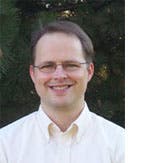

After hearing more than two dozen passionate pleas about acceptance, diversity and integrity, Rochester Hills leaders approved on Monday night a resolution that strengthens the city's commitment to civil rights.
In doing so, city councilmembers opted not to , that would specifically oppose pending legislation that could adversely affect those civil rights.
More than 100 people attended the City Council meeting. Among those in attendance were teachers and recent graduates of , the executive director of Equality Michigan and a former Democratic state representative.
Find out what's happening in Rochester-Rochester Hillsfor free with the latest updates from Patch.
The man responsible for bringing the issue to council, Rochester Hills resident Tim Maurer, said after the meeting that he was going to "keep moving forward" with his opposition to Rep. Tom McMillin's proposed House Bill 5039.
"We're not giving up," Maurer said.
Find out what's happening in Rochester-Rochester Hillsfor free with the latest updates from Patch.
McMillin did not attend the meeting.
Public comment
McMillin, R-Rochester Hills, introduced HB 5039 in October. If approved it would prohibit municipalities from extending special rights to those not covered by the Elliott-Larsen Civil Rights Act of 1976.
The Elliott-Larsen Act protects people on the basis of religion, race, color, national origin, age, sex, weight, height, familial or marital status. But it does not offer protection on the basis of sexual orientation.
Some municipalities — not Rochester Hills — have approved their own ordinances that extend the act's protections to gays and lesbians. This House bill says municipalities could "not adopt" such ordinances.
to oppose the bill through a resolution that he drafted. On Monday night, more than 20 people spoke out in support of the Maurer resolution and in opposition to HB 5039.
Alice Tomboulian of Oakland Township was a Democratic state representative for Rochester Hills from 1979-80. She said her son is gay and that his rights are not protected under Elliott-Larsen, so she is opposed to McMillin's bill.
Amanda Crowell Itliong of Rochester Hills urged city leaders to be a model for the city's youth and show young people that discrimination is not tolerated.
Brian Kirksey of Rochester Hills said the issue should not be one of partisanship but one of human rights. "Which side of history do you want to be on?" he asked councilmembers.
Two people voiced their opposition to the Maurer resolution.
"There are so many other issues that are so much more important," resident Jim Tokarski said. "Representative McMillin is the most approachable representative there is in Lansing. I oppose the rhetoric surrounding this. He's been called a racist and a homophobic — the language over this has gone off the deep end."
'We do not discriminate'
Council President Greg Hooper summarized the city's stance on civil rights, discrimination and acceptance.
"We do not discriminate in Rochester Hills or tolerate discrimination in Rochester Hills, period," Hooper said. "People need to know that."
However, Hooper explained, Rochester Hills does not have an ordinance that some other communities have that create an additional protected class. That's what HB 5039 refers to, he said.
Hooper said he received about 150 emails since the Maurer resolution was offered last month. "Most were form letters," he said. "Forty were from Rochester Hills residents; 110 lived outside of Rochester Hills — New York, Ferndale ..."
Among the 40 notes from residents, Hooper said, the opinions were split, with about half of the residents urging him to support the resolution and the other half urging him to not support it.
Last Friday, Hooper said, a group in support of McMillin sent a "robo call" alleging that members of City Council had taken a formal position on HB 5039 — a claim that was unfounded, he said.
"That was a flat-out lie, and I called Mr. McMillin and told him about that," Hooper said.
In summary, Hooper said, city councilmembers had no place formally voicing their opinion on the House bill. "It's not a local issue," he said.
Council's resolution
Most of the city councilmembers agreed with Hooper. They instead offered a second resolution in which they reaffirmed their support for human rights and civil liberties in the city.
The resolution, as stated, "does not take a formal position supporting or opposing House Bill 5039 but does recognize the ability of individual citizens to make a difference regarding the passage or failure of state legislation and encourages their continued involvement at the state level."
Councilmember Ravi Yalamanchi was the lone vote in opposition to the new resolution. He instead urged his colleagues to consider the original Maurer resolution, which more firmly stated an opposition to HB 5039.
"It's about respect and tolerance," Yalamanchi said. "This bill may never see the light of day, but it is also true that it could become part of some bill and be enacted."
The mayor's view
Mayor Bryan Barnett agreed with Hooper and the councilmembers who said the city has no place formally opposing the state House bill. He urged those in attendance at the meeting to speak out at the state level, where the discussion is more appropriate.
"From my position as the mayor of the city, one of the roles I'm very concerned about is that our reputation is being tarnished," Barnett said. "That's where my concern is. I'm not sure if it's a tarnish that's legitimate or if it's been amplified by powerful voices on both sides."
After the meeting, Maurer said he was concerned that the issue became all about partisanship and not about integrity, as he had urged Barnett to consider in his remarks earlier in the night.
"There is a great speech that has been running lately on our community television station. This speech was given by perhaps our best local leader to date," Maurer said, referring to Barnett. "This man will be the next Oakland County executive and perhaps governor of our state one day.
"In the speech that was given to a new group of OU students who just earned master's and doctorate degrees, the speaker tells the grads to be flexible, choose integrity over strategy and act upon opportunities when they are presented."
After the meeting, Maurer expressed his disappointment. "We've now seen this is all about partisanship," he said.
Get more local news delivered straight to your inbox. Sign up for free Patch newsletters and alerts.