Community Corner
Amphibian ‘Sexpert,’ Detroit Zoo’s Dr. Ruth, Sets The Mood To Stem Extinction: Video
Would the world miss salamanders, frogs, toads and newts? Yes, definitely, and Detroit Zoo's Dr. Ruth Marcec is helping them pitch woo.


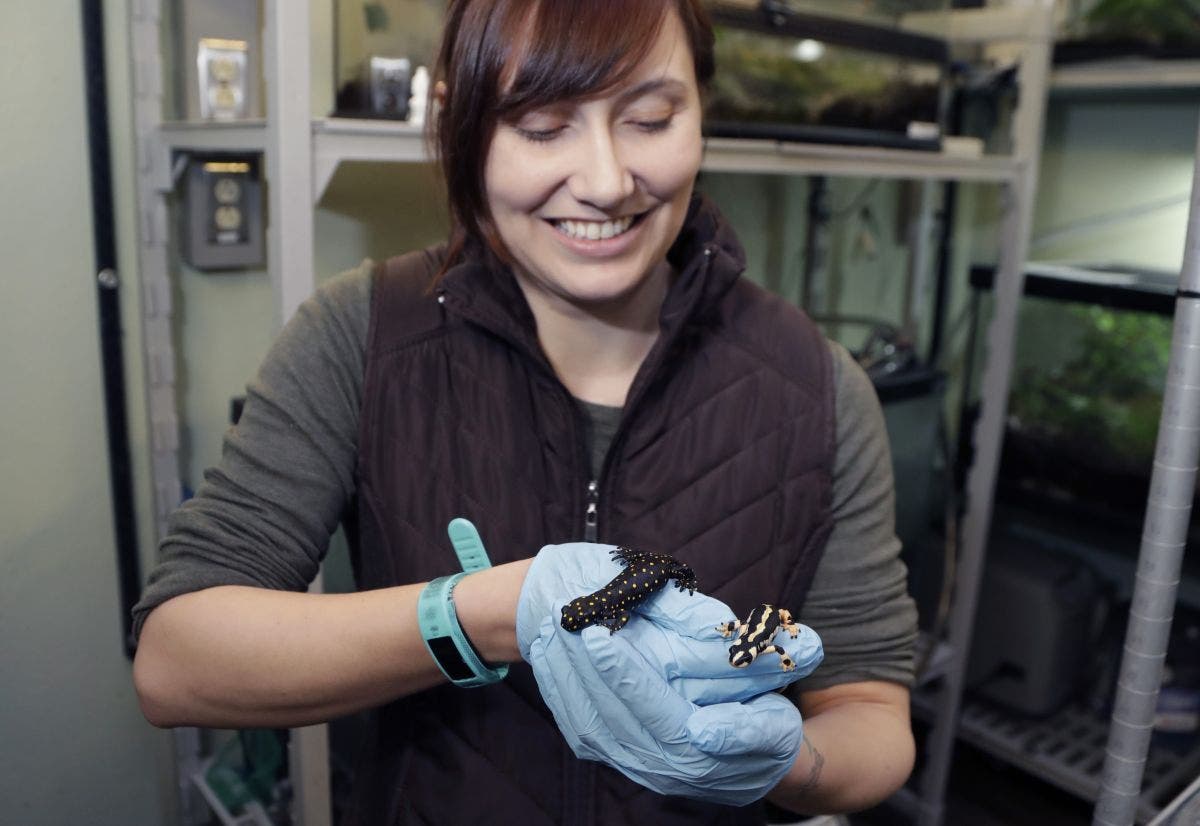
ROYAL OAK, MI — How do toads and frogs do it? Ask Dr. Ruth — no, not the famous human sex expert Dr. Ruth Westheimer, but the lesser known but highly qualified Dr. Ruth Marcec, an amphibian “sexpert” who has been hired by the Detroit Zoo to lead its National Amphibian Conservation Center.
If you weren’t aware, toads and frogs are in crisis, and the zoo’s Dr. Ruth is doing all she can to get them to pitch woo and breed — no easy feat for amphibians in captivity. The mood has to be “just right,” she says. In the amphibian world, that means controlling barometric pressure, rainfall and other environmental conditions.
Her job at the Detroit Zoo’s renowned National Amphibian Conservation Center is to stem what is known as the amphibian extinction crisis. Amphibians are among the most imperiled species on Earth.
Find out what's happening in Royal Oakfor free with the latest updates from Patch.
“If you combine all the endangered mammals and birds, that still doesn’t add up to the percentage of amphibians that are threatened and endangered,” Marcec told the Associated Press.
Would the world miss a few toads, frogs, salamanders and newts?
Find out what's happening in Royal Oakfor free with the latest updates from Patch.
You bet. They’re crucial to keeping water clean and soil aerated and healthy. In fact, Marcec said, “if you removed salamanders from the Appalachian Mountains, the forests would die.”
Marcec, both a veterinarian and amphibian reproductive psychologist, previously worked at the Central Florida Zoo and Botanical Gardens, where she served as director of the Orianne Center for Indigo Conservation, and as a graduate research assistant and lab manager for the Memphis Zoo.
Detroit Zoological Chief Life Sciences Officer Scott Carter said in a statement that Marcec’s special expertise in the health, welfare, breeding and conservation of endangered amphibians is a “great addition” to the zoo and the National Amphibian Conservation Center, which opened in 2001.
The center houses a spectacular diversity of frogs, toads, salamanders, newts and caecilians.
Amphibians are threatened mainly due to loss of clean water and damp habitats, changes in water and soil quality, and the potential effects of climate change. About 40 percent of the approximately 7,000 species of amphibians are in danger of extinction, according to the International Union for Conservation of Nature’s Red List of Threatened Species.
Feature photo: Dr. Ruth Marcec holds an anatolian newt, left, and a luristan newt at the Detroit Zoo in Royal Oak, Michigan. Marcec, the new director of the zoo's National Amphibian Conservation Center, is tasked with inducing frogs and salamanders to make a love connection. (AP Photo/Carlos Osorio)
Get more local news delivered straight to your inbox. Sign up for free Patch newsletters and alerts.