Politics & Government
10,000 Protesters Descend on Capitol Tuesday to Fight Michigan Right-to-Work Legislation
The bills were signed into law by Gov. Rick Snyder on Tuesday.

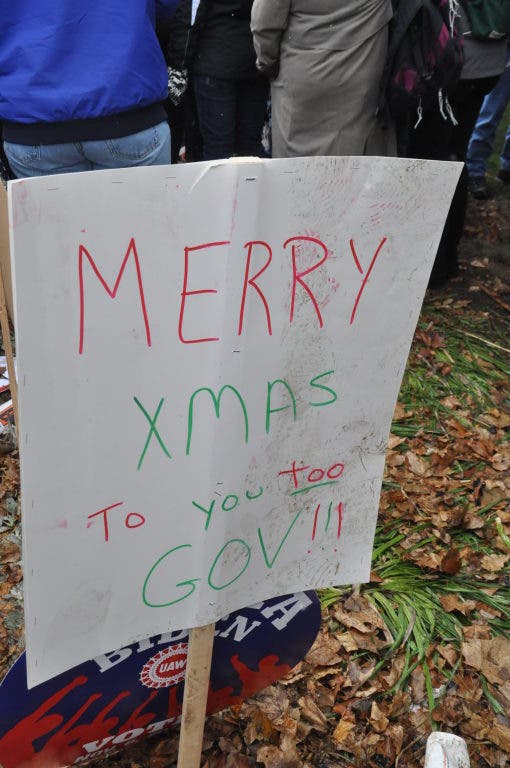


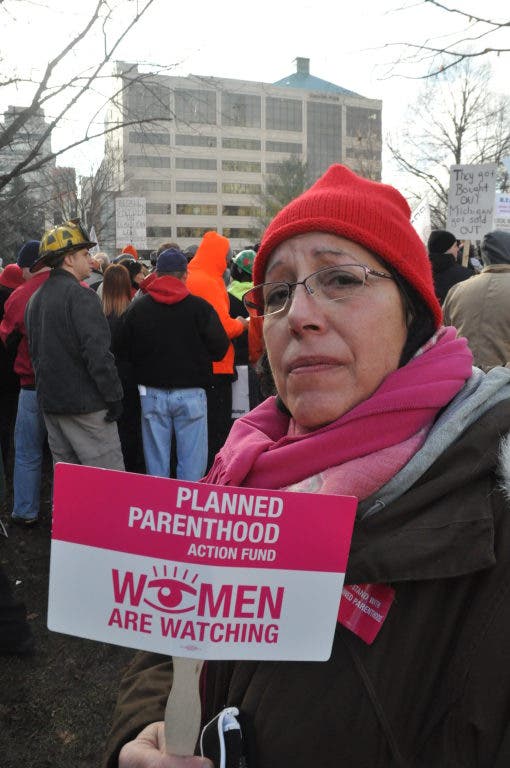


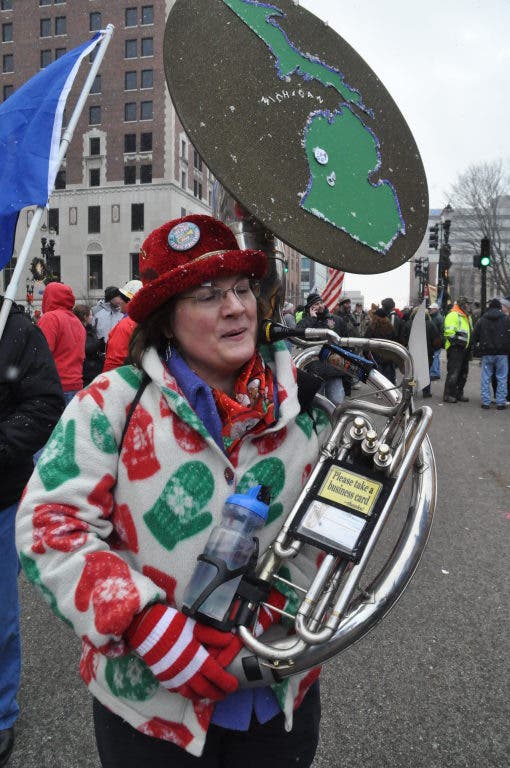

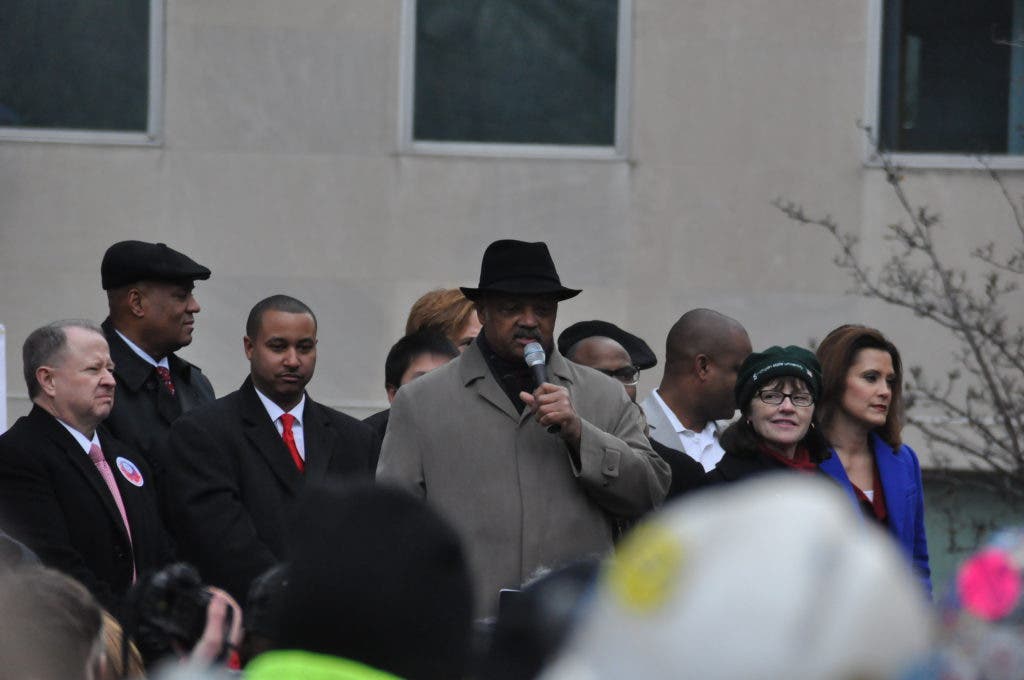







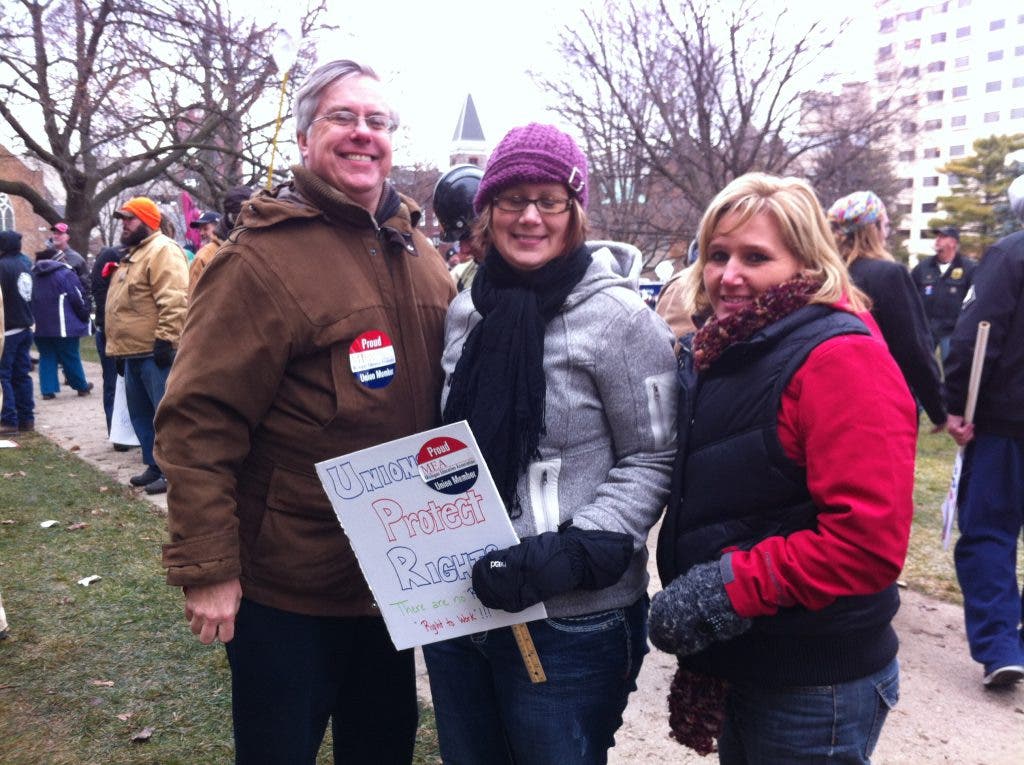


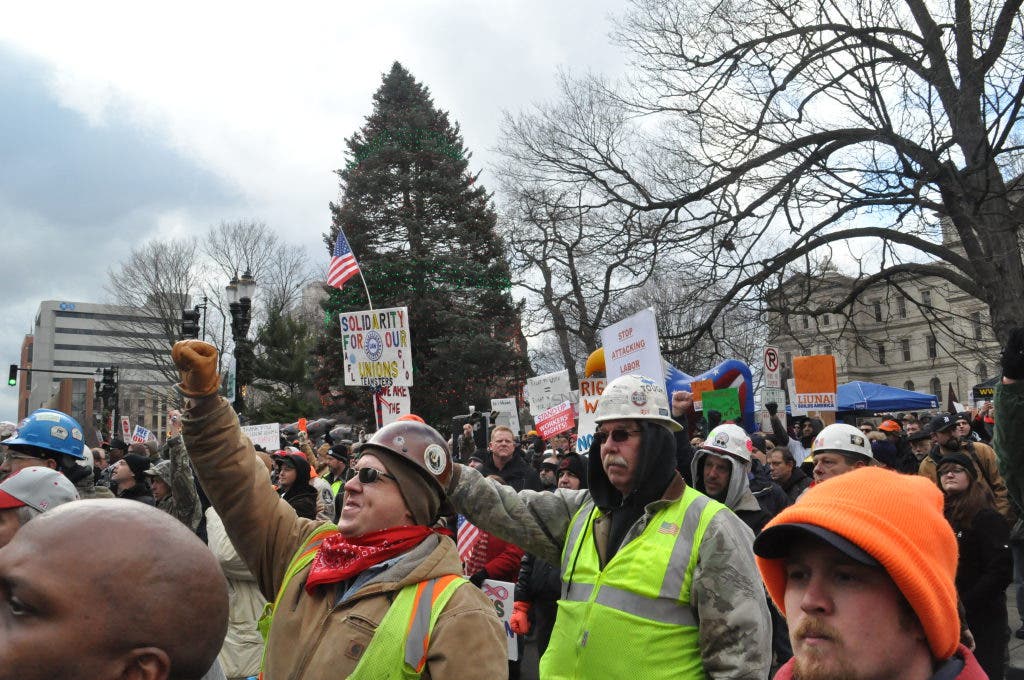






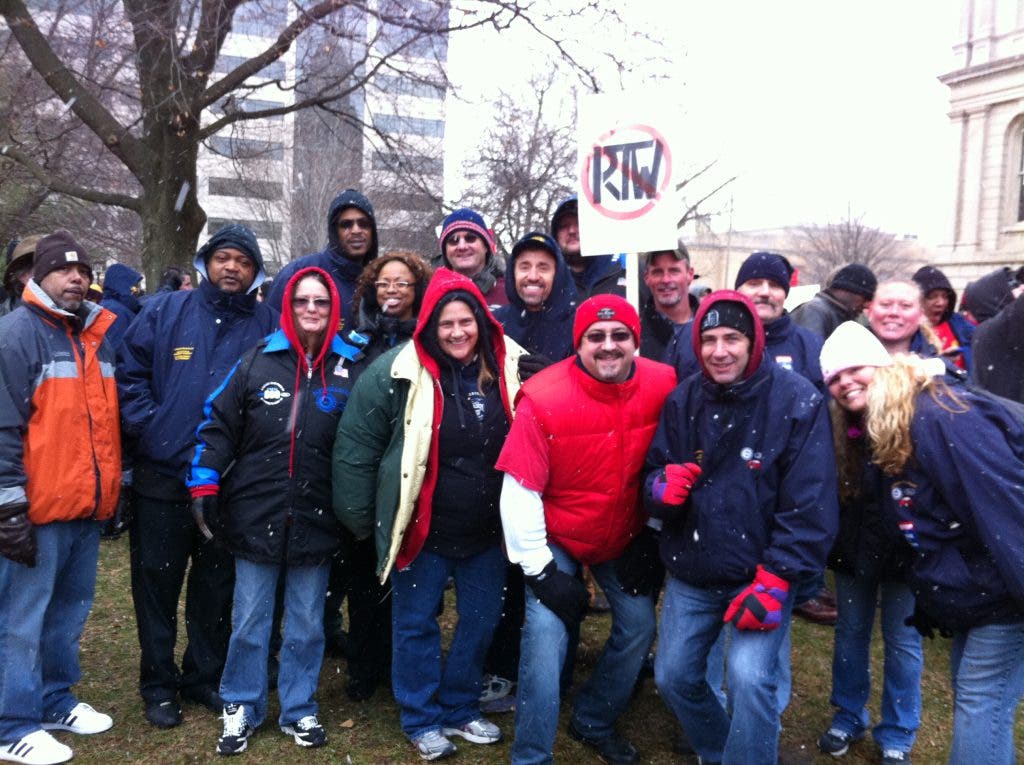


LANSING - People came from as close as down the street and as far as Chicago and Wisconsin, joining thousands of union members in a protest against right-to-work legislation Tuesday in Lansing.
Despite the roar of the crowds lining the lawn of the Capitol building and surrounding streets, two pieces of legislation passed by the Senate last week made their way through the state House of Representatives and were signed into law by Gov. Rick Snyder Tuesday afternoon.
10,000 on the Capitol lawn
Find out what's happening in St. Clair Shoresfor free with the latest updates from Patch.
Michigan State Police estimated that protesters at the Capitol numbered around 10,000 on Tuesday. Most were union members and supporters, while a small contingent of tea party and Americans for Prosperity members—both of which support right-to-work legislation—were present as well.
Teamsters, the American Federation of Teachers, the Michigan Education Foundation, UAW and a number of smaller unions—including pipeworkers, boilermakers and plumbers—were present.
Find out what's happening in St. Clair Shoresfor free with the latest updates from Patch.
"They say they want to bring Michigan together," said Nick Kottalis, a Dearborn resident and President of the Dearborn Truck Plant chapter of UAW Local 600. "This is just asking to divide the state of Michigan."
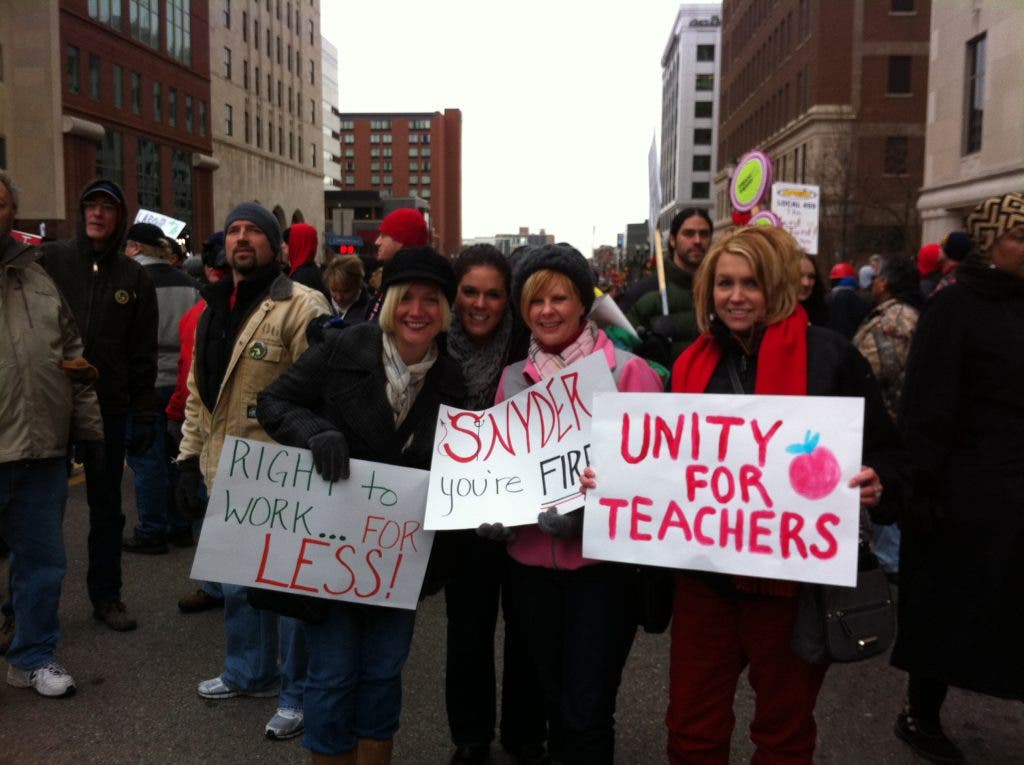
While UAW members arrived on large busses, many teachers came on their days off—or took a personal day—to join the protests, driving their own cars full of fellow educators donning red. Several said they feared for their jobs if their district knew they were at the protest.
"We're afraid to talk because we don't want to lose our jobs," said a teacher from Farmington.
Arrests, pepper spray, mounted police
The scene got out of hand a number of times as protesters clashed with right-to-work supporters, police, and legislators inside the Capitol.
According to the Detroit Free Press, Michigan State Police confirmed that three people were arrested and one was pepper sprayed—although several people claimed to have been sprayed. One of those people was former Congressman Mark Schauer.
“I immediately began to retreat and began to cover my eyes and my mouth,” Schauer told the Battle Creek Enquirer. “It was not good."
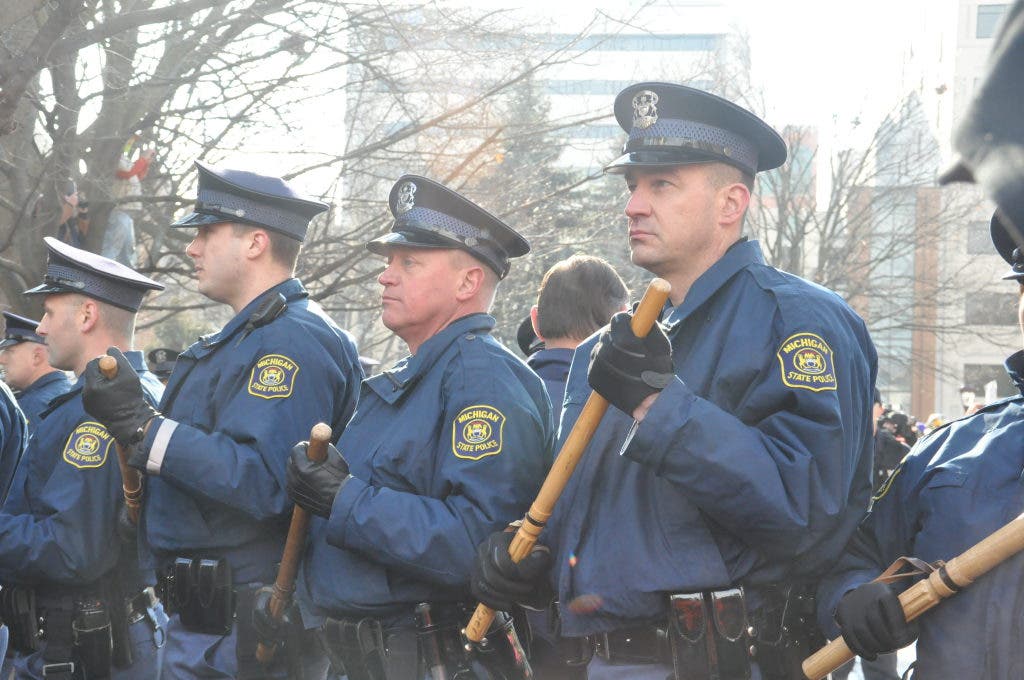
The biggest clash came around 11:30 a.m., when union members pushed down tents set up by Americans for Prosperity—while AFP members were inside. Mounted police were brought in to control the situation, as well as state police wielding batons.
After news of the house votes reached protesters, the rally moved to the Romney Building, where Gov. Snyder's office is. State officers formed a barrier around the building as protesters shouted to him, "Don't sign the bill!"
State Sen. Steve Bieda, D-Warren, voted against the legislation and issued the following statement after the vote in the House:
“I’m strongly opposed to these bills. The way this legislation was passed is an embarrassment. When collective bargaining laws were strengthened in Michigan in 1965 it was done not only with bipartisan support, but nearly unanimously and signed by Governor George Romney. The repeal of those rights was done by single-party rule that attempted to silence any opposition. Say what you will about this legislation, but we should all be ashamed of the process by which it passed.”
State Rep. Anthony Forlini, R-Harrison Township, voted against the bill Tuesday.
“It’s a divisive issue,” Forlini said in an earlier interview with Patch. “I’m not saying right to work doesn’t have merit, but I feel it would have been better as a ballot initiative. It shouldn’t be a Republican or Democratic issue just because one party or the other is in leadership. There are so many things to do in Lansing. It’s unfortunate this is pushing others aside.”
In a press conference Tuesday evening, Snyder announced that he signed the bills.
"I have signed these bills into law. ... We are moving forward on the topic of workplace fairness and equality," he said.