Politics & Government
Justice Department Investigating Flint Water Crisis
Announcement of an ongoing investigation is an unusual move, but federal prosecutors confirmed probe in response to high public interest.


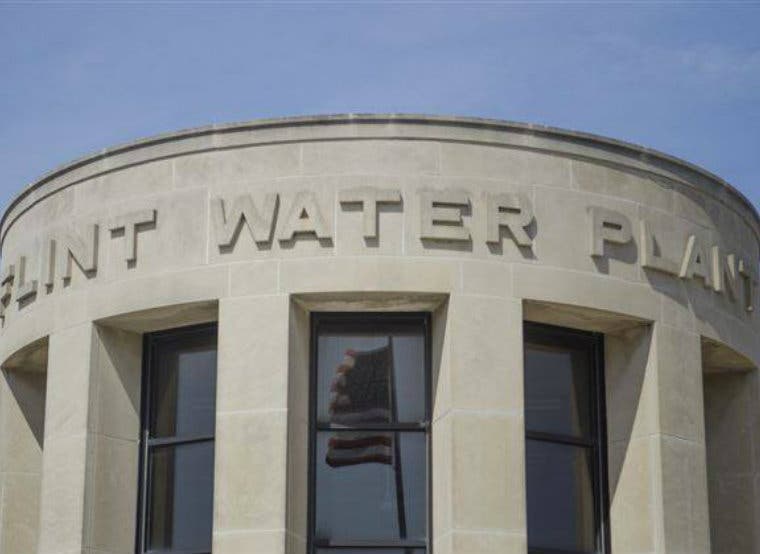
DETROIT, MI – The U.S. Attorney’s Office for the Eastern District of Michigan is investigating the water crisis in Flint, officials said.
Gina Balaya, a spokeswoman for U.S. Attorney Barbara L. McQuade, said federal prosecutors are working with the U.S. Environmental Protection Agency to investigate lead contamination in the city’s water supply, but declined to detail the specifics of the probe, The Flint Journal reports.
The U.S. Attorney’s Office, which is organized under the Department of Justice, handles criminal as well as civil cases. Announcement of an ongoing investigation is an unusual move by U.S. attorneys, but Balaya said the agency decided to go public with the probe in response to a high volume of letters and other inquiries from the public.
Find out what's happening in West Bloomfieldfor free with the latest updates from Patch.
A spokesman said Gov. Rick Snyder and his administration have not been contacted by the Justice Department regarding the crisis, which erupted last year when independent tests confirmed higher-than-acceptable levels of lead in the city’s water supply.
In a money-saving measure, the financially troubled city switched its water supply from Lake Huron to the Flint River in 2014. The decision was made at a time when the city was being run by four emergency managers appointed by Snyder.
Find out what's happening in West Bloomfieldfor free with the latest updates from Patch.
Related
- Erin Brockovich Keeping an Eye on Flint’s ‘Poop Water’
- Pediatrician Exposed Crisis of Lead in Flint Water
- State Delayed Action on Lead in Flint Water
- DEQ Director Resigns Over Flint Water Crisis
Snyder accepted the resignation of Michigan Department of Environmental Quality Director Dan Wyant late last year after records obtained by the American Civil Liberties Union of Michigan and Marc Edwards, a Virginia Tech researcher who helped bring the water crisis to the forefront, showed DEQ officials encouraged Flint officials to understate the results of water-quality tests.
DEQ officials admitted in October that the department hadn’t required the city to treat water from the Flint River less corrosive, despite a February e-mail from DEQ district coordinator Stephen Busch to the EPA that said Flint had “an optimized corrosion control program”
Snyder’s Flint Water Advisory Task Force has acknowledged the “substance and tone” of DEQ communications as one of the state’s failures, and said that the state failed to correctly interpret a lead and copper content rule as a regulatory failure.
Emergency Declaration
In related developments, Snyder said Monday he is weighing whether to declare a state of emergency in Flint, where Mayor Karen Weaver has asked for federal emergency relief to deal with the resulting public health crisis.
A study released in September by West Bloomfield pediatrician Dr. Mona Hanna-Attisha, pediatric residency director at Flint’s Hurley Children’s Hospital, showed the proportion of children with above-average levels of lead in their blood had nearly doubled since the city began getting its water from the Flint River.
Lead’s trail is virtually invisible, discoverable only through finger-prick blood test or when children begin showing signs of learning disabilities, reduced IQ, behavioral changes, antisocial behavior, anemia, hypertension, renal impairment, immunotoxicity and a plethora of other neurological and behavioral problems that are thought to be irreversible, according to the World Health Organization.
Federal help isn’t automatic, but Snyder’s office said state officials recognize “this is an emergency and are working with city and county leaders to coordinate efforts, streamline communication and tap all available resources at the state’s control,” The Detroit News reports.
The ACLU of Michigan and Natural Resources Defense Council said in November they intended to join Flint residents in suing state and city officials for ongoing violations of the federal Safe Drinking Water Act to force officials to “address repeated, systemic failures to follow federal rules designed to protect the public health from dangerous levels of lead exposure.”
“In their short-sighted effort to save a buck, the leaders who were supposed to be protecting Flint’s citizens instead left them exposed to dangerously high levels of lead contamination,” Michael Steinberg, legal director for the ACLU of Michigan, said in a statement. “Not only were the city and state’s actions harmful and misguided. They were illegal, too.”
Get more local news delivered straight to your inbox. Sign up for free Patch newsletters and alerts.