Politics & Government
Walz Proposes Tax On Social Media Companies, Cuts To Human Services Spending
Gov. Tim Walz on Tuesday proposed changes to Minnesota's budget, including taxing the wealthy.

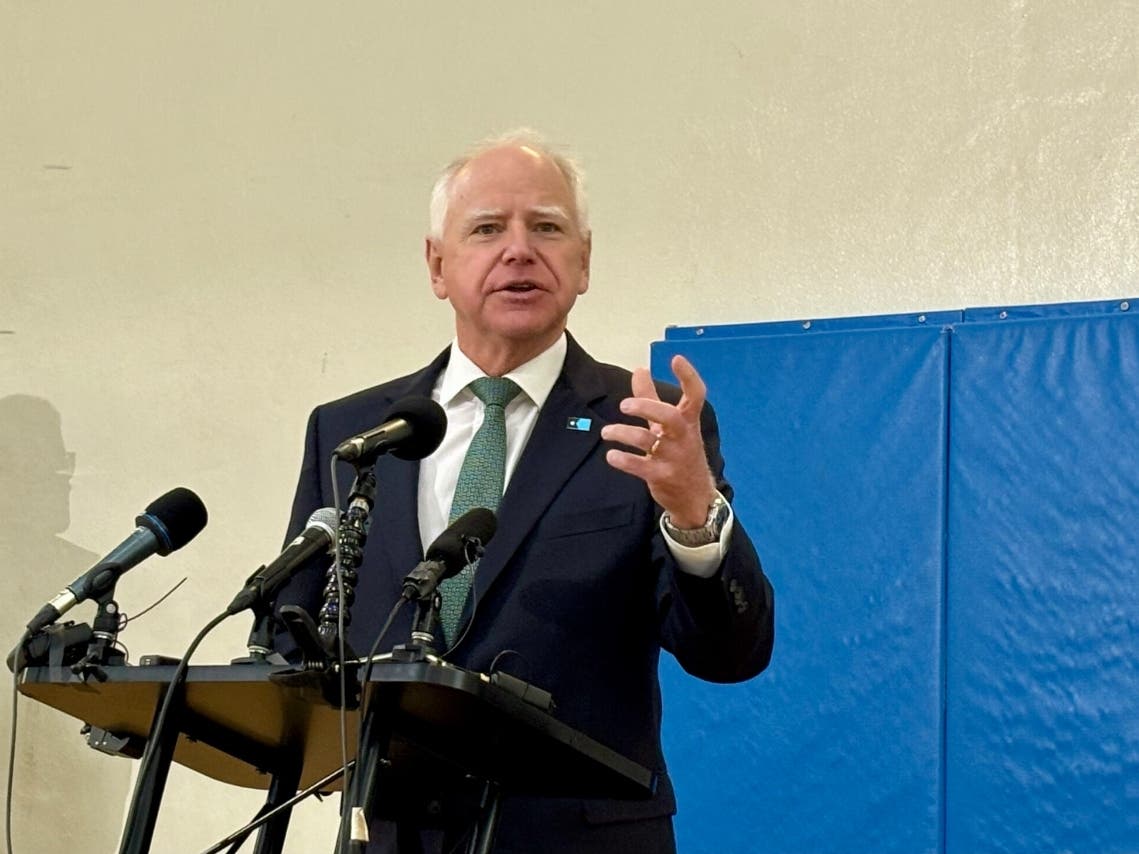
Gov. Tim Walz on Tuesday proposed changes to Minnesota’s budget, including taxing the wealthy, reducing spending on disability services and using the money for middle-class affordability measures.
Last year, Minnesota lawmakers passed a $66 billion two-year budget that took a step toward resolving a multi-billion-dollar budget deficit in 2028 and 2029. Lawmakers in even years like this one often pass a supplemental budget, which is an adjustment to the two-year budget they’re required to pass in odd years.
Find out what's happening in Across Minnesotafor free with the latest updates from Patch.
The Minnesota Legislature is narrowly divided, with Democrats and Republicans deadlocked in the House, so Walz will need to garner bipartisan support to pass any of his ideas.
The governor said he aims to help cut costs for middle-class families and ensure that wealthy people and companies “pay their fair share.”
Find out what's happening in Across Minnesotafor free with the latest updates from Patch.
“We’re putting out a budget … that first and foremost is fiscally responsible but invests in the things that builds Minnesota’s economy and makes life more affordable for Minnesotans,” Walz said at a press conference at St. Paul Eastside YMCA.
Several of Walz’s proposed budget changes are similar or identical to previous proposals that failed to make it across the finish line in the split Legislature.
Walz’s proposed social media tax — similar to the Democrats’ bill that failed to garner bipartisan support last year – would establish a tax on social media businesses with more than 100,000 monthly consumers. The revenue would go into a dedicated account to support “workforce development initiatives targeted at workers who experience job loss due to artificial intelligence,” according to Minnesota Management and Budget.
It would generate nearly $200 million in revenue in fiscal years 2028 and 2029. Republicans have staunchly opposed tax increases, so its passage is unlikely.
“Minnesotans are overtaxed and the cost of everyday life is too high,” said House Floor Leader Harry Niska, R-Ramsey, in a statement. “Now, the governor is proposing even higher taxes while cutting core services like nursing home funding. It’s time to focus on stopping fraud and making Minnesota more affordable instead of raising taxes.”
The governor, who is in his final year in office, is also asking lawmakers to expand the Child and Dependent Care Credit to allow more families to qualify and increase the amount people can receive from it.
The governor is again seeking to rework the state’s sales tax. Walz is proposing lowering the state sales tax rate by .075% — saving Minnesotans 75 cents for every $1,000 they spend on taxable goods. Walz’s plan would also tax professional services that are currently exempt from sales tax, including legal, banking, brokerage and accounting services.
Walz is also hoping to slow the projected growth in services for people with disabilities and the elderly, which is the largest driver of state spending increases over the next few years.
“We’re talking about trying to resize and make sure that these programs are as efficient as they can possibly be. We’re not asking for major changes to this,” Walz said.
To help people and businesses impacted by Operation Metro Surge, the governor is proposing partially forgivable loans for small businesses and additional rental assistance through the Family Homelessness Prevention and Assistance Program.
Republicans have voted down efforts to reform state law or provide aid in the wake of the surge of 3,000 federal immigration agents here earlier this year.
Minnesota is an “opt in” state when it comes to conforming the state tax code to changes at the federal level. That means the Legislature has to adopt changes to make Minnesota’s tax code consistent with the federal code, especially following the passage of President Trump’s One Big Beautiful Bill Act.
Walz proposed conforming to some of the minor federal tax changes made in the One Big Beautiful Bill Act, which would save Minnesotans around $268 million in 2028 and 2029. Walz is not suggesting opting into some of the more well-known proposals in the federal law, like tax-free tips and overtime.
Senate Minority Leader Mark Johnson, R-East Grand Forks, said Walz’s budget is dredging up past issues that received no support.
“These have failed in the past. They don’t have Republican support, and quite frankly, I don’t think he has the full support of the Democrats either,” Johnson said.
The Minnesota Reformer is an independent, nonprofit news organization dedicated to keeping Minnesotans informed and unearthing stories other outlets can’t or won’t tell..