Community Corner
Eagan PD Citizen's Academy: Drugs, DUI Presentation
Academy students learned about many different drugs, were told what cops look for in DUI suspects

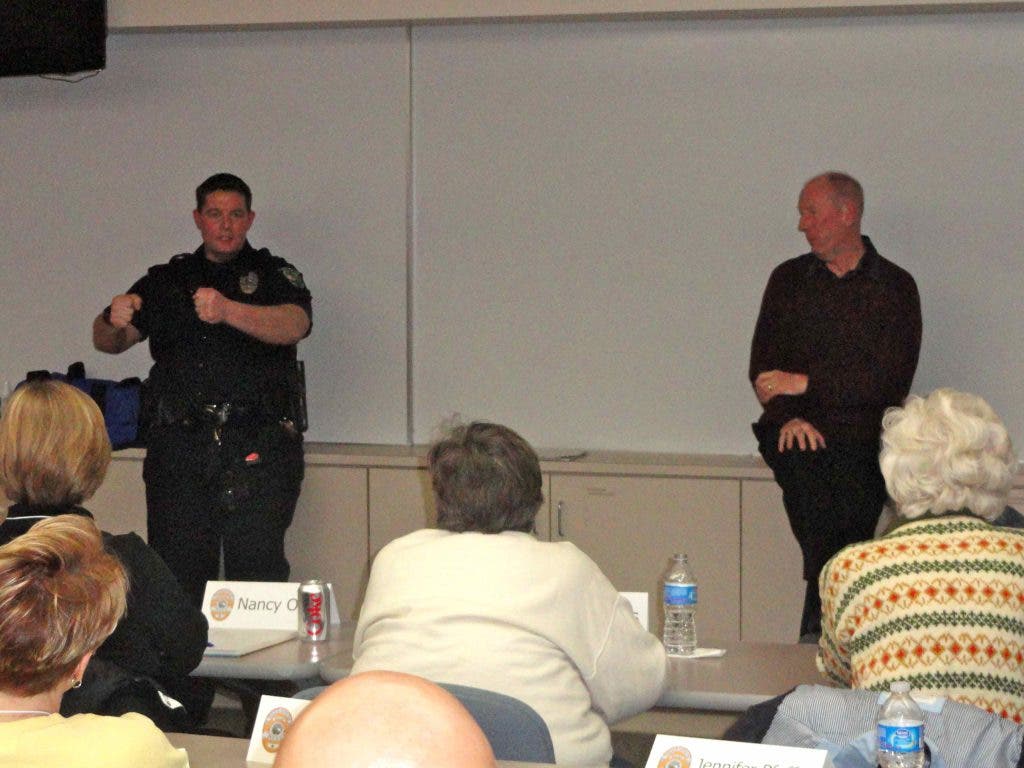

Editor's Note: In this weekly column, I am going to write about what I've learned each week at the academy. Some of the topics that will be covered in this column and at the Citizen's Academy is identity theft, homicide investigation, self defense, and there will also be ridealongs with officers, a taser demo and an opportunity to participate in a service weapons shoot. The Citizen's Academy is held every Thursday at the Eagan Police Department from 6:30-9:30 p.m.
Drugs and alcohol were the topic of discussion this week.
Drugs
Find out what's happening in Eaganfor free with the latest updates from Patch.
Sgt. Andy Speakman talked about the Dakota County Drug Task Force (which is made up of a team of officers each from a different city's police department in Dakota County).
Speakman shared with the class information about different drugs, how police are able to find drug 'homes' or dealers, how often they receive tips, and before-and-after pictures drug users.
Find out what's happening in Eaganfor free with the latest updates from Patch.
He said that often times police will receive tips from users or small-time dealers that break a case.
Not all want to go to prison; we get them to work with us, Speakman said.
He shared with the class several cases in the area from the past five years or so. Speakman also provided information on various drugs.
Brick-weed (which literally comes in a brick shape) has about 7-10 percent THC (which is what gets a person high). This weed is very common.
High-grade marijuana or "BC Bud" has 30 percent THC, is more expensive and comes from British Columbia. He said it is harder to obtain now because borders tightened up after 9/11. This has resulted in more people trying to grow the high-grade marijuana out of homes.
Heroin, a derivative of morphine, is rather expensive. Speakman said it costs anywhere from $30,000-$40,000 for a pound, and a majority of it comes from Afghanistan. The drugs will get mailed, people put fake names on it and often times use a foreclosed address for shipping purposes. Drug dealers will have someone stake out the foreclosed house, or they will do it themselves, and wait for the Fed-Ex or UPS delivery person to drop off the package.
Ectasy is a manufactured drug that comes from Europe or Canada. Often times it is brought in by Vietnamese organized crime.
Cocaine is still coming from only South America, and most of it comes up from Mexico or Florida, according to Speakman.
However, methamphetamine or meth, is still the #1 drug of choice here, especially in this area, Speakman said.
- 1 out of 8 offenders in Minnesota state prisons are there for possession, sale or manufacturing of meth
- Six meth labs were discovered by police in Dakota County in 2006 (three in homes, three in cars.)
- Out-of-home placements of children due to meth has increased by 69 percent in the State of Minnesota.
- The cost of meth from Arizona to Minnesota for a pound runs about $18,000 to $30,000.
Marijuana and meth are Dakota County's biggest drug probems, Speakman said. He also noted that another issue in the county is teens and young adults abusing prescription pills.
"Kids are abusing others kids' pills," Speakman said.
Concerning drugs in general, Speakman gave his opinion, "Drugs are not going away. It's a billion, billion dollar business for those guys."
Alcohol
Patrol Officer Pat Hogan explained to the class the various patrolling shifts for officers and typical calls during those shifts. Hogan is part of the "dog watch" shift, which runs from 8 p.m. until 6 a.m. He said he wouldn't have it any other way.
Calls that use two officers include domestic situations, assaults, in-progress types of calls, occasionally traffic stops, certain medical situations and calls where weapons are involved.
Hogan sees a lot of drunk drivers during his shift. When he pulls over a car, he said he's always looking and listening.
Tests for a DUI:
- Recite the alphabet starting with D through W
- Officer tells suspect to follow their finger with suspect's eyes (they are looking for jerking of the eye)
- The "nine step walk and turn"
- Backwards number count
- Asks where they've been, where they're going, what they are up to that evening...(According to Patrol Officer Steve Lounsbury, often times police will get a whole lot more information from people if they've been drinking.)
- PBT - blow into the breathlyzer, which is not submissible in court.
Once someone has been pulled over for drunk driving, it can take one to three hours of an officer's time, depending on how much the person is willing to cooperate with police. Also, there are several different forms the officer must fill out depending on each case.
Eagan police will obtain either a blood or urine test, which is sent to the BCA. It takes four to five weeks to get the results of those tests back. Hogan said most DWI cases have individuals who were at a .16 blood alcohol level.
DUI Presentation
Citizen's Academy students got to watch Hogan and Lounsbury try out the various DUI tests on volunteers. Four individuals arrived at the station at 6 p.m. last Thursday and drank hard liquor (drinks of choice were vodka Redbulls, vodka and Sierra Mist, Cognac, among others). The volunteers drank (and snacked) for about two and a half hours. Then, they were brought in for some drunk driving tests.
It was quite interesting to watch. One woman, whom I didn't think appeared very intoxicated and could hold a decent conversation, failed her tests miserably. We were later informed she was at a .17.
Another woman, who weighed about 100 pounds, had drank seven drinks and blew a .08. She would've still been taken into the station, Hogan said.
A shorter man was very talkative and swayed a lot. He wanted to "run the academy class," was funny and liked to interject a lot. He had nine drinks and his alcohol content was .15.
Lastly, another man had 14 drinks and seemed to be the life of the party. He was very friendly. He failed all his tests; his blood alchol level was at .12.
It was interesting to me to have Hogan explain what the average drunk driver behavior is (for example, a drunk driver suspect, while reciting the alphabet from D-W, will often not stop at W and continue on). All the items us students were told to look for with the volunteers we were able to see (stumbling, slurring, eyes jerking, not listening.) Good job, volunteers!
Homicide investigations and a taser demo will be next week's discussion. Stay tuned...
Get more local news delivered straight to your inbox. Sign up for free Patch newsletters and alerts.