Traffic & Transit
Frey Vetoes Robotaxi Rules; Council Members Push Override To Protect Uber, Lyft Jobs
A new report puts a price tag on what Minnesota could lose if driverless cars replace rideshare drivers.


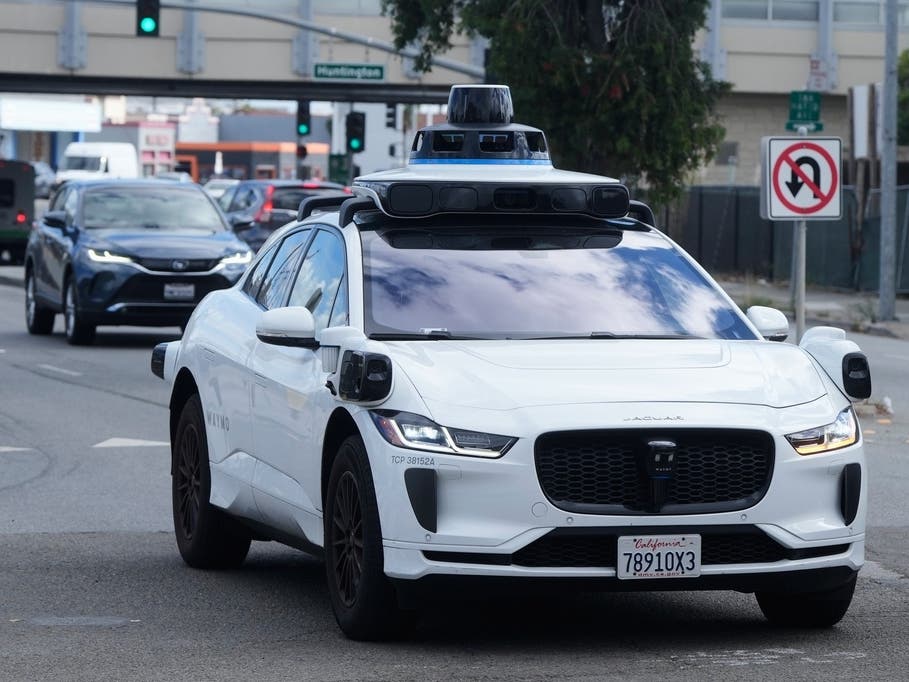
MINNEAPOLIS, MN — Four Minneapolis City Council members are urging their colleagues to override Mayor Jacob Frey's veto of a measure that would require a human behind the wheel of robotaxis, arguing driverless vehicles threaten the livelihoods of thousands of drivers, many of them immigrants.
Council Members Robin Wonsley, Jason Chavez and Aurin Chowdhury and Council Vice President Jamal Osman, the co-authors of the ordinance known as Workers Drive Minneapolis, issued a joint statement Friday responding to the veto.
"Workers Drive Minneapolis is a commonsense basic regulation to put public safety and workers' rights ahead of Big Tech's profit motives," the council members said.
Find out what's happening in Minneapolisfor free with the latest updates from Patch.
They said the veto leaves Minneapolis residents and workers with "no protections from AI robotaxis owned by Tesla, Amazon and Google."
"Drivers are our neighbors. They pay rent here, raise families here, and contribute to our communities every day," the statement said. "We are asking our City Council colleagues to stand with them and override this veto."
Find out what's happening in Minneapolisfor free with the latest updates from Patch.
The co-authors said Frey has not offered a meaningful way to prevent workforce displacement, and warned that roughly 10,000 drivers could see their work shrink, with transit and trucking jobs potentially disrupted next.
"Local government isn't powerless to stop automation that harms our communities, it's simply a question of political will," they said.
Frey Calls It A 'Backdoor Ban'
The ordinance would require autonomous rideshare companies to get a city license and keep a human safety monitor with a driver's license in the vehicle, with immediate access to the steering, brakes and accelerator, according to FOX 9.
The monitor would be paid at least minimum wage.
The council approved the measure 7-6 on Oct. 1, with Council Members Elliott Payne, Wonsley, Osman, Soren Stevenson, Chavez, Aisha Chughtai and Chowdhury voting in favor. Frey vetoed it the next day.
In an interview with the station, Frey said requiring a person in a driverless car makes no sense and would effectively ban the technology. He said Minneapolis should instead embrace autonomous vehicles while regulating them to make sure they are safe and work well in the city.
Responding to criticism that the veto is anti-worker, Frey compared driverless cars to earlier shifts in technology, noting that elevator operators no longer exist.
He said he expects traditional rideshare to remain for decades, and pointed out that he authored the ordinance that legalized rideshare in Minneapolis, which drew similar pushback at the time.
In his veto letter, Frey wrote that local governments should have a role in regulating autonomous rideshare, but said the ordinance ignores operational issues such as curb management, emergency response, traffic enforcement, liability, insurance and data privacy.
He also argued a human monitor would wipe out the benefits for riders who prefer driverless vehicles, pointing to testimony from disabled riders who said rideshare drivers had canceled trips over service animals or wheelchairs, concerns about assaults and other crimes involving drivers and passengers, and parents who want a safe way to send their children to school and activities.
Frey closed the letter by calling the ordinance "a backdoor ban that belies our progressive tradition in Minneapolis."
Override supporters face an uphill climb. It takes nine votes to override a mayoral veto, meaning the co-authors would need to win over two more council members, MPR News reported.
If enacted, the ordinance would not take effect until October 2027. A Frey spokesperson has also said the measure could invite the state to step in and preempt the city, and the mayor has pushed for the state to take the lead on regulating autonomous vehicles.
Report Puts A Number On What's At Stake
The override push comes as a new report from North Star Policy Action estimates that Minnesota's roughly 12,000 rideshare drivers support $561 million in economic activity statewide each year.
According to the report, released Wednesday, the state's rideshare drivers earn at least $209 million in wages annually and spend another $211 million on job-related costs such as gas, vehicle maintenance and insurance.
Their work also sustains about 2,500 additional jobs across the state and produces $116 million in tax revenue each year, including $43 million for Minnesota state and local governments, the report found.
The report says 61 percent of Minnesota's rideshare drivers are immigrants, and drivers are more than two and a half times as likely as the average Minnesota worker to live in a household below 200 percent of the federal poverty line. Many rely on driving as their main source of income.
If driverless fleets replace those drivers, the group argues, much of that money could flow to the out-of-state technology companies that own the vehicles instead of circulating through Minnesota businesses.
"When a Minnesota driver gets paid, that money goes right back into our communities, to a landlord, a grocery store, a mechanic down the street," said Aaron Rosenthal, research director of North Star Policy Action. "Driverless fleets would break that cycle and hand hundreds of millions of dollars a year to a few tech billionaires in Silicon Valley."
Get more local news delivered straight to your inbox. Sign up for free Patch newsletters and alerts.