Politics & Government
NH Senators Support Failed War Powers Resolution On Iran Strikes
Sens. Maggie Hassan and Jeanne Shaheen supported the failed attempt to pass a War Powers resolution.

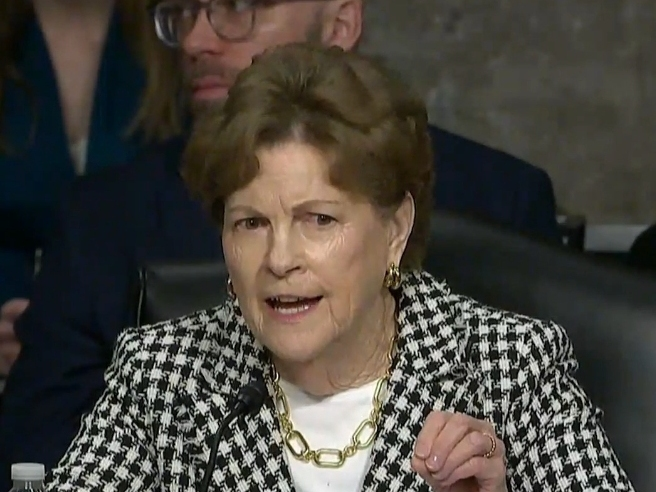
As news broke that members of New Hampshire’s National Guard are supporting America’s military mission against the Islamist regime in Iran, the state’s two U.S. senators were voting to bring it to an end.
Sens. Maggie Hassan and Jeanne Shaheen supported the failed attempt to pass a War Powers resolution and prevent the Trump administration from continuing its military onslaught against the terror-sponsoring government in Tehran.
Find out what's happening in Across New Hampshirefor free with the latest updates from Patch.
The vote failed 47-53, with Democrat John Fetterman (D-Pa.) and Republican Rand Paul (R-Ky.) each crossing the aisle to vote against the rest of their own party.
“No one mourns the death of the Ayatollah, who is responsible for the deaths of Americans and thousands of his own people,” said Shaheen, the ranking member of the Senate Foreign Relations Committee.
Find out what's happening in Across New Hampshirefor free with the latest updates from Patch.
“But the American people have real and unanswered questions about what our objectives are, what the president’s strategy is to achieve them, and whether this attack was driven by America’s national security interest or that of another country. After repeated briefings with the administration, I continue to have these questions.
“This is why today I voted to reassert Congress’s constitutional authority to declare war.”
And if Democrats in Congress prevailed, they would use that authority to end military action against Iran and its nuclear program.
That’s unacceptable, said Maine Republican Sen. Susan Collins, facing an uphill battle for reelection in November.
“We cannot tolerate a nuclear-armed Iran. The Iranian regime’s pursuit of nuclear capabilities, ballistic missile development, and support for terrorist proxies pose serious and longstanding threats to the national security of the United States and our allies,” Collins said.
“Passing this resolution now would send the wrong message to Iran and to our troops. At this juncture, providing unequivocal support to our service members is critically important, as is ongoing consultation by the administration with Congress.”
While she says today that “it’s good the Ayatollah is gone,” Shaheen has a long record of supporting appeasement of the Islamist regime. She supported the so-called “Iran Deal” policy of the Obama administration, which included sanctions relief that allowed billions of dollars to flow to the regime. At the time, the Iranian government was funding terrorist groups like Hamas and Hezbollah.
The Obama policy backed by Shaheen also resulted in the U.S. sending $1.7 billion in cash, stacked on pallets, to the Iranian government.
While its failure in the Senate makes the effort moot, the House is scheduled to take up the War Powers Act on Thursday. And both New Hampshire House members are expected to support it.
“President Trump should have consulted lawmakers before launching attacks on Iran this past weekend,” said Rep. Chris Pappas on Monday. He emphasized that the U.S. should not commit troops to another “costly and deadly war with no clear endgame.”
Pappas is running for the U.S. Senate seat being vacated by the retiring Shaheen.
Maggie Goodlander, a member of the House Armed Services Committee and a former naval intelligence officer, has been perhaps the most vocal critic in the Granite State delegation. She described the strikes as a “war of choice” that was “unilaterally launched” by the president.
Goodlander has called on Speaker Mike Johnson to bring the House back into session immediately to vote on the resolution, arguing that giving the president a “blank check to wage war” is unacceptable.
Interestingly, none of the members of the state’s federal delegation demanded a War Powers Act resolution when President Joe Biden bombed the Houthis for months in 2023 and 2024.
And when President Barack Obama spent seven months bombing Libya as part of a regime change that ousted then-leader Muammar Gaddafi, Shaheen never demanded he come to Congress for permission.
Instead, Shaheen was a prominent supporter of the Libya intervention. During a Senate Foreign Relations Committee hearing, she stated: “I remain a strong supporter of the president’s decision to take military action in Libya… The multilateral nature of our involvement has been, and will remain, vitally important.”
Shaheen did not join the calls to invoke the War Powers Act at the time, arguing instead that the U.S. should not withdraw its “unique offensive capabilities” until the political goal of Gaddafi’s departure was achieved.
This story was originally published by the NH Journal, an online news publication dedicated to providing fair, unbiased reporting on, and analysis of, political news of interest to New Hampshire. For more stories from the NH Journal, visit NHJournal.com.