Politics & Government
Special Education Issues Raised On Education Freedom Account Program
This school year, 890 of the 10,510 students in the program received state differential aid of $2,145 per student or nearly $2 million.

CONCORD, NH — The services special education and disabled students receive in the Education Freedom Account program are not necessarily linked to those student’s needs.
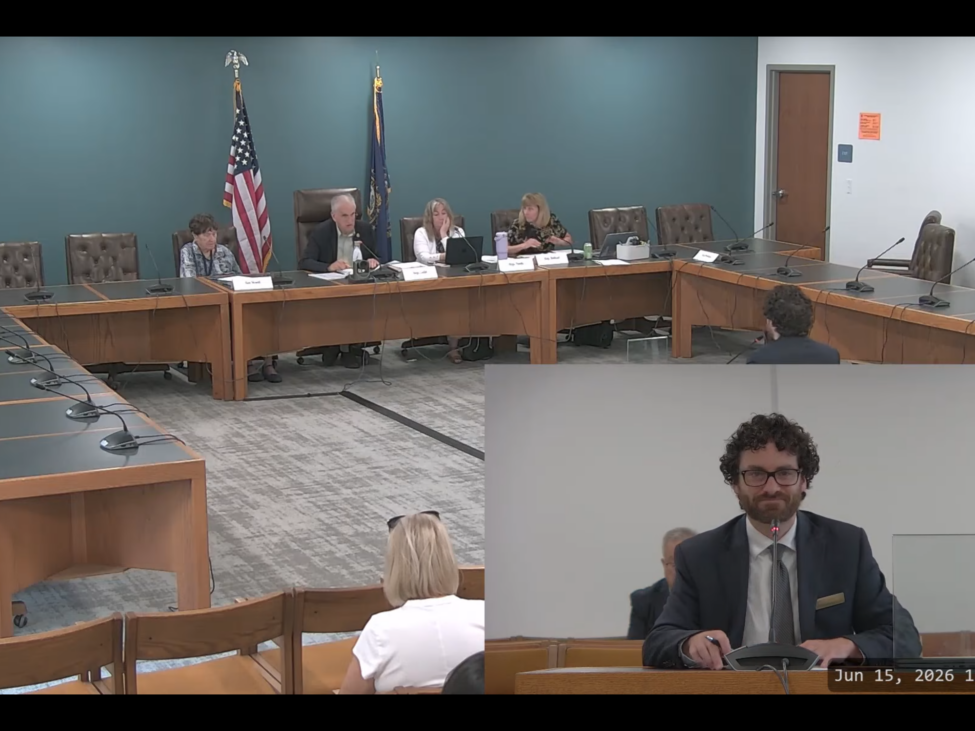
“We do not audit that on a case by case basis,” Matt Southerton, Director of Policy and Compliance for the Children’s Scholarship Fund NH, which administers the program for the state, told the Education Freedom Account Oversight Committee Monday.
Find out what's happening in Across New Hampshirefor free with the latest updates from Patch.
This school year, 890 of the 10,510 students in the program received state differential aid of $2,145 per student or nearly $2 million because they qualified for special education or disability services on top of the state adequacy aid grant of $4,625 each EFA student receives.
Committee chair Rep. Rick Ladd, R-Haverhill, had concerns both about the qualification process to receive additional state aid and whether the administrators tracked the students to see if they improve as they do with Individualized Education Plans in public schools.
Find out what's happening in Across New Hampshirefor free with the latest updates from Patch.
He noted they are evaluated every year and every three years there is a formal reevaluation done for each student.
Southerton said in the EFA program parents are given unrestricted funds. He said they identify the student, make sure the service providers are compliant and verify that the funds were spent on allowable services.
“We do not investigate on a case by case basis whether the actual service ties back to the student’s disability,” he said. “We are not in a position to determine whether or not it aligns with the requirements of an IEP.”
Special education students who leave public schools to join the EFA program waive all their rights to special education services required by federal and state law.
To qualify for the additional funds under the EFA program a student can have a formal evaluation through their school district or any medical provider in any state in the country can certify a student has a disability.
Ladd said every state certifies physicians differently and there is no requirement that a specialist certify the disability.
“This gives me a heartache,” he said. Somewhere in this country someone is making a decision that a person here in New Hampshire has an eligible disability, Ladd said.
There are 13 categories for disabilities in administrative rules, he noted, and asked if the services the students receive are performed by medical professionals with the proper background noting physical therapy has to be performed by a person with a PhD.
“The IEP is matched to the student’s goals and a contract document is signed with a service provider,” Ladd said.
He said he is concerned that there is no statute on disabilities, they currently only exist in rules.
Mark Manganiello, Finance Bureau Administrator for the Department of Education, said there is a set process that has been done in public schools to qualify for special education services, while there is another pathway in the EFA program.
There is a spectrum that may need further study or a gradation of services, reviews and oversight, Manganiello said.
The problem the state Board of Education ran into is to require school districts to go through the formal process when that student is not going to attend public schools, he said.
Rep. Peggy Balboni, D-Rye, said there is an alternative process of having an independent evaluation but that is not the criteria here.
This is a step up from just a disability because often in public schools, students with disabilities may not receive special education services, she said.
“There is no money associated with it,” she said. “There has to be a way to tighten this up a little bit,” especially with the growth in special education costs.
Ladd said there is a real issue here in terms of what kind of services students receive, not just in the EFA program but the state sends money to school districts for special education and the district has to provide services it chooses.
Ladd asked Southerton how the CSF determines who goes forward from year to year.
Southerton said the students have to be certified for a disability every year and submit the medical data.
“Here we are accepting learning disability conditions without any kind of formality that the disability is being treated,” Balboni said. “The parents waive all rights for special education, but they still get all the funding.”
Ladd asked Southerton to provide the committee with the number of students in each of the 13 categories of disabilities in the EFA program.
The committee also discussed the assessment options parents have for the students in the EFA program to show advancement to the next grade, which are the statewide assessment tests, known national tests such as the California achievement test, or having a certified teacher review a portfolio.
Southerton said only 10 students in the last school year out of 5,765 took the state assessment tests.
He said 2,793 students submitted portfolios, and 2,359 took 17 different national tests with the California Achievement Test the most popular with 1,127 using that method.
Another issue discussed was the percentage of money the CSF retains for administration, which is 10 percent of the grants to parents.
Southerton said last year the cost was just under 8 percent, and the organization sends money back to parents at the end of the school year if administrative costs are less than 10 percent.
Concerns were also raised about recent attempts to make career and technical school programs available to EFA students.
Southerton said the courses have always been available to EFA students but they were being billed $10,000 to $11,000 per student which makes it infeasible so several bills were passed this year to try to make it more affordable and give them equal footing to those students in sending schools.
Ladd noted the situation is very complicated as entry into the career and technical schools are very competitive and often require students to go for several years making it difficult for others to attend.
But others said the arrangements vary from district to district with some charging EFA students and others not charging them.
Ladd said they will revisit the issue but some legislation is likely needed.
The oversight committee will meet again after the summer break during July and August.
Garry Rayno may be reached at garry.rayno@yahoo.com.
This article first appeared on InDepthNH.org and is republished here under a Creative Commons license.