Health & Fitness
How To Wash Lettuce, Berries And Herbs To Reduce Cyclospora Risk
How to wash fruits and vegetables properly, what doesn't work against cyclospora and why even prewashed greens aren't risk-free.


Enough has been said about the severe symptoms of the widespread cyclospora outbreak for most people to know cyclosporiasis is a miserable illness to be avoided at all costs.
We’ve heard enough adjectives — “explosive,” “unrelenting” and others — used to describe the severe diarrheal illness that has sickened thousands of people, including hundreds who became so ill they had to be hospitalized, to know we need to be cautious.
But how can consumers know if this parasite — which is about one-tenth the width of a human hair — has wriggled into their lettuce, broccoli or raspberries and laid its eggs?
Find out what's happening in Across Americafor free with the latest updates from Patch.
Unless there’s been a product recall, they can’t.
Shredded lettuce linked to the current outbreak in nine states has been recalled, but cyclospora outbreaks are common every year during hot-weather months. Previous outbreaks have been tied to raspberries, basil, cilantro, snow peas and mesclun lettuce. The parasite gets onto produce through contact with human feces, often in contaminated water, soil, ice, equipment or during harvesting and packing.
Find out what's happening in Across Americafor free with the latest updates from Patch.
The only sure way to kill it is to cook produce to a temperature of at least 158 degrees Fahrenheit throughout, not merely warm or briefly wilt it.
Some practical options include sautéing spinach or kale, roasting broccoli and cauliflower, steaming green beans, cooking peppers and onions, or adding tomatoes, cabbage and herbs to soups, sauces or casseroles. The vegetable needs to reach 158 degrees throughout, not merely be warmed or briefly wilted.
But a piping-hot garden salad? No one’s ordering that off the menu.
For fruits and vegetables often eaten raw — lettuce, cilantro, basil, parsley, scallions, tomatoes, cucumbers, berries and other fruits — correctly washing produce is the best defense. The stubborn microscopic parasite sticks tightly to produce surfaces, and proper washing will lower the risk of cyclosporiasis but may not remove the parasite, according to federal health officials.
There’s a right and wrong way to wash produce, according to the Centers for Disease Control and Prevention, the Food and Drug Administration, and other health experts.
The Right Way
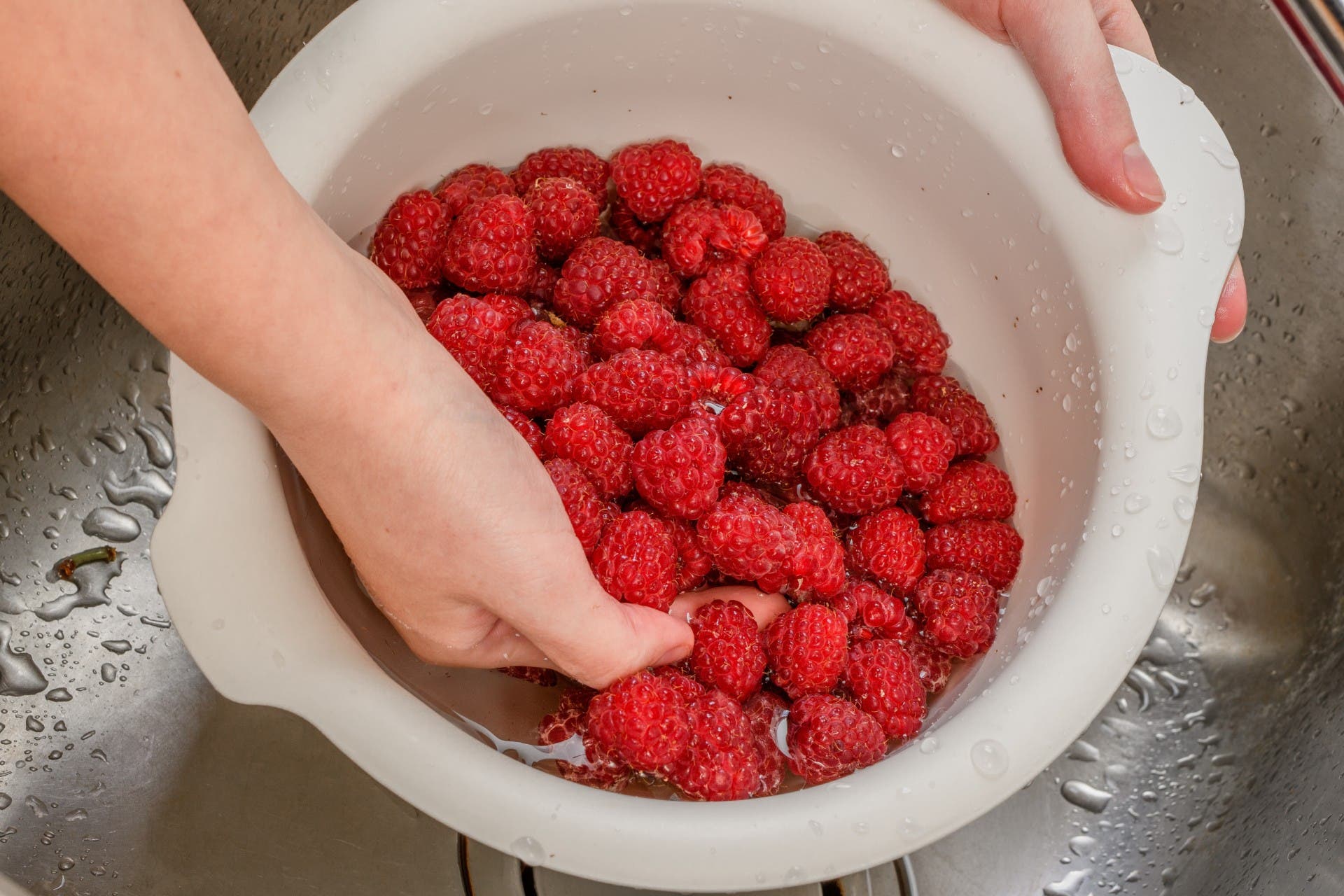
Unless the produce is visibly dirty, it is best to wait to wash it until you are ready to prepare or eat it. This will help promote quality and shelf life. Always wash produce before eating it raw; cutting, chopping, dicing or slicing it; cooking or preparing it; or preserving it.”
Start with clean hands and equipment. Wash your hands with soap and water for at least 20 seconds. Clean the sink, faucet, colander, cutting board, utensils and work surface before preparing produce. Keep fruits and vegetables away from raw meat, poultry and seafood.
Use cool, running drinking water. Hold produce under the faucet rather than simply soaking it in a bowl or sink. Running water carries loosened dirt and contaminants away; soaking can spread contamination from one item or leaf to another.
Lettuce and other leafy greens: Remove the outer leaves and discard bruised, torn or damaged portions. Separate the remaining leaves, rinse them under running water and gently rub their surfaces with clean hands. Dry them with a clean paper towel, clean cloth or salad spinner that has been washed before use.
Berries, herbs and delicate produce: Put them in a clean colander and gently rinse them under cool running water, turning the produce so the water reaches different surfaces. Avoid vigorous scrubbing, which can damage them, and wash them shortly before eating rather than before storage.
Melons, cucumbers, squash, potatoes and other firm produce: Scrub the outside under running water with a clean produce brush — even when the rind or peel will not be eaten. Otherwise, a knife or peeler can carry contamination from the surface into the edible portion. Clean and sanitize the brush after use.
Apples, tomatoes and similar produce: Rinse them under running water while rubbing the surface gently with your hands. Cut away bruised or damaged areas and discard anything rotten or slimy.
Wash before peeling or cutting. Even when the skin will be removed, rinse the produce first so a knife, peeler or your hands do not transfer contamination to the flesh.
Dry after washing. A clean paper towel or cloth can remove additional moisture and surface material. Refrigerate cut or peeled produce within two hours, or within one hour if it has been exposed to temperatures above 90 degrees.
The Wrong Way
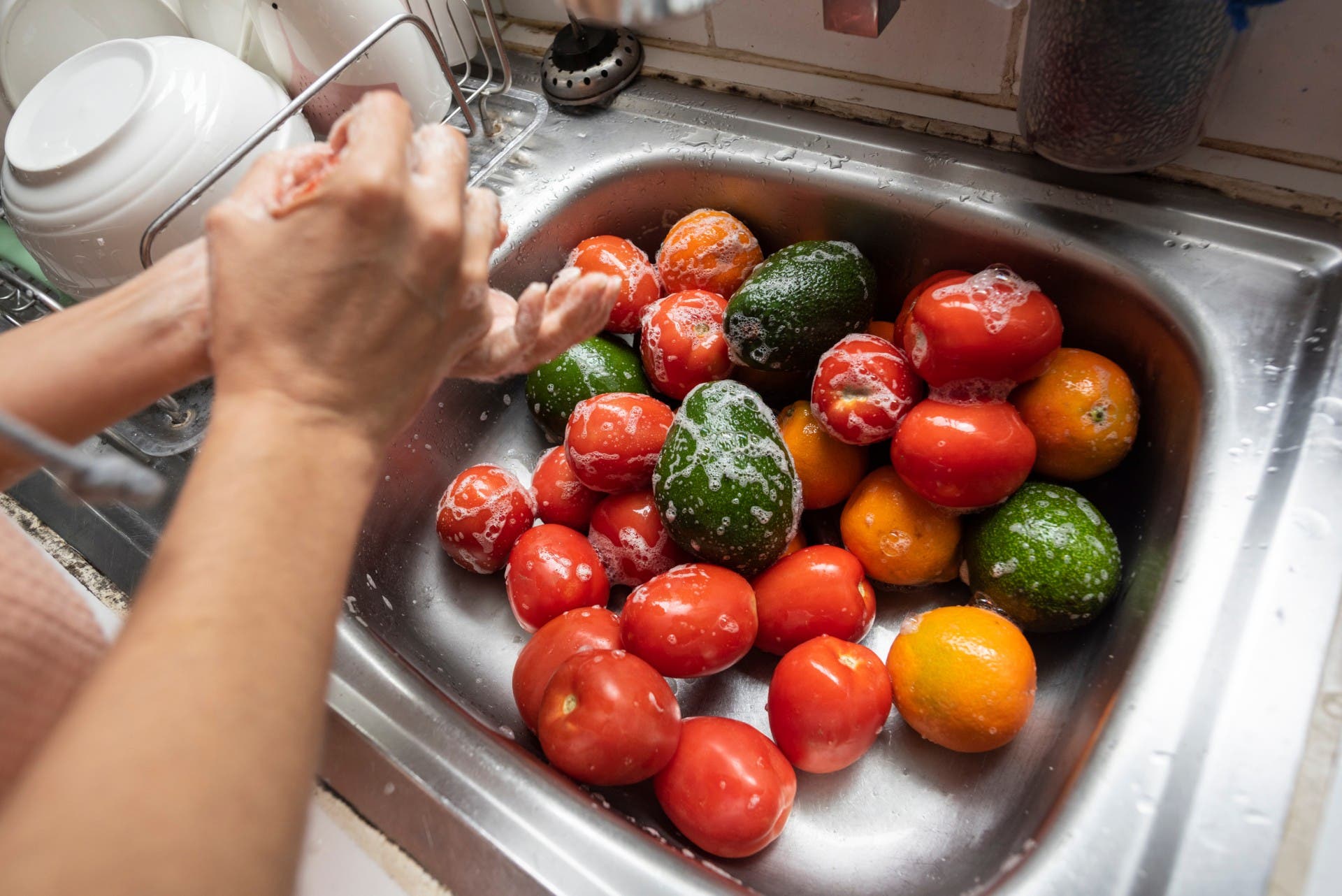
Cyclosporiasis is such a wretched illness that consumers are taking extra precautions when washing produce.
Some have taken extreme measures by mixing up potions with vinegar, lemon juice or baking soda, or they may use dish soap, bleach and other disinfectants.
That won’t help, and it may exacerbate food safety issues. Even commercial washes promoted as killing cyclospora haven’t been proven to eliminate cyclospora or outperform running water. Chlorine-based disinfection also may not kill the parasite.
Bagged lettuce and other vegetables labeled “triple washed” or “prewashed” and marketed as ready to eat should still be rinsed before eating.
That’s because prewashed and sterile aren’t synonymous, according to Lisa Cuchara, a professor of biomedical sciences at Quinnipiac University.
“The same things that make prewashed vegetables convenient and appealing also introduce risk,” Cuchara wrote for The Conversation. “That’s because each stage of production — harvest, cut, wash, conveyor belt and packaging — creates another opportunity for contamination.”
Bagged lettuce also may travel long distances, giving germs more time to multiply and making recalls more difficult. During commercial processing, a pathogen on one leaf can spread through wash water or equipment, leading to cross-contamination. Juices released from cut leaves also may help bacteria survive and grow.
But Wait …
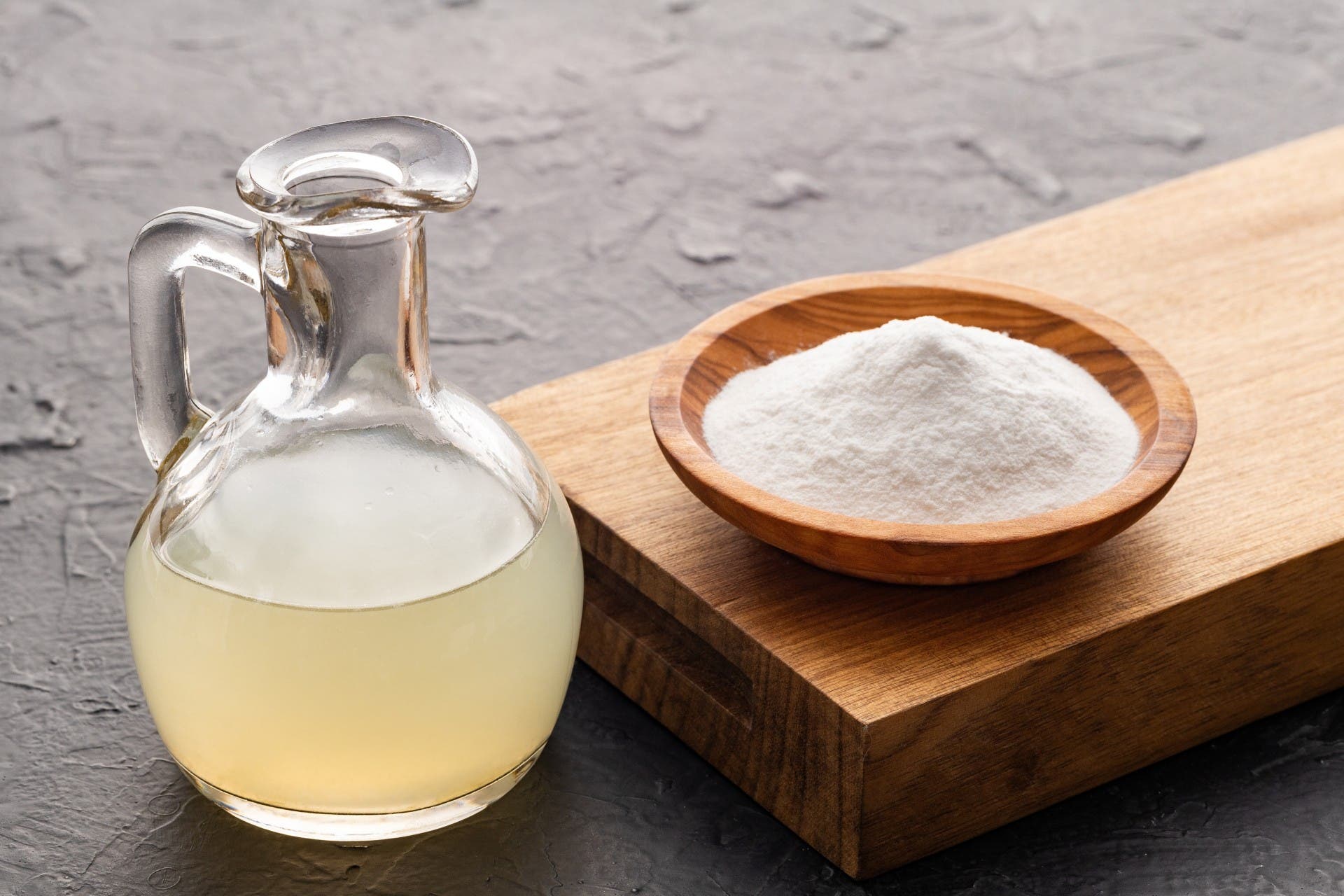
It won’t kill parasites, but soaking produce in a solution of water and baking soda or vinegar may help break down and remove surface pesticide residues more effectively than plain water, according to the Environmental Working Group.
Its scientific studies showed baking soda soaks reduce surface pesticide residues by a median of about 50 percent, and vinegar soaks achieve a median reduction of about 55 percent.
Baking soda’s alkaline properties help degrade certain stubborn pesticide molecules on the outer skin of fruits and vegetables, and both options boost water’s cleaning power without leaving toxic synthetic detergent residues from dish soap behind, according to the studies.
The Current Situation
Case numbers are likely to rise Tuesday when the CDC next updates its cyclosporiasis surveillance. Michigan health officials said this week that at least 10,000 people in the state have been sickened by the parasite since May, including about 190 who were hospitalized, making it the largest cyclosporiasis outbreak in the nation. Michigan usually has about
In its July 28 update, the CDC said 6,707 laboratory-confirmed cases of cyclosporiasis acquired in the United States had been reported since May 1, including 423 hospitalizations and no deaths.
Cases have been reported in 45 states. The agency is also reviewing more than 11,500 additional illnesses that have not been confirmed or still require investigation, many of them in Michigan and Ohio.
The totals include a nine-state outbreak linked to recalled iceberg lettuce, and the CDC expects the case count to rise because reports can lag about six weeks behind the start of an illness.
Related
Get more local news delivered straight to your inbox. Sign up for free Patch newsletters and alerts.