Politics & Government
Warmington To Democrats: I'm Bringing Back My Net Zero Energy Plan
Cinde Warmington, when speaking to supporters last month, promoted a "net zero" energy policy experts say will send energy costs soaring.

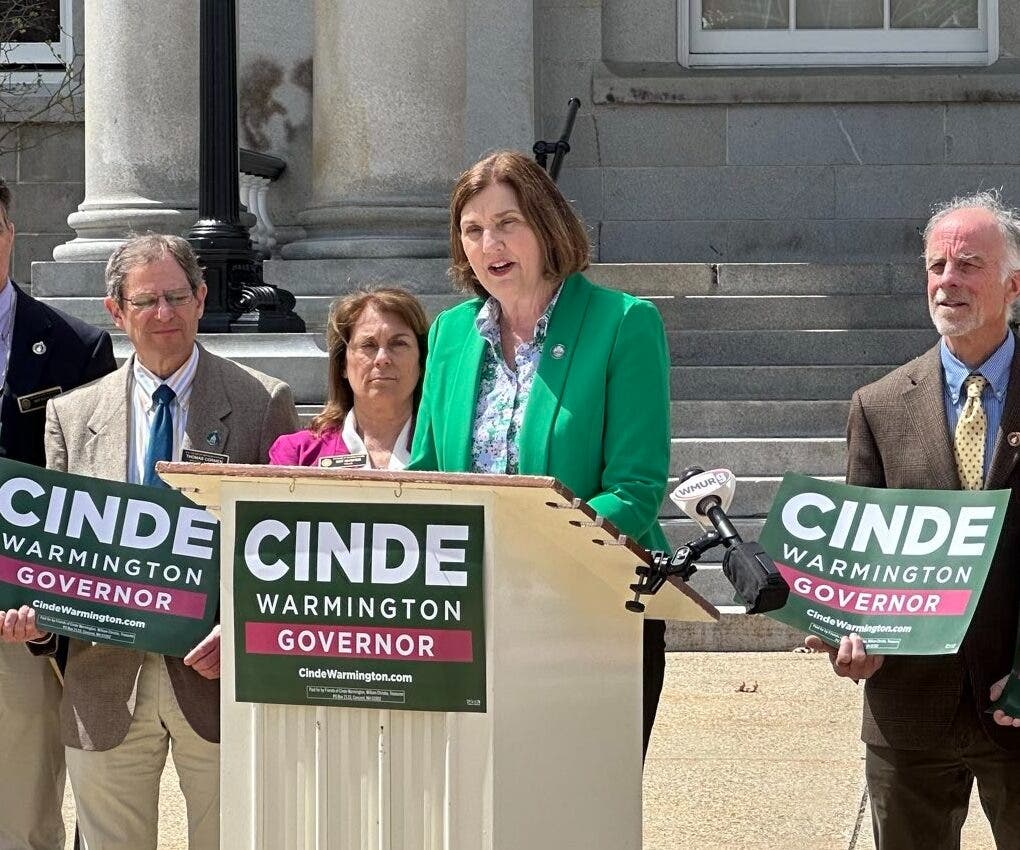
CONCORD, NH — Democrat Cinde Warmington is making affordability a centerpiece of her campaign for governor.
But in off-the-record meetings with supporters, she’s promoting a “net zero” energy policy that experts say will send energy costs soaring.
Find out what's happening in Across New Hampshirefor free with the latest updates from Patch.
In an audio recording obtained by NHJournal, Warmington, speaking to a group of Democrats in Pelham last month, was asked about her energy policy.
“We put out a whole green energy economy plan in my last election. We’re tweaking that now, updated, and we’ll be putting that out,” Warmington said. That plan was her “CLEAN Energy Economy Future,” which would “create standards that lead New Hampshire to net zero emissions by 2040,” according to a press release from Warmington’s 2024 campaign.
Find out what's happening in Across New Hampshirefor free with the latest updates from Patch.
“Net zero” can mean a power grid that emits zero carbon, or it can mean a ban on all carbon emissions, including gasoline-powered cars. Her 2024 plan also called for more taxpayer spending on electric-vehicle subsidies, more spending on “green” appliances like electric heat pumps, and more mandates requiring utility companies to buy green energy, even when it’s more expensive than natural gas.
Warmington declined to answer questions from NHJournal about her plan both during the 2024 campaign and again on Monday. Also missing: a price tag. What would going net zero and investing billions in renewables cost ratepayers or taxpayers?
Energy experts agree that New Hampshire, which already pays among the highest electricity rates in the country, would see rates soar if it shut down reliable power sources like natural gas and shifted to intermittent power sources like solar and wind.
Warmington has a different perspective.
“We need to be investing in renewable energy,” Warmington said in Pelham. “There are so many jobs related to solar energy, the manufacture of it, the installation of it, the maintenance of it, all of those jobs.
“It’s good for the environment, and I’ve got to tell you, the wind blows, and the sun shines, whether or not the Strait of Hormuz is closed.”
In fact, as state Rep. Michael Harrington (R-Strafford) pointed out to NHJournal, Warmington is getting the basics wrong. “The sun doesn’t shine at night, and the wind isn’t always blowing, either.”
Harrington, a member of the House Energy Committee who once served on the Public Utility Commission, frequently points out that renewables receive massive taxpayer subsidies to make them look less expensive. Warmington wants to increase taxpayer spending, including subsidies for electric vehicles and expanded public transportation.
Harrington says it’s time to stop forcing ratepayers to pay more in order to underwrite green energy policies. “After 20 years of ratepayer subsidies amounting to hundreds of millions of dollars, the mandated ratepayer subsidies need to end. New Hampshire needs to join other states like Arizona and end these subsidies for renewable generators.”
Warmington’s approach — limit fossil fuels and force consumers to subsidize green energy — was the Biden administration’s approach. Democrats, led by President Joe Biden, passed legislation spending about $400 billion on green energy subsidies.
The result was the manipulation of the market in unsustainable ways. A new survey of U.S. solar and wind developers found that when the Biden-era subsidies end, the cost of clean energy power purchase agreements (PPAs) is set to increase by 40% to 120%, according to the Financial Times. In Texas, ending subsidies could send PPA prices soaring from $55 per megawatt hour to $121, they report.
How realistic is Warmington’s approach? Consider what happened when temperatures soared over the Independence Day weekend here in New Hampshire. According to ISO New England, only 8% of the electricity on July 4 was generated by renewables — wind and solar. Meanwhile, natural gas provided 60% of the power, and nuclear another 20% or so.
Gov. Kelly Ayotte has been fighting utility companies’ efforts to raise rates, arguing they are raising costs for ratepayers more than necessary. On Monday, she joined other governors in the region calling for the return of more than $1.5 billion to ratepayers across New England, including $150 million to New Hampshire. She claims there has been more than a decade of transmission utilities overcharging consumers on their electric bills.
Ayotte is unimpressed by Warmington’s energy approach.
“Cinde Warmington wants to bring Massachusetts-style energy policies to New Hampshire — the same policies that have made electric bills in New England the highest in the country,” Ayotte spokesman John Corbett said. “While Gov. Ayotte is fighting to lower electric bills and bring more energy to our state, Warmington would rather ban combustion engines and sink taxpayer money into expensive energy mandates that make costs even higher.
“On top of that, Warmington won’t put a price tag on her disastrous net-zero plan because she knows Granite Staters won’t like the answer.”
This story was originally published by the NH Journal, an online news publication dedicated to providing fair, unbiased reporting on, and analysis of, political news of interest to New Hampshire. For more stories from the NH Journal, visit NHJournal.com.