Politics & Government
NFIB Endorses Ayotte As She Touts GOP Business Tax Cuts In Goffstown
Small business advocates, the National Federation of Independent Business's NH PAC, praised Gov. Kelly Ayotte for supporting tax cuts.

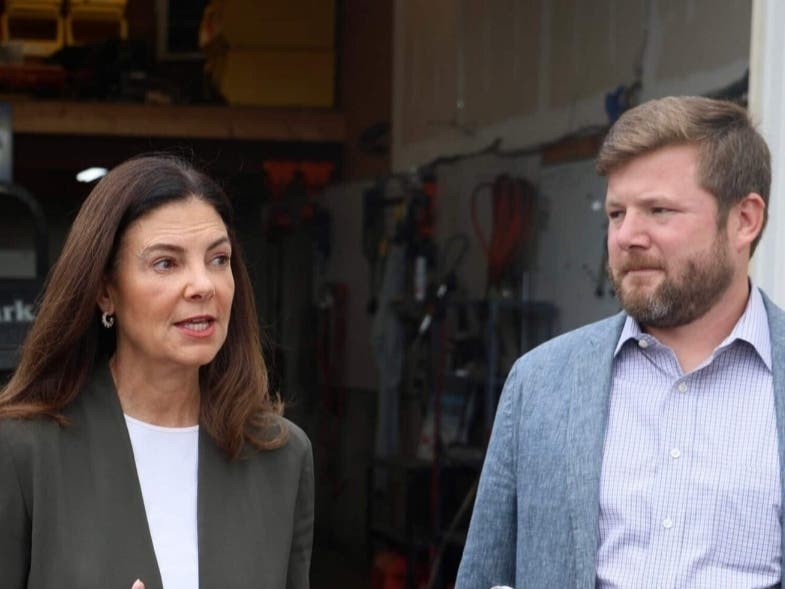
Gov. Kelly Ayotte picked up the endorsement of New Hampshire’s leading small-business advocacy group Thursday, defending Republican business tax cuts against Democratic criticism and pointing to rising state revenues on the GOP’s watch.
The National Federation of Independent Business’s New Hampshire political action committee announced its endorsement at Landscape Plus, a family-owned and operated landscaping business in Goffstown. NFIB represents more than 1,700 small businesses across the state.
Find out what's happening in Bedfordfor free with the latest updates from Patch.
“This is a really easy choice for small business owners in New Hampshire,” said John Reynolds, NFIB’s state director, citing Ayotte’s support for tax relief, workforce development, affordable health insurance and reliable energy.
Ayotte, who faces Democrat Cinde Warmington in November, emphasized her own experience helping her husband start and operate a landscaping and snow removal business as she toured the Goffstown landscaper’s business.
Find out what's happening in Bedfordfor free with the latest updates from Patch.
“I remember the nights shoveling snow and then going to my work at the attorney general’s office. I remember the dinner table discussions about workforce,” she said.
“Our economy is only strong because of our small businesses. They are the heart of our economy, and as governor, I will always have their backs. I have walked a mile in their shoes with my husband.”
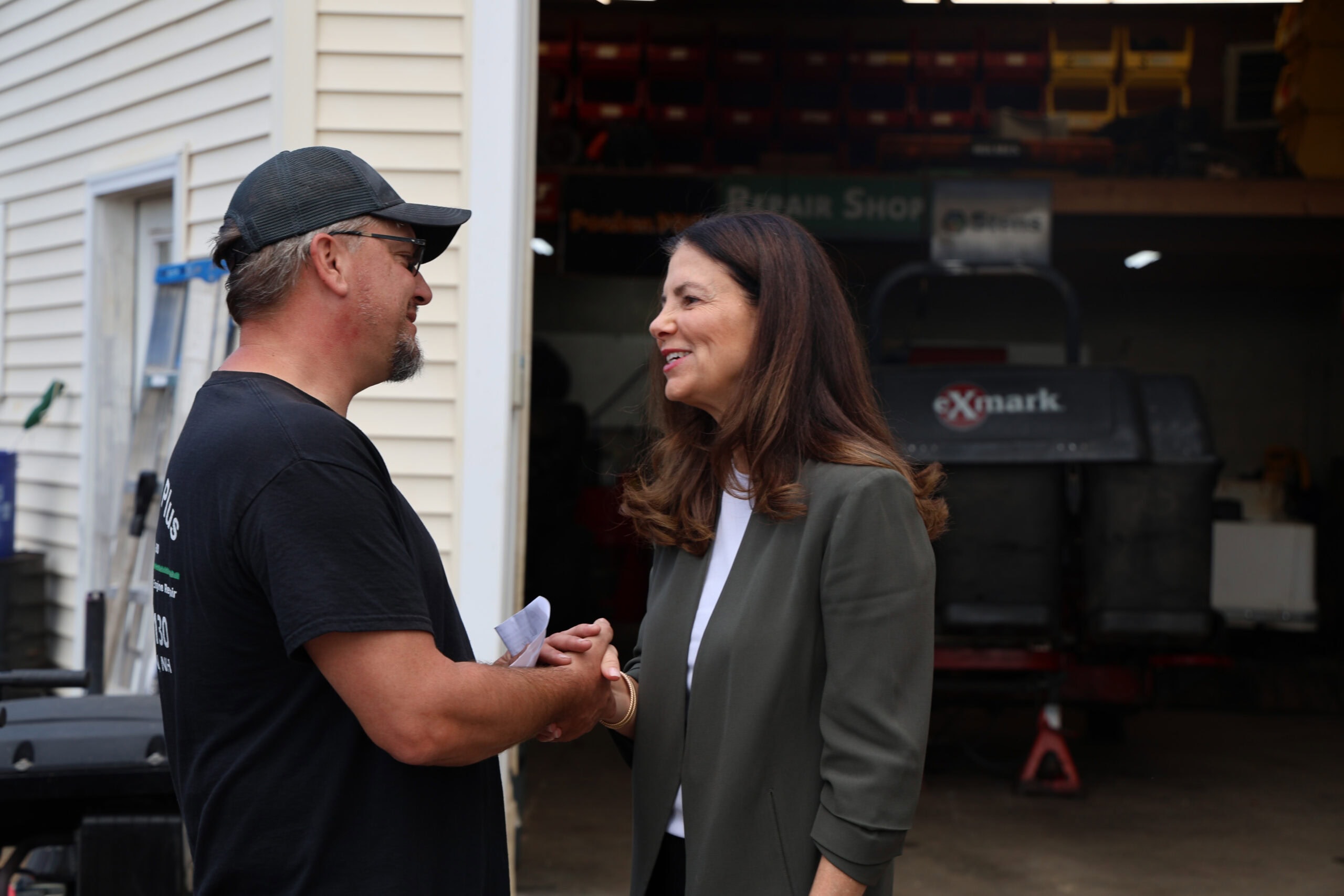 Gov. Kelly Ayotte and David Vermokowitz, owner of Landscape Plus.(Courtesy)
On policy, Ayotte argued that Republican cuts to business taxes have allowed businesses like Landscape Plus to invest in their employees and equipment.
Asked about Democrats’ argument that business tax cuts have cost the state roughly $1 billion in lost revenue and contributed to higher local property taxes, Ayotte pointed to the business tax revenue numbers.
“If you look at the revenue that has come in, it has actually spurred more revenue for the state, and it gives relief to people like Dave and small business owners because they put that money back into the economy,” Ayotte said.
The endorsement comes days after New Hampshire reported record September business tax collections of $269.8 million, exceeding the monthly revenue plan by $69.4 million, or 34.6%. Collections were $94.7 million higher than a year earlier.
Overall, the state finished the first quarter of its fiscal year nearly $75 million ahead of projections for its General and Education funds.
“We have overperformed in our business taxes. Why? We’re competitive. We try to keep them low,” Ayotte said Thursday. “The more we can lower taxes on our small businesses and let them use their capital to grow their business and to succeed, the better off our economy is going to be.”
Democrats have repeatedly criticized the GOP’s tax policy. In June, House Minority Leader Alexis Simpson, D-Exeter, accused Republicans of prioritizing vouchers and “tax cuts for out-of-state corporations” over public education and freezing college tuition.
The left-leaning New Hampshire Fiscal Policy Institute claims that, based on its modeling, business tax rate reductions resulted in between $795 million and $1.17 billion in forgone revenue during tax years 2016 through 2024. However, the institute acknowledges that combined business tax revenues increased 118% between fiscal years 2015 and 2024, but it argues collections could have been higher without the cuts, according to its modeling.
The Josiah Bartlett Center for Public Policy has documented the growth in actual receipts: Combined business tax collections rose from $561.7 million in fiscal year 2015 to $1.096 billion in fiscal year 2025, a 95% nominal increase. Its analysis found collections remained substantially higher after adjusting for inflation.
For Reynolds, this year’s tax legislation offers a concrete example of how Ayotte’s policies benefit smaller employers represented by NFIB.
Ayotte signed House Bill 155 in July, raising the business enterprise tax filing threshold from $300,000 to $400,000 in enterprise value. NFIB estimates the change exempts an additional 4,500 small employers from filing a BET return. The law also ties future BET rate reductions to surplus business tax revenues.
“That means that they can pay their workers more. It makes it easier to hire. It makes it easier to grow,” Reynolds said Thursday.
NFIB’s endorsement also cited Ayotte’s support for housing legislation, the local school property tax cap ballot question, expanded health insurance options and opposition to costly energy mandates. The organization backed Senate Bill 607, which expands access to short-term health insurance policies beginning in January.
Ayotte’s campaign said she has signed 12 bipartisan laws aimed at making housing construction faster and easier, supported workforce training at community colleges and opposed harmful Canadian tariffs.
She argued that training in automotive repair, manufacturing and other trades can help employers find workers with the skills they need and called for strengthening the community college system.
Touring the facility with owner David Vermokowitz, Ayotte talked about the challenges of operating a landscaping business in New Hampshire, particularly on family members.
“When you’re a kid, you always want snow at Christmas — until you have a snow removal business. And when my husband sold it, that was like the biggest joy for me as a wife. I was like, ‘Oh my gosh, I can actually have some snow at Christmas will still be around!’”
This story was originally published by the NH Journal, an online news publication dedicated to providing fair, unbiased reporting on, and analysis of, political news of interest to New Hampshire. For more stories from the NH Journal, visit NHJournal.com.