Politics & Government
Biemer: When Local Enforcement Fails, Federal Overreach Follows
Former Juvenile Parole Board member: NH has avoided the kind of sweeping federal actions and militarized patrols by cooperating with ICE.

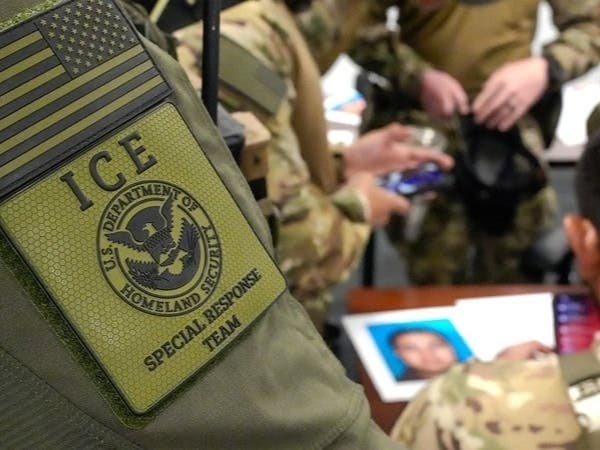
There should be broad agreement on a few basic principles of policing in a free society.
Heavily militarized law-enforcement units should not be patrolling ordinary streets. Military-style authority and equipment are appropriate only in narrow and extreme circumstances—targeted actions against hardened locations or demonstrably dangerous criminals. Routine street patrols are not one of them.
Find out what's happening in Concordfor free with the latest updates from Patch.
Likewise, no law enforcement agency should operate without clear identification. Uniforms, badges, and visible markings are not optional details; they are essential safeguards. Policing without transparency undermines public trust and weakens respect for the rule of law.
Finally, the rapid expansion of any federal law-enforcement agency—particularly at the scale and pace seen during the Trump administration’s expansion of immigration enforcement—comes at a cost. Training suffers. Legal standards become uneven. Tactical discipline degrades. We have seen the consequences of this approach, and they should concern anyone who values civil liberties, due process, and professional policing.
Find out what's happening in Concordfor free with the latest updates from Patch.
But none of this happens in isolation.
Federal overreach rarely appears out of nowhere. It almost always follows prolonged failure—or outright defiance—at the state and local level.
History offers a clear warning. During Prohibition, many states and cities refused to enforce federal law. Some openly nullified it; others simply looked the other way. The result was not moderation or reform. It was aggressive federal intervention, consolidation of authority, corruption, and public backlash. Federal agents became national police, operating with blunt force and little local legitimacy.
The lesson was not merely that Prohibition was unpopular. It was that enforcement vacuums invite federal overcorrection—and that overcorrection is almost always less precise, less empathetic, and less accountable than local enforcement ever was.
For decades, immigration enforcement followed a more restrained and effective model. Local law enforcement did not conduct sweeps. There were no door-to-door patrols. There were no immigration traffic stops. Instead, when an undocumented individual was already in custody for a crime, local authorities notified the federal government. It then became the responsibility of federal officials to assume custody lawfully and humanely for adjudication.
Roles were clear. Local police focused on public safety. Federal authorities enforced federal law.
That approach remains largely intact in New Hampshire. As a result, the state has avoided the kind of sweeping federal actions, militarized street patrols, and public escalation seen elsewhere. Professional cooperation reduced the perceived need for federal intervention.
The current federal posture toward immigration enforcement should be condemned by anyone who values civil rights, the rule of law, and opposes the militarization of police. But condemnation alone misses the deeper lesson.
The reality is this: the local approach is almost always the most effective and the most humane. Federal enforcement, by its nature, is broader, more rigid, and less capable of nuance. When local jurisdictions refuse to enforce the law or turn enforcement into a political statement, they invite a federal response that will inevitably be more aggressive and less restrained.
This reality does not excuse the actions of Immigration and Customs Enforcement, nor does it justify abuse or overreach by any enforcement agency. It simply underscores a hard truth learned repeatedly throughout history: the best way to avoid draconian federal enforcement is to empower local police—free of political agendas—to enforce the law uniformly, professionally, and close to the communities they serve. When local enforcement works in good faith, federal escalation becomes unnecessary. When it does not, escalation is almost always what follows.
Drew Biemer is a current member of the Concord Public Safety Advisory Board and former member of the State Juvenile Parole Board.
This story was originally published by the NH Journal, an online news publication dedicated to providing fair, unbiased reporting on, and analysis of, political news of interest to New Hampshire. For more stories from the NH Journal, visit NHJournal.com.