Schools
Concord School Board Eyes 12% Tax Increase, Prepares To Cut 37 FTEs: Fiscal Year 2027 Budget Follow-Up
Parents, students, and employees request preservation of art teachers, elementary assistant principals, and Second Start during hearing.


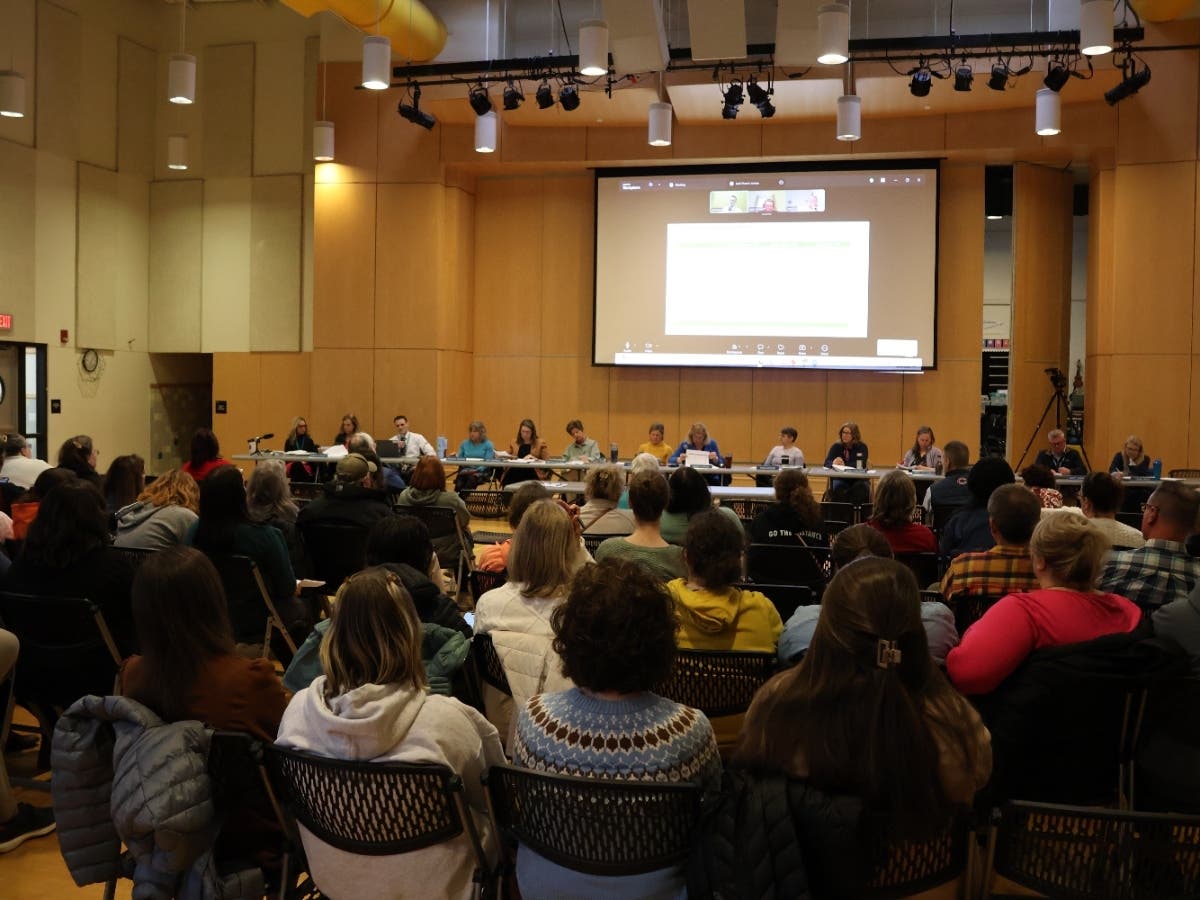

CONCORD, NH — About a dozen and a half Concord parents, students, and SAU 8 employees spoke to school board members as they try to find ways of filling a multi-million dollar budget deficit while attempting to limit the property tax increase for fiscal year 2027.
According to the latest budget documents, the district is proposing an 11 percent budget increase.
The drivers for the budget increase included staff salaries rising by more than $1.9 million and benefits costing nearly $1.6 million more between fiscal years. The professional services budget is increasing by nearly $1.35 million, while principal and transfers to pay for capital projects and other items are increasing by nearly $2 million. More than $4 million more is being budgeted for services, supplies, equipment, and dues, fees, and interest.
Find out what's happening in Concordfor free with the latest updates from Patch.
The budget increases, combined with decreases in local revenue, led to a $17.8 million deficit, requiring service cuts and significantly higher property taxes.
One revenue reduction is $3.4 million in state aid, not based on the standard adequacy aid per pupil, which has increased, but due to a drop in the “extraordinary grant” and “fiscal capacity disparity aid” line items. This bonus-adequacy money has not been “cut” by the state; it has been lost due to a 17 percent increase in property values in the city, almost double the state average. The formula presumes Concord residents are more affluent than before, based on higher property values calculated under the law.
Find out what's happening in Concordfor free with the latest updates from Patch.
No one in the halls of power appears willing to amend the formula to restore funding for Concord and other communities losing it.
Another $1.5 million in “other revenue sources,” such as raids on reserve accounts rather than staff reductions in previous years, was also lost.
Federal funding is expected to be cut by $320,000, according to the documents.
A second budget public hearing will be held at 6 p.m. Wednesday, March 25, at the central office on Liberty Street. To view all of the SAU 8 Concord School District budget files, visit this link.
To fill the deficit, the district has proposed a 12 percent tax increase, about $8.5 million higher than last year. The proposed local tax rate will be raised by $1.78 per $1,000 assessed value, year over year, or about $712 in new taxes on a $400,000 assessed home.
This does not include the first bonding for the new middle school project, $76 million, which was approved on March 11. The first-year tax impact of the loan is expected to be between $456 and $525 on a home assessed at $400,000 over 25 years.
The district is also proposing to delay the first payment on the middle school bond, about $2.5 million in interest, for one year, essentially pushing off the future pain to other property taxpayers.
Another $3.6 million will come from the $3.8 million property taxpayers are overtaxed annually, which is deposited into the trust fund. That money will be moved into the interest expense column.
Also Read
The board also approved $6.8 million in non-personnel reductions — including requested new equipment, instruments, furniture, and other items.
The rest of the budget reductions will come from a combination of personnel cuts, vacancies, and retirements.
Initially, the district was considering cutting more than 70 current or vacant positions to save around $6.5 million.
The number of layoffs is not exactly known, but it will amount to 37 full-time equivalents and millions of dollars. Concord High School will lose nearly 16 FTEs, while Rundlett Middle School will lose 6 FTEs. The elementary schools will see a reduction of 5.5 FTEs, the central office will lose 6 FTEs, and the Concord Regional Technical Center will lose a staffer, currently budgeted for a third of a day.
The district is also proposing cutting Second Start, the alternative high school that assists at-risk youth, job seekers, and adults in need. The program costs about $22,000 per student. Moving some Second Start students in-house is expected to save more than $500,000, according to documents.
Another reason for the limited increase in state adequacy aid was the drop in enrollment and the staffing correction needed years ago, which the district ignored tackling.
While state documents show enrollments dropped by around 800 students over the past decade, SAU 8 documents show it was closer to 900 students. At $4,351 in adequacy aid per student for FY27, it is more than $3.9 million less in state money than the district should have planned for, with staff reductions to serve fewer students. During those same 10 years, though, per-pupil costs nearly doubled in the Concord School District, from $13,644.59 to $24,351.28.
The base adequacy aid has increased by about $1,000 per pupil, resulting in a near-even adequacy aid line-item payment to the district from the state: $15.21 million in FY17 to $15.28 million in FY27, despite 900 fewer students.
That 900-student reduction also included 236 fewer free and reduced-price lunch-authorized students, resulting in about $600,000 less in state aid, while there are 56 more students designated as special education, which has led to a small increase.
Public Comment
During the public comment period, 17 people spoke out against the proposals, in some way, shape, or form, and one person said the cuts did not go far enough.
Employees of Second Start read letters submitted by students on their behalf, touting the success of the program, helping them graduate from high school. One student said they would not return to Concord High School if the program funding were cut; another student raised the issue of bullying at the school, which was never addressed. An alumnus of Second Start, who commended the program, said it helped her move on from high school to college, where she is majoring in education.
Kim Haley, who spent more than two decades as a counselor at the Second Start, believed the in-house proposal “may not fare well,” due to the lack of opportunity for educators to really get to know the students, many of whom suffer from trauma and substance abuse issues, and vice versa.
“The place is magic,” she said.
Shayla Masciarelli, another counselor at Second Start and an alum, said she fell through the cracks at Concord High. But the program helped her graduate. She said when she attended, no one noticed whether she was succeeding, likening it to an educator not checking in with her because she was “just the quiet kid.”
State Rep. Kris Schultz, D-Concord, pointed to unfunded mandates by the state, as well as the downshifting of costs, such as pension liabilities, during prior years, which now amount to about $3 billion annually. In her comments, she attacked Republicans and Education Freedom Accounts, saying they fund tuition to private and religious schools for the rich.
EFAs, though, amount to less than $52 million annually out of $4.15 billion spent on K-12 education in New Hampshire. And many EFA students receive scholarships because they are poor or middle-class.
Lauren Matava, a fourth-grade teacher at the Broken Ground Elementary School for more than 20 years, said the assistant principals at the elementary level should be preserved. She said the staffers deal with all kinds of children with special needs, as well as interventions within the system.
Alicia Frank, a school psychologist for Beaver Meadow and Mill Brook, said many staffers wrote a letter in support of Nancy Coffin, the assistant principal at Broken Ground, and requested she be preserved as full-time and not split between both schools.
Ayana Valerus, a junior at Concord High and an advanced placement art student, spoke out in favor of preserving the position at the school, saying her work had led to real-world successes. She said the classes led her to display her work at coffeehouses and even sell some pieces. The program, she said, while on the verge of tears, “gave me a home.”
Amy Valerus followed up Ayana’s comments by saying she was wearing two hats: that of a parent and someone with a doctorate in social work research. She spoke out against the cuts to art teachers and called on the board to ensure equity for students, ensuring all children had access to the benefits of a fulfilling public education.
Somayeh Kashi, a visual arts teacher at Rundlett Middle School, also spoke out against the art teacher cuts, suggesting the proposal could not have come at a worse time, Youth Art Month. Student artwork, she said, was on display at the community center. Kashi said students were worth more than the cuts the district was making.
Karen McCormack, an art teacher at Broken Ground who was also a Concord High graduate, pointed to the district’s Portrait of a Learner plan and said the arts and music helped students grow and handle complex problems in other programs as well as in life. The elimination of the positions amounted to a one-third cut in the art positions at both the high school and the middle school. She added there was no way the district could offer all the art programs offered at Concord High with only two teachers.
Other attendees also spoke in favor of the assistant principal positions and Second Start. Some attendees were also critical of the state’s lack of direct funding for schools while not acknowledging more state funding would require the creation of an income tax — something neither political party is advocating for. It would also require residents to pay taxes one way or the other.
Roy Schweiker, whose father served on the school board decades ago, cautioned the cuts would not be enough, especially given the city’s upcoming reevaluations. The reeval is expected to shift an even greater share of the tax burden to the residential sector. He was also critical of increased staffing in the district, including several new positions that were not there two decades ago. Schweiker also criticized the district teacher contract, saying while Concord ranked 160th in New Hampshire in per capita income, teacher salaries were 6th, according to state data.
“We’re paying far more than we can support,” he added, noting teachers in neighboring Bow, a town with significantly higher incomes, were paid $10,000 to $15,000 less.
Schweiker also criticized the new middle school bonding, saying it should have been spread across 50 years rather than 25, thereby lessening the burden on property taxpayers.
At the end of the public comment period, Pamela Walsh, the president of the board, said many people had submitted emails and comments online, too. She also commended those who spoke, especially the students.
“What you did was really brave,” Walsh said.
Walsh said there were hard decisions the board had to make. She was also critical of the state’s role in funding. Walsh requested people call the governor’s office and added the Concord delegation, all Democrats, “do really good work,” but said nothing about asking those members to amend the state’s extraordinary grant and fiscal capacity disparity aid provisions.
Walsh said, if the state were funding education at the level required by recent court cases, “We’d probably have a tax decrease this year.” She said the aid would be about $12 million more — meaning the district would still need to make $5 million in cuts. What Walsh also failed to acknowledge was an income tax would be required to fund the $500 million increase in state education aid. Missing from the comments was also the fact the state spent $140 million more on K-12 education while educating 2,300 fewer students between the last two full school years.
After the meeting, Superintendent Tim Herbert said he did not believe any of the board members had reached out to their state senator or representatives to request an amendment to the formula or restore the funding. He also said the district was not closing Second Start but was working toward in-house alternative programming, offering work-based learning, flexible schedules, and other opportunities at a lower cost, mimicking the district’s adult learning program. Herbert said the district was paying for 38 slots upfront for Second Start, but used only 23. There were 17 students on the list to attend Second Start next year, with eight students returning to Concord High because it was not a good fit for them, he said. There are also students leaving the school and taking advantage of the EFAs, although he did not have an exact number. Creating the alternative programming in-house would expand options for students at a lower cost, he said.
Herbert said putting off the bonding interest payment on the middle school was something requested by the board, as an example, but was not “set in stone,” adding, he and the board were focused on stabilizing everything during a difficult year.
The Children’s Scholarship Fund New Hampshire did not return an email seeking information about Concord students and EFAs before publication.
Do you have a news tip? Email it to tony.schinella@patch.com. View videos on Tony Schinella's YouTube or Rumble channels. Patch in New Hampshire is now in 217 communities — and expanding every day. Also, follow Patch on Google Discover.
Get more local news delivered straight to your inbox. Sign up for free Patch newsletters and alerts.