Schools
Concord School District To Buy Land For New Middle School
Part 1: SAU 8 has entered into a letter of intent with CenterPoint Church to buy 37-acres of land along Clinton Street for a new school.


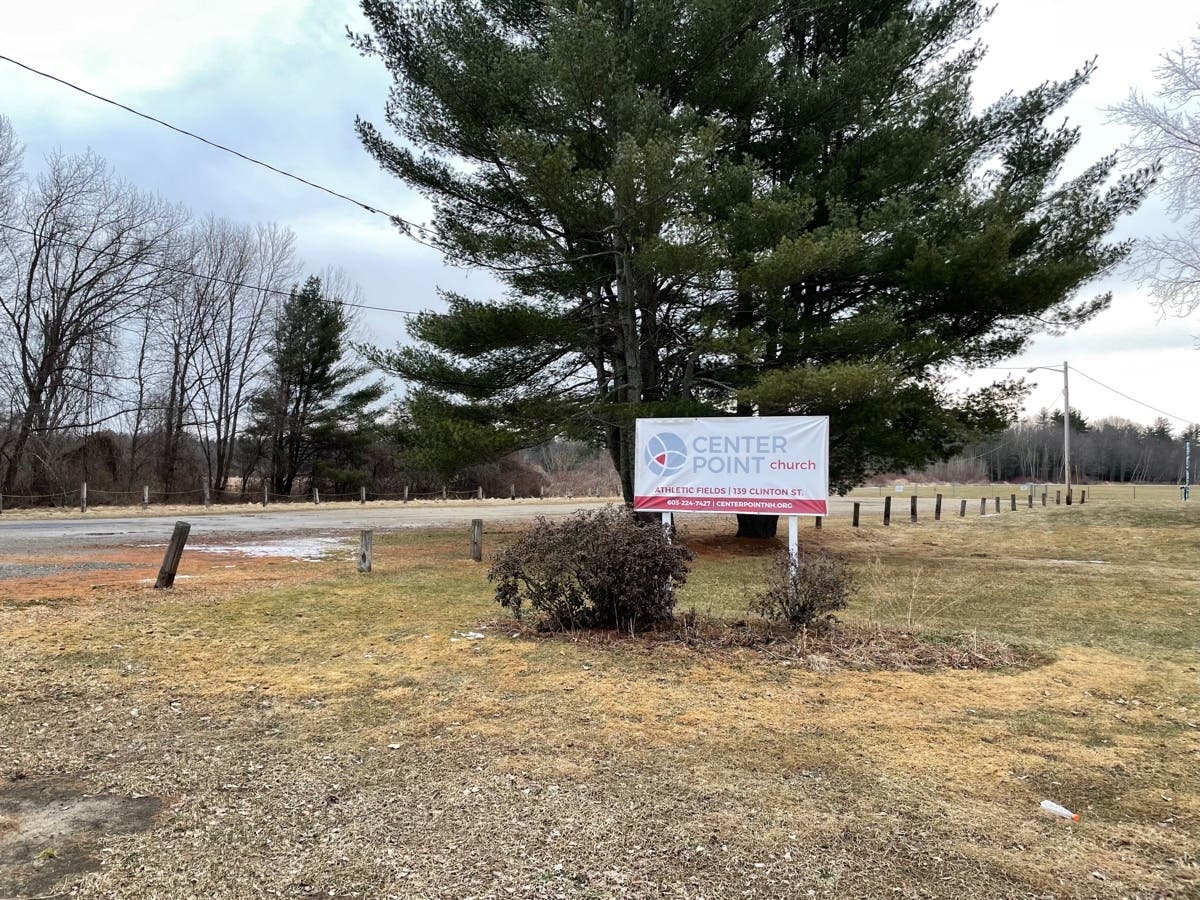

CONCORD, NH — The Concord School District has signed a letter of intent to purchase two parcels of land on Clinton Street for a new middle school.
The parcels, owned by CenterPoint Church, are now used for softball games, soccer practice, wild berries, and farmland for New Americans. The agreement, which had been in the works for months, was finalized during the past couple of weeks. While the exact price of the parcels had not been finalized, both sides were pleased an intent agreement had been tentatively reached.
The school district also owns two parcels, about 30 acres of land, across the street from the church parcels.
Find out what's happening in Concordfor free with the latest updates from Patch.
The tentative plan is to construct a new middle school, for sixth-, seventh-, and eighth-graders on one part of the parcel in conjunction with a new Concord YMCA facility next door. The school will be built for around 900 students with features streamlined down to the basics from past visioning sessions.
The YMCA building will feature a new, larger pool, expanded programs for all ages, and the org will use rooms at the school, too, for programs when necessary.
Find out what's happening in Concordfor free with the latest updates from Patch.
ALSO READ:
- Part 2: Concord’s Middle School Could Be Sold After New Facility Built
- Part 3: A Lot Of Unknowns With New Concord Middle School Project
Kathleen Murphy, the superintendent of SAU 8, said the parcels were perfect for a new school due to their close proximity to the current school, major commuter streets, and the city itself. It is also one of the largest, last remaining parcels in the city with access to water and sewer. Murphy said a lot of meetings have been held studying the middle school issue and the district had reached out to the public on numerous occasions.
“It’s a challenge,” she said. “But I’m anxious to hear from the community … as soon as all of this stuff starts to come together, we’ll be opening our doors and having more meetings.”
Still Working Out Specifics
School officials are still working out some of the figures as they prepare to solidify plans, not only to work with the Concord YMCA, but state building aid, and other financials.
Jack Dunn, the district’s business manager, said estimates for a new school were in the $96 million range. But that price was from 2017, for a larger school — 1,200 students, about 300 more than what the district is planning for now. That price was also the estimate before paring down the plans and before, too, out-of-control inflation that has increased costs exponentially — including building material costs that have gone through the rafters. State aid, if approved, was expected to be as high as 40 percent, but the state will not pay for everything the district and its parents want.
Dunn noted part of the streamlining would be the elimination of a major theatre at the school — a feature some parents requested during visioning sessions but was not a need, especially with state-of-the-art performance centers like the Capitol Center, Bank of New Hampshire Stage, and the Audi, all located within a couple of miles of the school.
Praying For Guidance
Matt Furr, the lead pastor of the church, said he was happy to have reached an agreement with the district especially since they have been talking about acquisition for a bit of time.
Furr was also impressed with the collaborative nature of the concept.
“The church has always wanted to be a strong part of the community,” he said. “We believe that’s part of God’s calling on us; it’s not just about who we are, as a group, but it is how God has gotten us here, in the middle of the community. It’s an expression of his love to the people around us.”
Furr said the church loved being a part of the community and had done that through other organizations and activities not just on the Clinton Street fields but the North State Street building.
Furr, too, was impressed with the collaborative plan put forward by the district and the YMCA.
“We want good things for this community,” he said, “and we know God wants good things for this community. It’s such a creative plan. I love that it’s a first in New England.”
How The YMCA Fits In
The combination middle school and Y facility was part of a trend across the country, Michele Sheppard, the interim president and CEO of Granite Y, umbrella organizations that leads the Concord org as well as five others in New Hampshire, said.
The combined building's concept had been constructed in places like Lincoln, Nebraska, which has two middle schools with YMCAs, Raleigh, North Carolina, and St. Petersburg, Florida, too, but not anywhere the size of a small city like Concord.
The Concord YMCA, for a number of years, had considered a move or upgrade to a newer and more spacious facility. The org and district have been discussing space usage with the district for about five years.
Margaret Tomas, a volunteer with the YMCA, said the org had been on North State Street for more than 100 years. The newest section of the building, the pool and the gym, were built six decades ago.
“It’s small,” she said, “it’s aging. The systems are old. It’s hard to make large spaces in there for group exercise. We are just running out of space and it is very expensive to maintain because of its aging systems.”
Sheppard said a new building would also allow the Y to expand its programs not just for the community but the school community, too. For the last three decades, the Y in Manchester has worked with the school district to offer expanded programming and supplemental support for students who are not necessarily falling out of the system but who might need that extra assistance and help with families.
“We talk about that family in a school,” she said. “And the Y has become a part of that environment.”
The org runs “stay” classrooms in middle schools offering mentoring and tutoring for students that are struggling in the normal school environment as well as social-emotional learning, she said.
“And that is one of the things that we think is going to be a strong attribute to the Y being a part of the school project,” Sheppard said. “We were talking about doing that prior to. We also do a lot of summer learning loss programs, targeted to that middle school age group.”
There was potential, too, with a larger pool, as well as all kinds of programming from birth to seniors.
Gro Development, she said, which has worked with a number of YMCAs on architecture, design, real estate, facility consulting, and marketing was working with the Granite YMCA on its part of the building project.
Alex Turek, the executive director of the Concord YMCA, called the potential of the orgs to work together “magical” and would allow the district and the Y to “strengthen kids and families.” It is, he said, “one of the foundations of community.”
Murphy was impressed with how all the moving parts appeared to be coming together in such a collaborative way.
“I have always believed that schools are the fabric that weaves our communities together,” she said. “I think, for the capital city, it was just so appealing to think that we could partner with a church that services our community, in a ton of different ways, many of which we do also, and continue the partner with the Y, which includes families, which is such an important part of what we are trying to create in our schools. It was a marriage made in heaven.”
Murphy said private use of school buildings was not unusual.
In Hampton, when she was the superintendent there, Head Start regularly used school space. They worked closely with the preschool programs. While it was a small scale and the district did not ask the state for building aid, she likened it to the walls breaking down a little bit between schools and communities — while also making them more functional.
“The piece that’s really important, too, when you think about this, in order for the schools to meet all the needs, the social and emotional needs Michele just talked about … we can’t do it alone anymore,” Murphy said. “You can’t expect the schools to take on all of these issues. They are important issues; they are important to kid’s learning if you don’t have those things in place. But we can’t do it alone. It’s very clear, and if it isn’t, we are going to be in trouble, that we develop partnerships with our community. Otherwise, we’re going to be crushed.”
Dunn said no financial agreements between the Y and the district have been solidified.
The architects from both organizations will be comparing needs and assessments. After that, three price points will be built into the cost for the school building between now and the deadline for aid application. The district will then apply for state aid. Dunn said he expected to know if Concord was getting state school aid by January 2023.
The district and the Y will then reach some sort of financial arrangement in the future, assuming there is school building aid in the next state budget.
Dunn said there were a lot of attractive attributes between the two projects.
A new pool at the Y building would allow for expanded use by students. He noted that drowning was a leading cause of death amongst middle school students, about 5 percent, according to the Centers for Disease Control and Prevention, but swim lessons offered to Concord kids could prepare them. The district was looking at heating the school with geothermal but if it did so, there would be too much heat coming into the system. This would allow the Y to use the extra heat to heat its pool.
Murphy said renovating Rundlett was not an option despite a third of the building being around 30 years old as well as other upgrades to the school. There are also issues about parking on the current site and that the support services would not be available either. The new school was a 50-year moment; it would not be done again for a very long time.
Furr said he did not know what the church would do with the money but it would leverage it “for the good of those around us.”
Dunn hoped to have the application for state aid prepared by July 1.
“We’ll see what the money comes in at,” he said. “The board will have to make some value decisions. But the board hasn’t taken a crack at it yet … it’s a work in process.”
Murphy said the financial component will be the biggest piece of the puzzle.
“Give us a little more time as we work (it) out,” she said. “The financial plan will be the critical piece. Give us a little more time to work that out.”
Got a news tip? Send it to tony.schinella@patch.com. View videos on Tony Schinella's YouTube.com channel or Rumble.com channel
Get more local news delivered straight to your inbox. Sign up for free Patch newsletters and alerts.