Politics & Government
Sanborn's Attorney Tells New Hampshire Supreme Court Failed Concord Casino Sale Was A Rigged Game
Adam Katz said Tuesday the NH Lottery Commission and the NH AG's Office rigged the process to ensure Sanborn would miss the sale deadline.

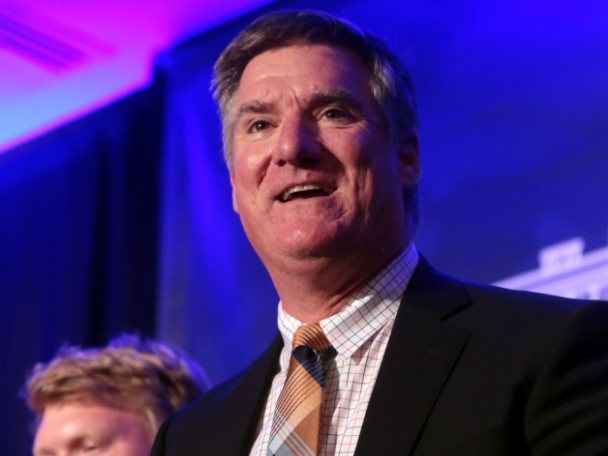
Andy Sanborn’s lawyer told New Hampshire Supreme Court justices that the state stacked the deck against him when he tried to sell his Win Win Win casino business.
Adam Katz, representing Sanborn, said during Tuesday’s oral arguments that the New Hampshire Lottery Commission and the New Hampshire Attorney General’s Office rigged the process to ensure Sanborn could not sell the business by the mandated deadline. Internal reports, currently under seal, show state officials had no intention of allowing Sanborn to sell his business, but continued to give him the impression they were considering the proposed sale, Katz said.
Find out what's happening in Concordfor free with the latest updates from Patch.
“[A]gencies can’t provide affirmatively misleading comments about their own processes when it materially prejudices the private party that’s going through the agency process,” Katz said.
Details about the sale have been sealed by the courts. But documents obtained by NHJournal show Sanborn had a $40 million deal in place with an out-of-state buyer. That deal would have kept Sanborn involved in the business for at least several years. The sale was blocked by the state, and Sanborn’s gaming license was revoked.
Find out what's happening in Concordfor free with the latest updates from Patch.
Sanborn, who is currently facing state criminal charges for alleged COVID-19 relief fraud, wants a do-over from the Supreme Court so he can finally sell his Concord casino and cash out. He was first ordered to sell his casino in December 2023 after a hearing determined that his misuse of $844,000 in federal COVID funds rendered him an unsuitable person to hold a charitable gaming license.
Sanborn’s gaming license was suspended, and he was given six months to sell the business, with an option for a three-month extension. The forced-sale order stipulated that if Sanborn did not sell his business within the allowed time, the license would be revoked completely. The casino business would then be virtually worthless to any buyer.
Yet Sanborn claims state regulators scared off two potential buyers and strung out the process with the third so that by the time the New Hampshire Attorney General’s Office issued its final order blocking the sale, the deadline had passed.
Assistant Attorney General Mary Triick told the justices there was no attempt to game the sales process to harm Sanborn. In fact, state regulators conducted the review of the buyer and the proposed sale as quickly as possible. The process was reasonable and legal, Triick said.
But when Associate Justice Melissa Countway asked what legal standard the Attorney General’s Office used to review the rejected deal, Triick was caught short.
“The statute just says, ‘in the opinion of the attorney general’ … I don’t know that there was a specific standard contemplated in this sense,” Triick said.
If the Supreme Court justices agree with Sanborn, he would receive an additional 12 months to sell his business with a gaming license.
“Mr. Sanborn is not seeking to reinstate himself as a gaming operator or to relitigate the proceedings that led to the forced-sale order,” Katz said. “All he would like to do is sell his business and put this matter behind him.”
Sanborn’s legal saga began in August 2023, when Attorney General John Formella publicly accused Sanborn of engaging in COVID-19 relief fraud. The alleged fraud uncovered by a Lottery Commission investigation included Sanborn’s purchase of sports cars with relief money and paying himself hundreds of thousands of dollars in future rent.
While Formella’s original accusations led to the forced-sale order, they never resulted in criminal charges. Instead, Sanborn was eventually indicted on charges that he lied in applications for a state COVID relief program.
The criminal case is scheduled to go to trial later this year and has already resulted in sanctions against prosecutors for their own misconduct. Last year, Merrimack Superior Court Judge John Kissinger criticized the Attorney General’s Office for mishandling evidence seized during the execution of a search warrant.
“The court finds that the NHAG exhibited gross negligence at several points throughout its execution of the warrant and subsequent taint review of the seized material that rises to the level of prosecutorial misconduct,” Kissinger wrote last year.
This story was originally published by the NH Journal, an online news publication dedicated to providing fair, unbiased reporting on, and analysis of, political news of interest to New Hampshire. For more stories from the NH Journal, visit NHJournal.com.