Politics & Government
$584 Tax Hike Proposed In Bloomfield: What Comes Next For Town Budget
The municipal increase would be in addition to school and county taxes.


BLOOMFIELD, NJ — The average Bloomfield homeowner would see a $584 increase to the municipal portion of their taxes under the town’s latest budget proposal.
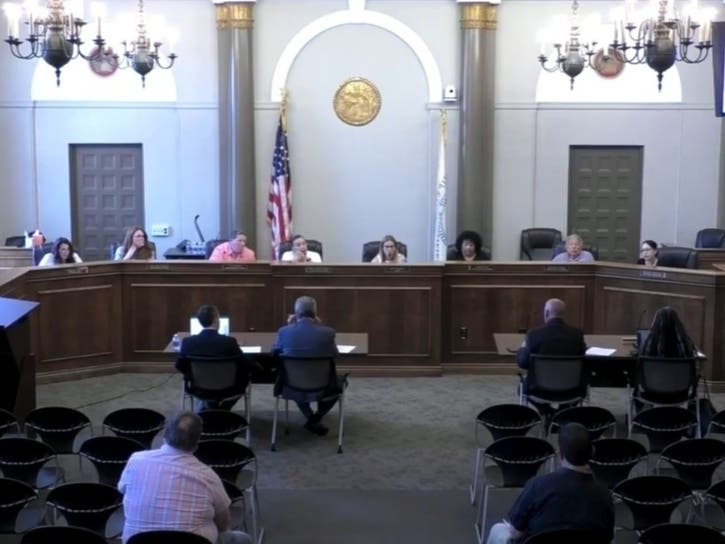
The Bloomfield Town Council introduced the 2026 municipal budget during a special meeting on Tuesday. Watch video footage here, and view a presentation from town administrators here.
A public hearing and final vote is scheduled to take place on Tuesday, July 28. The budget synopsis and other financial documents can be viewed online here.
Find out what's happening in Bloomfieldfor free with the latest updates from Patch.
Introduction of the township’s spending plan was delayed this year due to a “continued effort to develop a fiscally responsible budget that remains fully compliant with state cap regulations,” town administrator Anthony DeZenzo previously said.
Here’s where things currently stand:
Find out what's happening in Bloomfieldfor free with the latest updates from Patch.
TAX IMPACT
If it crosses the finish line intact, the draft budget would mean a $584 annual increase for an average homeowner with a property assessed at $355,263.
Property taxes in New Jersey are mainly made up of three parts: school, municipal and county.
The municipal tax represents about 38 percent of the total property tax bill, with the remaining 62 percent allocated to county and school taxes, township officials said.
The Bloomfield Board of Education approved the 2026-2027 school budget in April – which will also come with a tax increase.
>> Related: Bloomfield School Budget Has Job Cuts, Tax Hike (See Final Numbers)
SPENDING AND REVENUE
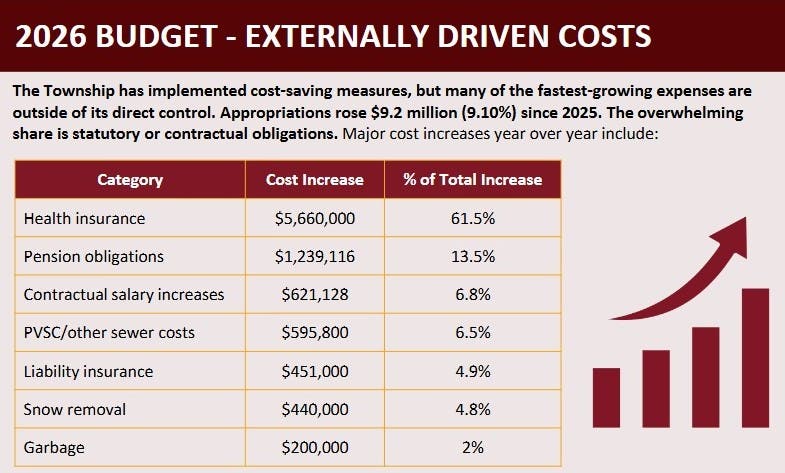
Rising health care, pension, insurance, utility and contractual costs continue to put pressure on municipal budgets across New Jersey, including Bloomfield.
Bloomfield town administrators said they have tried to “aggressively reduce what it can control.”
“For 2026, the township implemented additional measures including a hiring freeze, strategic use of vendors to reduce long-term benefit costs, and staffing reductions through attrition across multiple departments,” administrators said.
Cuts to the municipal workforce include the loss of eight police and fire department positions each, five full-time department of public works positions, three administrative positions and a finance department position.
The overall impact? A $1.04 million budget reduction, administrators said.
The township also secured a $1.2 million appropriation through the latest state budget that will reduce its reliance on municipal reserves, administrators said.
Township Auditor Steven Wielkotz pointed to Bloomfield’s credit rating with Moody’s as a sign of its “commitment to maintaining long-term financial stability.”
According to the township, “municipal-controlled” spending only accounts for about 5.58 percent of the total budget – with the remainder driven by externally mandated or contractual obligations.
“We understand the pressures that Bloomfield families are facing, which is why we’ve focused on reducing the expenses within the township’s control while maintaining essential services that residents depend on every day, from public safety and road maintenance to sanitation, snow removal, recreation, parks and senior services,” Mayor Jenny Mundell said.
“This budget is about balancing the needs of the community with the reality of the current economic climate and ensuring that Bloomfield remains financially strong for the future,” Mundell said.
SEWER FEES
Some Bloomfield residents criticized the proposed tax hike online, with several pointing to the town’s recent sewer fee changes.
“So our taxes go up nearly $600 and we have to pay a sewer fee?” one resident commented.
Supporters have claimed the move will save residents money over the long run, and will put some of the burden back on commercial properties and businesses. Critics have argued otherwise, alleging that it is an effort to evade the mandatory 2 percent cap on annual increases to the tax levy – and may leave some homeowners without important protections.
Send local news tips and correction requests to eric.kiefer@patch.com. Learn more about advertising on Patch here. Find out how to post announcements or events to your local Patch site.
Get more local news delivered straight to your inbox. Sign up for free Patch newsletters and alerts.