Politics & Government
NJ Prison Inmates Are Committing Fewer New Crimes After Their Release, Report Says
It's not a new trend, officials say.


The number of people who are re-arrested after being released from prison continues to drop in New Jersey.
Last week, the New Jersey Department of Corrections (NJDOC) released its latest recidivism outcome report, which can be viewed online here.
The report tracked 4,174 people who were released from prison in 2021 over a three-year period. Only 6 percent were reincarcerated for a new conviction: a new low for the Garden State.
Find out what's happening in Bloomfieldfor free with the latest updates from Patch.
For comparison, the recidivism rate for inmates in 2011 stood at 12 percent.
It’s not a new trend, correction officials added – recidivism rates have dropped nearly 50 percent in New Jersey since 2013.
Find out what's happening in Bloomfieldfor free with the latest updates from Patch.
Many of those who were sent back to prison weren’t necessarily guilty of committing a new crime. The official recidivism rate includes people convicted of parole violations, such as failing a drug test, violating curfew, or committing another type of "community supervision violation (CSV)."
Article continues below
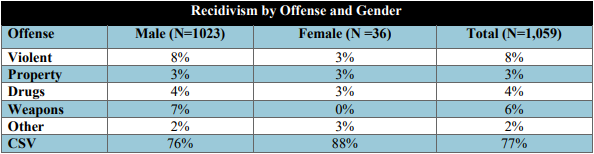
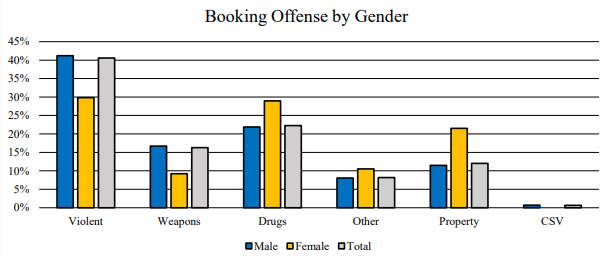
Most of the inmates were initially sent to prison for committing violent crimes. Among releases under the age of 21, violent offenses accounted for 48 percent of bookings, followed closely by drug offenses (31 percent). For those aged 60 and older, violent offenses represented 62 percent of bookings.
The average inmate served 991 days in jail before being released.
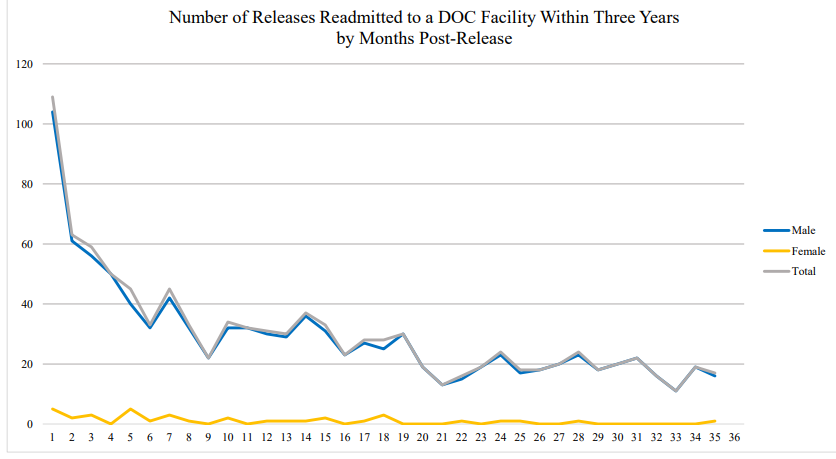
A former inmate's likelihood of re-arrest drastically dropped after the first few months, data shows.
Rehabilitation programs have played a big role in the decade-long decline, the NJDOC said.
Inmates who completed a residential community reintegration program had the lowest percentages of all reoffending events, with only a 12 percent reincarceration rate. Related: New Program Helps NJ Veterans Get Back On Their Feet After Prison Terms
Meanwhile, nearly 55 percent of people who completed a vocational education program while incarcerated were employed at some point within three years of their release. Related: NJ Prison Launches Fashion Design Training For Women, Youth Coaching Program
Education is also helping to uplift inmates, the DOC reported – there was an 86 percent pass rate for prisoners who participated in mandatory education programming and took the high school equivalency test. Related: Dozens Of 'Freedom Libraries' Built At 2 State Prisons In NJ
“Public safety is most effectively strengthened when rehabilitation is at the heart of our mission,” NJDOC commissioner Victoria Kuhn said, also citing substance use and mental health services at state prisons.
Gov. Mikie Sherrill, a former federal prosecutor, agreed that rehabilitation efforts are paying off in New Jersey.
“I know firsthand that this kind of work can reduce crime and improve lives,” Sherrill said. “While there is more work to be done, New Jersey is moving in the right direction and we will continue these programs that are proven to strengthen public safety.”
CRIME RATE IN NEW JERSEY
Crime is dropping in New Jersey – and plunging nationwide, according to the latest statistics from the FBI.
According to FBI data, New Jersey’s crime rates dropped in 2024 after ticking up for two years following the COVID pandemic.
New Jersey saw 20,684 violent crimes with a population of 9,500,851 residents that year – a rate of 217.7 per 100,000 people. That was down from 225.3 per 100,000 people in 2023. The state’s violent crime totals were below the national rate, which came to 359.1 per 100,000 people.
New Jersey experienced 135,610 property crimes in 2024 – a rate of roughly 1,427 per 100,000 people. The statewide total was down from 1,527 per 100,000 people in 2023. Again, New Jersey was below the national rate of 1,760 per 100,000 residents.
According to long-term trend data from the FBI, the Garden State has seen a big drop in violent crime over the past decades – especially from levels seen in the 1980s and 1990s.
Some politicians and commentators have argued that the FBI data may be fraudulent, manipulated or incomplete. However, civil rights advocacy groups such as the Brennan Center for Justice have disputed those claims.
According to a recent study from the Pew Research Center, many Americans tend to believe crime is up – even when data shows that it has decreased. In 23 of 27 Gallup surveys conducted since 1993, at least 60 percent of U.S. adults have said there is more crime nationally than there was the year before, despite the downward trend in crime rates during most of that period.
- Related: Is Crime Up Or Down In New Jersey? Here’s What FBI Data Shows
- Related: New Shooting, Car Theft Data Released In NJ Shows 'Historic' Numbers
Send local news tips and correction requests to eric.kiefer@patch.com. Learn more about advertising on Patch here. Find out how to post announcements or events to your local Patch site.
Get more local news delivered straight to your inbox. Sign up for free Patch newsletters and alerts.