Politics & Government
Afghan Teen Finds Village Of Help, Hope With Brick Family
Mohammad Mir Shahnoory got separated from his family while escaping Afghanistan in August. That didn't end his dream of reaching the U.S.


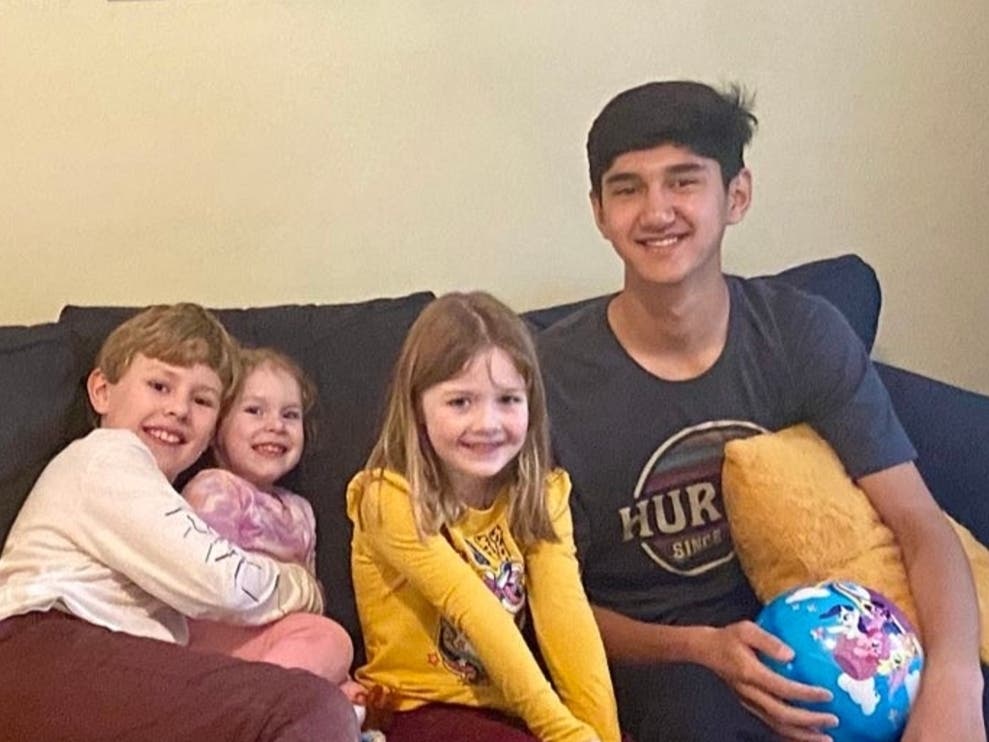
BRICK, NJ — When Mohammad Mir Shahnoory was 8 or 9 years old, he dreamt at night of being surrounded by skyscrapers.
“I dreamed this dream four or five times — I’m in a car, in a city. I look through the car window, but I can’t see the top of the buildings,” said Mir, now 17. “There are no big buildings in Afghanistan.”
He had spent a lot of time watching Hollywood movies that had been translated into Dari, his native language, and they left the young Afghan boy with strong impressions of the United States — so strong he dreamed of moving there.
Find out what's happening in Brickfor free with the latest updates from Patch.
“I was kind of obsessed,” Mir said. “I started learning English so I could take the first step.”
His dream of coming to the United States was far different from the reality he experienced in getting here, however. Mir was among the thousands of Afghan refugees who fled the country in August when the United States withdrew the rest of its troops from Afghanistan last summer.
Find out what's happening in Brickfor free with the latest updates from Patch.
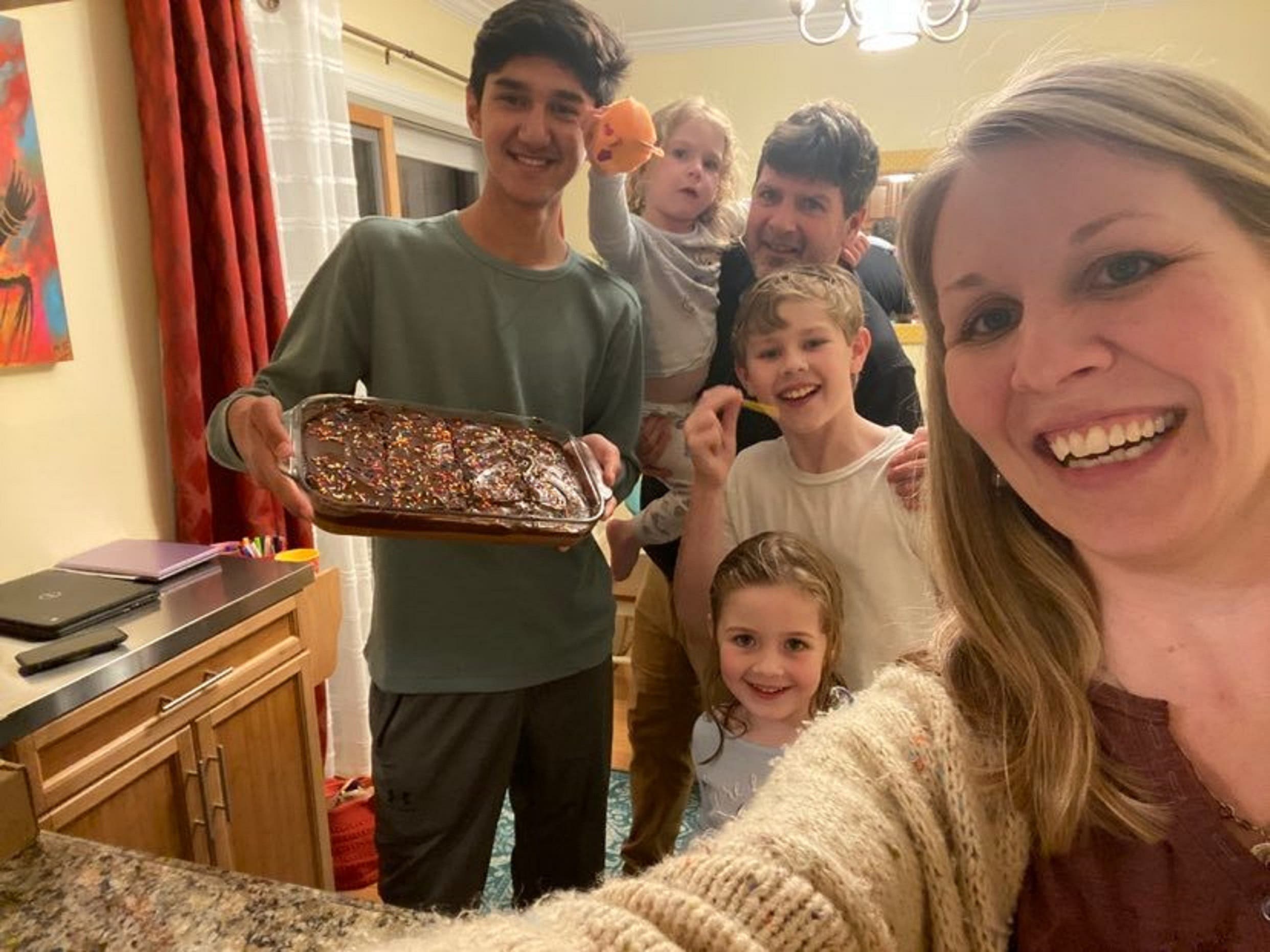
Eight months after a solo journey that took him from the chaos of Kabul to the suburban confines of the Brick Township home of Christie and Greg Williams and their three children, Mir said he is happy to be here.
“I like the United States,” Mir said in a phone interview. “The people try to encourage me and help me. They give me a lot of opportunities to grow.”
Most importantly, he knows he is safe.
In Afghanistan, his family was targeted by the Taliban because they are Shiya Muslims. There were bombings regularly just minutes from his family's home as the Taliban took over.
“We are a minority race and ethnicity,” Mir said. “There’s a genocide going on.”
From war to the Jersey Shore
Christie Williams and her husband, Greg, do a lot of volunteer work, from fundraising and helping find a cure for cystic fibrosis to doing food collections and beyond.
“We do a lot of work with resettled refugees,” Christie said as she talked about how her family got to know Mir. A friend of hers who lives overseas and teaches English to those who do not speak it contacted her seeking help.
The friend had an Afghan student who was desperate to get information on his teenage nephew, a refugee who had been evacuated to the United States. Christie and Greg set to work reaching out to their contacts to try to find Mir, and soon were able to track him down.
Mir was in a shelter for refugee children who were traveling alone. But Mir wasn’t simply a child evacuee: He was key to his family’s hope of being reunified in the U.S., away from the threats to their lives in Afghanistan.
However, plans were to place him with a foster family, a prospect that worried Christie and Greg because of the difficulties it could create in reunifying the family. They decided they wanted to help and volunteered to sponsor Mir, to facilitate the reunification.
“It was decided we could sponsor him because we had a roundabout relationship with the family,” Christie said, through her friend’s connection with Mir’s uncle, Atta Shahnoory. Christie and Greg communicated with Atta through the messaging application WhatsApp, getting to know him while Atta got to know them.
It took multiple conversations and interviews over two months with Mir's caseworker before Christie and Greg were approved to sponsor Mir, a responsibility that carried a host of concerns.
“We were warned of potential obstacles in registering Mir for school,” Christie said. Because he was a humanitarian evacuee, he didn’t have a lot of the paperwork typically required for registering a child for school.
They had concerns about how he would fare academically, with teachers and schools still being battered by the impact of the COVID-19 pandemic and the stresses of the return to classrooms where larger class sizes make teachers' work more complicated.
“Most concerning to us, we feared that Mir wouldn't be accepted by his peers and our community as whole,” Christie said. “Mir’s not only a foreigner, but from a country most of us only know as war-torn.”
“We did our best to prepare him — but honestly, we held our breath for a long time,” Christie said.
Almost two months later, Mir is thriving, she said. He is enrolled at Brick Memorial High School, where he carries a 95 average in Algebra II. He was selected in late April to be a delegate at Boys State, a weeklong conference sponsored by the American Legion, with his admission paid for by a local American Legion post, Christie said.
“His guidance counselor also wrangled a ticket to prom for Mir,” she said. “He really wanted to go but missed the deadline. Now he gets to experience it!”
Christie and Greg have worked to make sure Mir gets to experience other things he has never seen, such as the Atlantic Ocean.
"The ocean was rough, it was very noisy," Mir said.
“My daughters were collecting seashells and handed them to Mir,” Christie said, “and he asked me what they were. It never occurred to me that he had never seen seashells before.”
Mir meets each new adventure with joy, she said.
Feeling safe will do that.
Making his escape
Mir is the second oldest of the seven children of Attaullah Shahnoory and Kamila Sohrabi. When he was younger, Mir and his family lived in a town outside Kabul, where Mir’s grandfather had once been the leader of his village. That was years earlier, well before Mir was born.
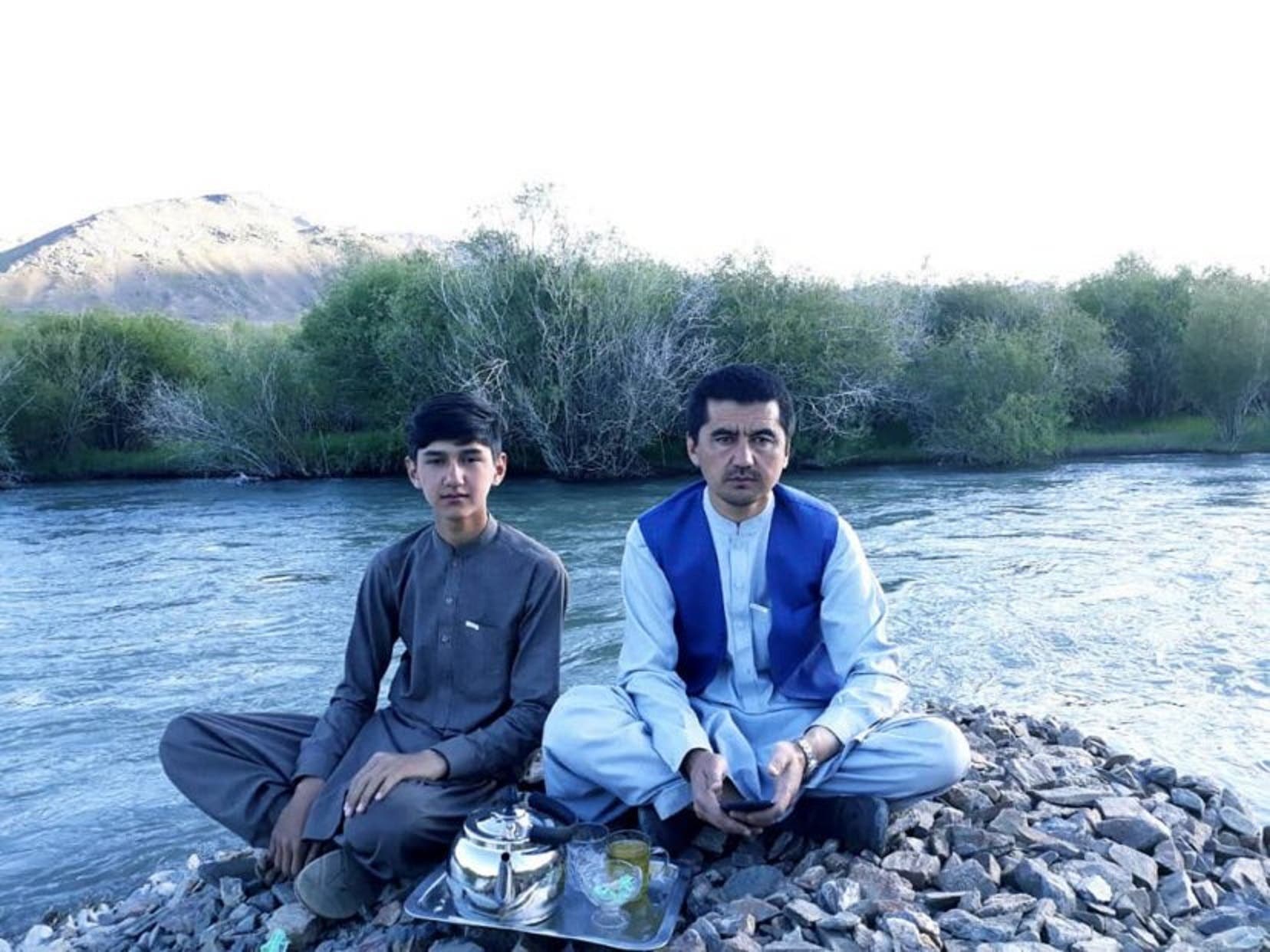
“They arrested my grandfather and took him to jail for six months during the first Taliban reign,” Mir said, because he was a leader in the community. It was the late 1990s. The rest of the family, including Mir’s father and uncle, fled the village into hiding, and the Taliban burned their home to the ground. When they finally released Mir’s grandfather, the injuries he had suffered through torture during his arrest led to his death.
After the Taliban were out of power, Mir's father and uncle and family returned to the village. They lived there in relative peace and safety until Mir was about 12, he said.
In the last five years, the Taliban had begun returning to power in Afghanistan, and as they did, Mir's family left the village and moved to the relative safety of Kabul. But not before spending time hiding to avoid retribution from the Taliban. As the U.S. troop withdrawal increased, Mir and his family knew they had to leave.
Had they stayed, Mir said he most likely would have been forced into the Taliban army. The threats to his parents, his sisters and his younger brothers were significant as well, primarily because they were Shiya Muslims, in the minority, and not Sunni Muslims, who are the majority.
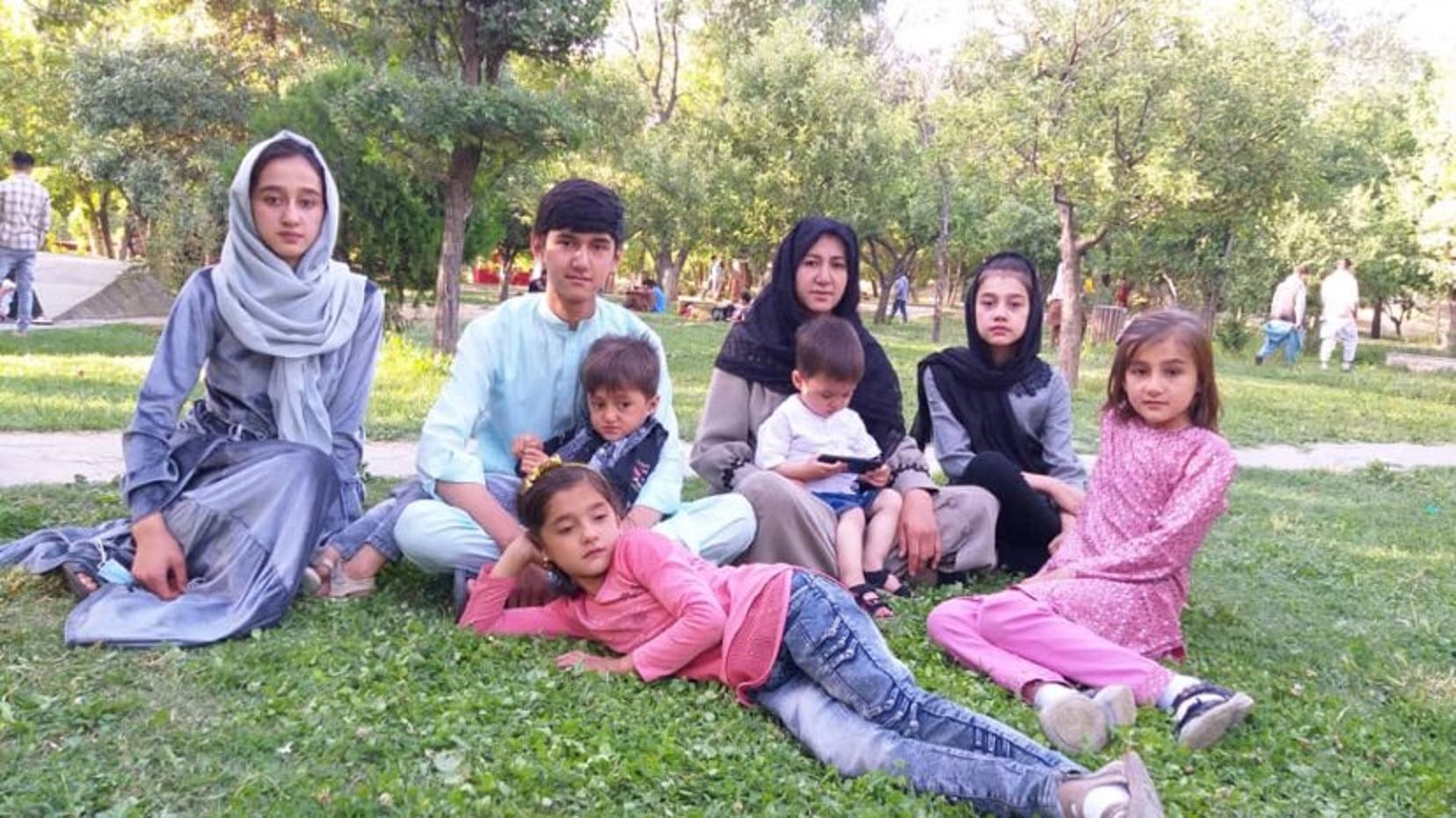
As the Taliban increased its control last summer, Mir’s family was working to escape. They contacted the U.S. government and started getting things in order. On Aug. 19, Mir and his parents, siblings and grandmother made their way to Kabul Airport. They had gotten an email telling them they were approved to get on a U.S. transport out of Afghanistan and to be at the airport at 8 a.m.
“We got there early, at 1:30 a.m.,” Mir said, and, with email in hand they got in line. At 4 a.m., there was a surge of people who arrived at the airport trying to get on a flight. "They didn't follow the line."
In the crush of people Mir got separated from his family, who were sent to the back of one line by soldiers. He had the email that said he was cleared to get on the flight. His family waved him on, telling him to keep trying to reach the gates of the airport. At 6 a.m., he was finally at the gate and was let inside. It was the last time he saw his parents in person.
Once inside the gates, the evacuees stood in long lines to check in, to make sure they were supposed to be there and to direct them to the right places. Some planes were going to Kenya, some to Pakistan.
“I waited for one going to Qatar because I knew that would take me to the United States,” Mir said.
After four days he was finally on board a Galaxy Hercules C-130 with 500 of his fellow Afghans, bound for Qatar, Mir said.
In Qatar, “the camps were huge,” he said. There were long lines to get food, and it was a long walk across the camp to get to where meals were served, Mir said. There also were long lines for the bathroom facilities because there were limited numbers of those.
After the stop in Qatar, he flew to Bulgaria, then from Bulgaria he boarded a flight to Dulles International Airport outside Washington, D.C.
“We arrived in the evening,” he said and stood in another long line before boarding a bus to Virginia. In Virginia, Mir said, he finally had a chance to take a shower for the first time in days, which was a huge relief. He traveled wearing the same clothing for 10 days, he said.
The stop in Virginia also brought with it interviews and documentation and medical checks. From Virginia, Mir was flown to Fort Bliss, Texas, and after a brief stop, bused to a refugee camp in New Mexico. He said that made him nervous, because he thought they were being taken to Mexico instead.
As Mir traveled, he soaked up the differences between the United States and home. In New Mexico he saw the desert for the first time.
“Afghanistan is mountainous. It is not hot,” Mir said. “The ground is green and the mountains are bare.” And while the country does have deserts, he had never seen them.
The New Mexico camp was large, too, larger than the one in Qatar, he said. “I walked 15 minutes to get food,” he said. From New Mexico, Mir was moved to a shelter in Chicago, where he stayed for a couple of months.
In Chicago, the children were given classes in English.
“For me, it was not helpful,” Mir said. He pushed those in charge to provide more schooling for the kids. The caseworkers arranged for a computer class through Khan Academy, because Mir is interested in computer science.
“He’s really an incredible advocate for himself and others,” Christie said.
It was in Chicago, too, where he finally saw skyscrapers in real life.
“They took us to a mosque in downtown Chicago” to worship, Mir said, and then on a tour of the city. As he looked out the window up at the buildings, he realized it was the vision from his dreams years earlier.
After a few months in Chicago, he was transferred to a shelter in Phoenix that had access to more classes and more structured schooling.
“Education was classes from 8 a.m. to noon then 1 p.m. to 3 p.m. then PE and classes until 6 p.m.,” he said, with algebra and history in addition to English.
By that time, Christie and Greg were working to sponsor Mir in New Jersey.
“When I was in the shelter leaving to go to Phoenix, my caseworker called,” Mir said, and he was told about Christie and Greg and their three children. “Everyone was saying it’s a very nice family.”
On March 5, Mir was flown to Philadelphia to meet the Williamses and join them.
“I was very happy,” he said. “It was like a golden chance.”
In the weeks since Mir said he has been welcomed into the Brick Township schools.
“Every step of the way doors have been opened,” he said. “All my teachers say we will help you because you arrived in the middle of the year.”
“The teachers and staff have been nothing short of incredible,” Christie said. “And our Brick community as a whole has been phenomenal. I’ve never been so proud to live in Brick as I’ve been over these past eight weeks.”
“It’s a village, it’s truly been a village every step of the way,” she said.
Christie said Mir has been just as impressive.
“He's breathtakingly brave, resilient, and hopeful. Not only is he kind, compassionate, and insightful, he's also exceptionally bright,” she said, adding that the couple’s three children “absolutely adore him.”
And where Americans see conflict at home, Mir sees peace.
“In the last weeks (before he left Kabul) we had big bomb explosions in the community,” Mir said. His family was in hiding, waiting for their opportunity to get out, and bomb explosions were a feature of their daily lives.
There is hope on the horizon, however; hours before Mir shared his story, he learned his parents and all his siblings had been able to board a plane and escape from Afghanistan to Qatar.
“In Chicago, the government said they are trying to get the families of the children out and trying to reunify them here in the United States,” Mir said.
His family didn’t have passports initially but finally obtained them in late April, which allowed them to begin their trip to safety. However, the family reunification applies only to Mir's immediate family — his parents and siblings who are under the age of 21.
Efforts are underway to get his grandmother out as well, as she is alone. Mir’s uncle and aunt — his father’s siblings — had left Afghanistan previously for their safety. The family is appealing to U.S. officials because women are in greater danger under Taliban rule. They are not allowed to travel anywhere without a man accompanying them.
Adjusting to a new life
Christie Williams said she wasn’t at all sure what Mir would like to eat, but typical of most teenagers he likes pizza. Peanut butter and jelly is a favorite, as is Christie’s lasagne.
The family is vegetarian — “except for my husband," she said — so finding common ground on food turned out to be easier than she expected, Christie said.
And Mir is able to worship comfortably. In the Shiya practice of Islam, “You can practice your religion wherever you are,” he said.
An app on his phone shows him the direction to face Mecca, to the east. He has to pray five times a day, but not at specific times.
“On the weekends he gets up before sun-up to pray,” Christie said, and then goes back to sleep, and Mir said he prays twice in the afternoon and twice in the evening.
With his dream of coming to the United States fulfilled, he’s now focusing on the future. He wants to go to college, perhaps Harvard or MIT, and is weighing several possibilities, including public policy in addition to computer science.
Christie even put up pennants in his room for those schools to encourage him.
Mir said his motto is whatever you dream, write it down and make it happen, which he picked up from a book.
“Whatever you think and believe will come true,” he said.
Get more local news delivered straight to your inbox. Sign up for free Patch newsletters and alerts.