Crime & Safety
'There Was No Playbook' NJ Mom Says Of Daughter's Clinging Jellyfish Encounter
The Brick Township girl's clinging jellyfish sting perplexed doctors and her family; she is believed to be the first child stung in NJ.


BRICK, NJ — The Colvin family has spent many warm days swimming and playing in the Metedeconk River right behind their home.
It's something Julianne and Matt Colvin looked forward to when they moved from Colorado and bought their home in the Nejecho Beach section of Brick in 2022.
"I'm a New Jersey native," Julianne said. "I grew up coming down the shore in the summer time."
Find out what's happening in Brickfor free with the latest updates from Patch.
"We've been enjoying spring and summer in and on the water since we moved in. Swimming on a warm spring and early summer day specifically is our favorite — before a lot of boaters and vacationers come out. And before we start seeing a lot of jellyfish," she said.
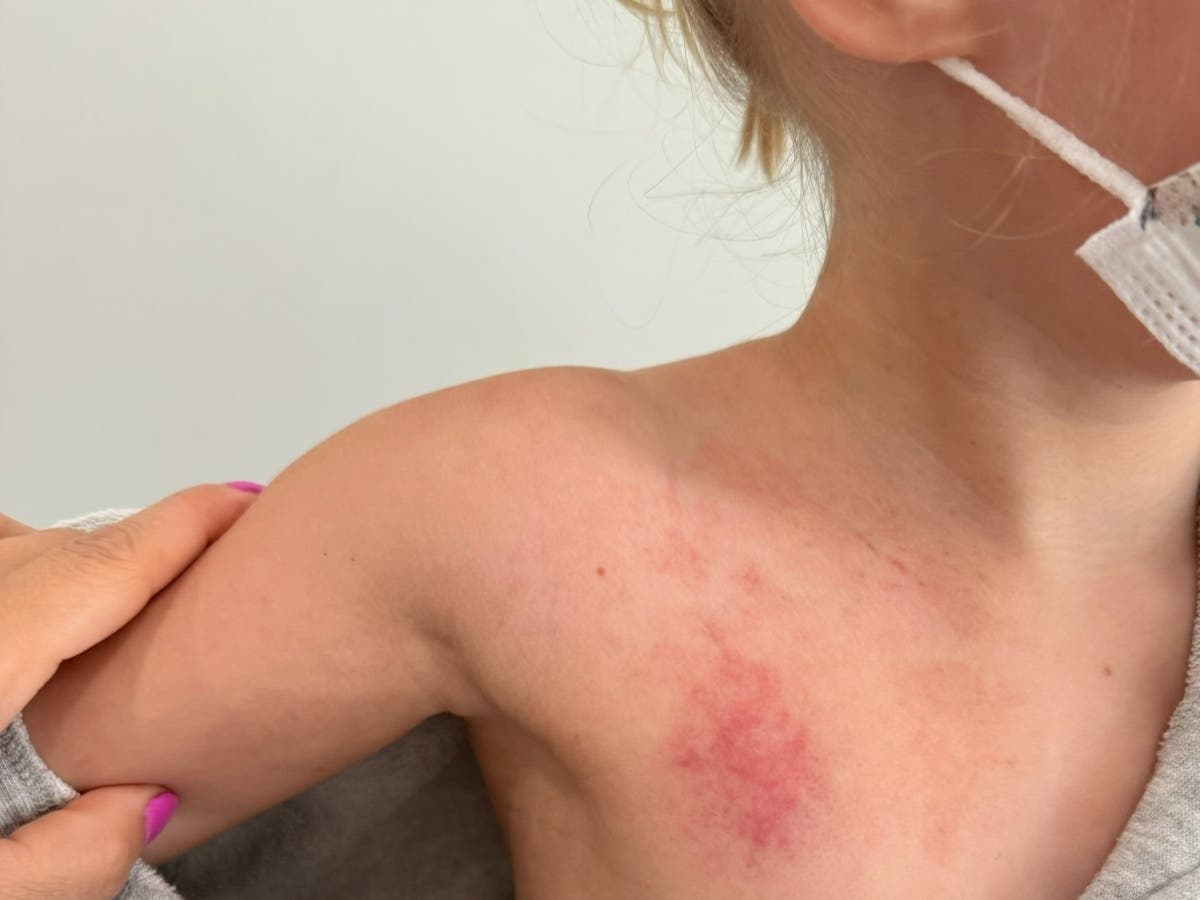
That's what they were doing on June 7 when their 6-year-old daughter Amelia had an encounter with a clinging jellyfish that left her with a rash, a large welt and led to multiple trips to the emergency room to try to find relief.
Find out what's happening in Brickfor free with the latest updates from Patch.
"We have never experienced anything like this," Julianne said. "Amelia was in significant pain for four days and we couldn't understand why nothing was helping."
A 10-year history
Clinging jellyfish were first found in the Manasquan River near the Point Pleasant Canal in 2016. They are an invasive species, originating in the Pacific Ocean.
They were first observed in the eastern Atlantic at Woods Hole, Massachusetts, and by the 1920s they had spread to other waterways in Massachusetts and Connecticut. They do not swim or migrate, but can hitch a ride in a ship's ballast — which is likely how they spread to New Jersey — or from Pacific oysters containing polyps.
Paul Bologna, director of the marine biology program at Montclair State and a top expert on jellyfish, has been tracking and studying the creatures since they were first found in New Jersey, through research funded by the state Department of Environmental Protection.
It wasn't until 2018 when they drew widespread attention in New Jersey after two people wound up hospitalized after being stung at Tices Shoal, a popular hangout spot for boaters in Barnegat Bay where the water is shallow enough to wade.
The Metedeconk River has been a hotbed for the creatures, which range from the size of a dime to the size of a quarter and are difficult to see in the water. They inhabit the sea lettuce and other aquatic vegetation, but generally disappear in mid-July when the water heats up.
"We have done lab experiments which show that when they are exposed to three to four days of water exceeding 28 degrees Celsius (85 degrees Fahrenheit) they end up dying," Bologna said. "In New Jersey, we often get that first serious heat wave in late June-early July. So far, we have not seen that extended hear, but when it comes that is usually when the clinging jellyfish start to decline. Other jellies show up like the bay nettles, but at least the worst ones living in our waters begin to go away."
In the last few years attention to the clinging jellyfish has died down, in part because there haven't been widespread issues with people being stung. Bologna, who regularly shares updates on the jellyfish in the state in the New Jersey Jellyspotters Facebook group, has been documenting clinging jellyfish stings and said the last one he received was about four years ago.
Amelia's sting is the first one he is aware of in New Jersey involving a child, he said.
A painful sting, a search for answers
Julianne Colvin said the family was swimming the morning of June 7 when Amelia got stung on the chest. They took her to an urgent care and at the time and while the doctors noted she had been stung by something, they couldn't identify what it was because the mark was still barely visible.
Four hours later, however, Amelia had a large welt and a rash that was spreading toward her collarbone and she was in intense pain, so they headed to the emergency room.
This time doctors were able to say it was a jellyfish sting and gave her lidocaine cream in addition to the Motrin Amelia had received earlier, Julianne said.
Over the course of the next two days, the Colvins took Amelia to the emergency room again, and then to their pediatrician, and had a telemedicine visit, because the welt and rash were spreading — across Amelia's chest, collarbone and her arm — and because the pain, which would come in waves, was disrupting Amelia's sleep. They prescribed Motrin, Zyrtec, hydrocortisone cream, Benadryl and a topical steroid, with little effect.
Finally, at 12:30 a.m. on June 10, Julianne emailed Bologna.
"I sent a desperate email to a marine biologist I found while researching online. He wrote back immediately and for the first time in four days I had real answers," Julianne said. "Understanding what had stung her and why she was in so much pain gave our whole family a sense of relief — even though the pain itself hadn't changed yet. Just knowing what we were dealing with made an enormous difference."
Amelia finally got a full night's sleep on June 10-11, Julianne said.
"She is the bravest little girl," Julianne said. "She handled something incredibly difficult with so much strength. I couldn't be more proud of her."
"I want to be really clear — the doctors we saw were doing their best," Julianne said. "The challenge is that Amelia is believed to be the first child ever stung by a clinging jellyfish in New Jersey. There was no playbook for this. No documented pediatric cases to reference. I'm not sure any doctor could have known exactly what they were looking at."
"What this experience showed us is simply that we need more awareness — in our communities and in our medical communities — about what these jellyfish are and what a sting looks like," she said.
Spreading awareness
Jellyfish are a common sight in New Jersey's bays in the summer months, with bay nettles making their presence known usually in mid- to late July as the waters warm up.
That's what the Colvins expected until Amelia got stung. But it's important to the family that their children — they have a 3-year-old son, James —not be afraid of the water.
"We don’t want to have a fear of swimming in our backyard, that’s a huge reason why we bought our house," she said. "We crab, fish, swim, paddle board, and boat out on the river all the time. But now we are better educated on what inhabits our water and where these specific jellyfish like to hang out. Now we know to avoid seaweed and algae during this time of year."
That's what she wants for other families, too. And she's hopeful that sharing Amelia's story will help both families and medical professionals have a better sense of what they are looking at if they encounter another child stung by the clinging jellyfish.
"This was a very unfortunate chance encounter with an extremely painful clinging jellyfish and with Dr. Bologna educating the public we hope it doesn't happen to another family," Julianne said.
"I don't want my children to be afraid of the water," she said. "We live in a beach town and the water is a huge part of our lives. But this experience showed me that we have a responsibility to educate ourselves about the marine life in our own backyard. The more knowledge we have the better equipped we'll be to keep our children safe."

Treating a jellyfish sting
Bologna has offered the following advice for treating jellyfish stings in the past:
- Pour white vinegar after the initial sting. This immobilizes any stinging cells that have not fired.
- Then, pour salt water across the sting area to wash away any remaining tentacles. DO NOT pour fresh or bottled water over the area because it can cause the stinging cells to fire and continue to sting.
- Wipe the area with a clean, dry cloth and then apply a hot compress to the area. The heat helps denature, or destroy, the venom proteins.
There also is a product called Sting No More, which is known to be effective against many venomous jellyfish, Bologna said.
Get more local news delivered straight to your inbox. Sign up for free Patch newsletters and alerts.