Health & Fitness
'Clinging' Jellyfish With Toxic Sting Return To Jersey Shore; 17 Found
Seventeen "clinging" jellyfish with a toxic sting have appeared this month in New Jersey, so the state is investigating.


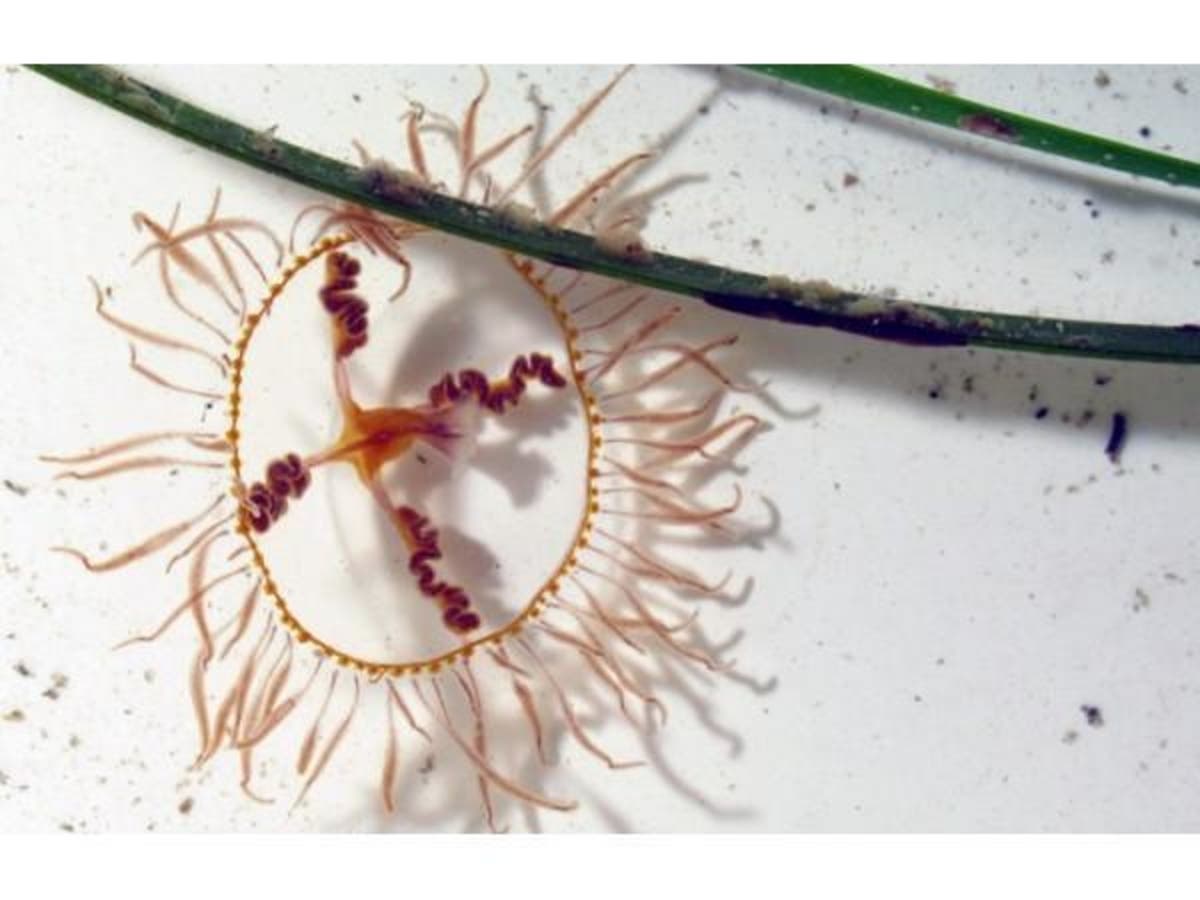
The state is searching for "clinging" jellyfish across the Jersey Shore after 17 toxic-sting-possessing animals were found.
Montclair State University is conducting a Department of Environmental Protection-funded study of clinging jellyfish, a small, invasive jellyfish that packs a toxic sting that can cause kidney failure.
A total of 17 small adults were identified from the Shrewsbury River in Monmouth County this past week, according to a DEP release.
Find out what's happening in Middletownfor free with the latest updates from Patch.
A New Jersey man was hospitalized last year with a "toxic sting" from a dangerous clinging jellyfish just as more were found at the Shore. The Middletown man was stung in Oceanport and was hospitalized soon after, according to Monmouth Beach officials.
Other clinging jellyfish were found in Monmouth County and in Ocean County near Brick and Point Pleasant Boro, and one was brought it to the Jenkinson's Aquarium.
Find out what's happening in Middletownfor free with the latest updates from Patch.
Last year, Montclair and the DEP conducted a survey to confirm and collect multiple specimens of the quarter-sized jellyfish. This year’s scientific work will attempt to further investigate distribution and breeding patterns of this species in the Shrewsbury River in Monmouth County and its biology.
“We look forward to learning more about the clinging jellyfish through our partnership with Montclair State University,” said DEP Commissioner Bob Martin in a release.
“We have completed our initial focus to determine the prevalence of this rare species. We now look to gain a better understanding of their presence and to what extent they are increasing in these waters.”
The discovery from last June was a first for New Jersey, when small number of clinging jellyfish (Gonionemus vertens) were observed and recorded.
Following that first single observation in the Manasquan River, more were observed in the Shrewsbury River, prompting DEP and Montclair State University to initiate a sampling plan for assessing the abundance of clinging jellyfish in New Jersey waters.
Sampling was conducted last June through August in the Shrewsbury River, Manasquan River and northern sections of Barnegat Bay, where the jellyfish has not yet been observed.
No clinging jellyfish have been found on coastal beaches, nor are they anticipated, as they prefer to cling to vegetation found in sheltered bay and estuarine waters.
This year, seven sites within the Shrewsbury River estuary where the species was found are being sampled, as well as other locations in the Manasquan River and Northern Barnegat Bay.
While the first two sample sessions in late May in these waters yielded no clinging jellyfish, the 17 small adults identified in the Shrewsbury River were found on Friday, according to the DEP.
“This year’s individuals appear to be blooming at the same time as last year’s individuals,” said Paul Bologna, Director of the Marine Biology and Coastal Sciences Program at Montclair State University. “This suggests that annual blooms may become a common feature in New Jersey.”
Bologna, working with John Gaynor, professor of Biology at Montclair State, will use DNA analysis of the 17 individuals collected last week to also detect early developmental forms of the clinging jellyfish that are too small to see by eye, according to the DEP.
They will use this technology to look for Gonionemus vertens polyps, which may be attached to aquatic plants or bulkheads in the Shrewsbury River estuary.
“It’s the polyp phase of the life cycle that persists from season to season and may be the reason for the return of the jellyfish to the Shrewsbury River,” Gaynor said.
“One of the objectives of this continued study is to determine to what degree these clinging jellyfish are becoming established in our waters,” Gary Buchanan, director of DEP’s Division of Science, Research and Environmental Health, said in the release. “This species had not been reported previously in New Jersey before last year and appears to be mostly limited to the Shrewsbury River. The challenge now is to determine what extent the clinging jellyfish are maintaining a population in this specific estuary.”
The clinging jellyfish, a native to the Pacific Ocean, is very difficult to spot in the water. A sting can produce severe pain and other localized symptoms and, in some cases can result in the need for hospitalization.
The clinging jellyfish is not known to inhabit ocean beaches or other sandy areas, but tends to attach itself to submerged aquatic vegetation and algae in back bays and estuaries, areas not heavily used for swimming.
According to the Woods Hole Oceanographic Institution, the clinging jellyfish has a red, orange or violet cross across its middle. Each jellyfish can trail 60 to 90 tentacles that uncoil like sharp threads and emit painful neurotoxins. Clinging jellyfish primarily feed on zooplankton.
The DEP encourages the public to exercise common sense and caution during recreation in areas where the jellyfish have been discovered. Anyone wading through these areas, especially near aquatic vegetation should take precautions, such as wearing waders to protect themselves. Swimming near lifeguarded beaches is, as always, encouraged.
If stung by a clinging jellyfish:
- Apply white vinegar to the affected area to immobilize any remaining stinging cells.
- Rinse the area with salt water and remove any remaining tentacle materials using gloves or a thick towel.
- A hot compress or cold pack can then be applied to alleviate pain.
- If symptoms persist or pain increases instead of subsiding, seek prompt medical attention.
For a map identifying New Jersey locations sampled for clinging jellyfish, visit:
http://njdep.maps.arcgis.com/apps/View/index.html?appid=b675e280405540a1b212d63be734345b
For more information on the clinging jellyfish, visit: https://www.njbeaches.org/njdep_public_files/ClingingJellyfish_factsheet%207-6-2016%20update.pdf
Patch file photo
Get more local news delivered straight to your inbox. Sign up for free Patch newsletters and alerts.