Health & Fitness
Virtua Doctor Who Battled Coronavirus Has Advice For Students
Dr. Christopher Pomrink, whose son Luke attends Temple, has advice for college students as they return to school.


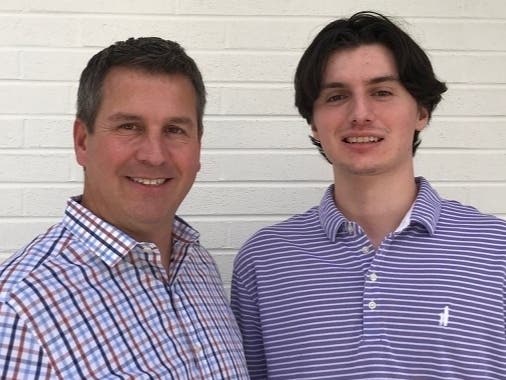
CHERRY HILL, NJ — A Virtua Health Care doctor from Cherry Hill who survived a bout with coronavirus has advice for students and parents as they prepare to return to class amid the pandemic.
His son is a Temple University sophomore who was on campus for two weeks before the university announced it would suspend in-person classes after an outbreak.
Dr. Chris Pomrink, an internal health physician at Virtua, stressed communication with the university's administration and using caution for large gatherings.
Find out what's happening in Cherry Hillfor free with the latest updates from Patch.
Pomrink was briefly hospitalized with the coronavirus in March as the pandemic was just taking hold and no one knew what to expect. He battled the virus for 16 days before getting better, and it was another four weeks after that before he fully recovered.
New Jersey Coronavirus Updates: Don't miss local and statewide announcements about novel coronavirus precautions. Sign up for Patch alerts and daily newsletters.
Find out what's happening in Cherry Hillfor free with the latest updates from Patch.
He’s followed the virus carefully after his experience, and knows the important role young people play in stopping the spread of the disease.
“You see who it’s really impacting, which is the elderly and people with pre-existing conditions,” Pomrink said.
But the virus is easily spread, and those who have it may never exhibit symptoms. Otherwise healthy people might have it, not know it, and spread it to some of the more vulnerable members of the population. This is important to note as colleges reopen.
“We need to make sure college students are aware,” Pomrink said. “I worry that they’re not following the guidelines.”
His son, Luke, is a college student who is aware of the situation following his father’s experience.
“It was scary when I first found out,” Luke Pomrink said. “It was a reality check that it was very real, very serious. It made me more aware.”
Patch spoke with the Pomrinks before Temple announced in-person classes would be shut down until Sept. 11 due to 103 "active cases" of the virus on campus. Read more here: Temple Postpones In-Person Classes After 100+ Coronavirus Cases
Luke Pomrink is taking all his classes online, but was living in a privately-owned apartment on campus. He remained on campus as of Tuesday morning, according to his father.
Before the announcement, Luke described the environment on campus as “very promising,” with every student wearing a face covering. He said there were some parties, but no major issues had been reported at that time. He also understood an outbreak was a realistic possibility.
“Some of the other students are knowledgeable,” said Luke, who noted that he was outspoken among his group of friends about taking steps not to spread the virus. “My duty is to enforce this idea that they need to take it seriously.”
As his father, Christopher Pomrink said he was happy with the amount of communication between Temple and their students and families.
He recommends students follow these safety guidelines:
- Be aware of the virus data in the area where your college is located. How far into “reopening” is the region? What are state and local officials recommending regarding college and campus life?
- Adhere to the four basic safety measures for this pandemic: Wear a mask in all indoor and outdoor public spaces, maintain 6 feet of distance from other people, wash your hands or use hand sanitizer often, monitor your own health — if you are sick, stay home, self-isolate, and contact the student health office.
- Gather only in small groups, preferably outside.
- Learn your university’s policies on in-person, online, and hybrid classes, and stay informed as the plans may change in response to COVID-19 trends.
He also recommends they ask the following questions:
- What is the university policy on COVID-19 testing?
- Will there be symptom screenings, such as temperature checks, for students, faculty, and staff?
- Does the college offer a COVID-19 testing site through student or employee health services?
- How does the university handle contact tracing and quarantine to limit an outbreak?
- Is there dedicated housing for quarantine if students should contract the virus?
- How will in-person classes be scheduled to maintain social distancing?
- Will dining halls be configured for social distancing? Will they offer outdoor dining or take-out options with disposable utensils and containers?
- Are vulnerable students accommodated with single-room housing?
- How will the university promote safe and compliant student behavior? Is there an education plan for students, faculty, and staff?
“College students need to be aware of their environment and the situations they are placing themselves in,” Dr. Pomrink said. “Unfortunately, there will be students who disregard public health recommendations. Students who are anxious about COVID-19 during this pandemic must avoid situations like parties and large gatherings. They must be aware of the risks to themselves, their classmates, and their families.”
With reporting by Tim Moran
Get more local news delivered straight to your inbox. Sign up for free Patch newsletters and alerts.