Schools
Cranford High Ranks 13th Out of 100 Top Schools
New Jersey Monthly rating jumps from number 29 in 2008.

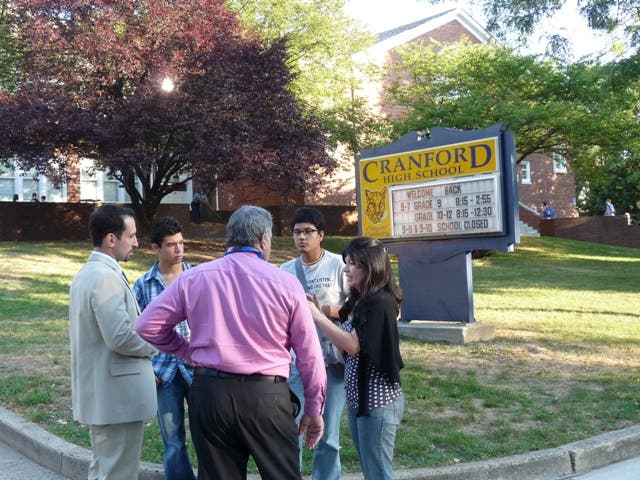


Cranford High School was ranked number 13 out of 100 on New Jersey Monthly's list of top state high schools in August, jumping up from number 29 in 2008.
Using data analyzed by Monmouth University's Polling Institute, New Jersey Monthly ranked state high schools using indicators such as the student-facility ratio, student performance on state and federally mandated tests and "student outcomes" – where students ended up after graduating high school. Four-year colleges were given the most weight.
"To be on that list is amazing," John Arlotta said, the district's supervisor of academic affairs. "We're very proud. Obviously there are other things that make a good high school, but it's nice to get recognition."
Find out what's happening in Cranfordfor free with the latest updates from Patch.
In 2009, Cranford High School enjoyed a 12.1 students-per-instructor ratio, according to the National Center for Education Statistics. The national average is around 15.5 students per instructor.
More students took advanced-placement tests this year, Arlotta said, which helped Cranford climb in the state rankings. Only 180 students took the tests in 2000, he said, whereas 599 took them in 2009 and 643 took the tests in 2010.
Find out what's happening in Cranfordfor free with the latest updates from Patch.
The advanced-placement tests are graded on a scale from 1 to 5. This year, 77 percent of students scored a 3 or higher, up from 71 percent in 2009.
Arlotta said that Cranford's jump in ranking is the result of an academic shakeup within the district. In 2003, he said, Cranford High School principal Carol Grossi and former superintendent Lawrence Feinsod developed plans to make classes more rigorous and increase opportunities for learning outside the classroom.
"(The school) starting moving very quickly towards these goals," Arlotta said. The district established the High School University of Cranford in 2004, where students are grouped according to academic interest, take part in seminars and field trips and are required to take one advanced placement class a year.
"We have a lot of opportunities for students to go beyond the walls of high school," Arlotta said.
In addition, the district instituted dual-credit programs through partnerships with Kean University and the University of Medicine and Dentistry of New Jersey. Although classes in these programs are taught at the high school, students earn college credits at the same time.
Cranford High School also made the Newsweek ratings this summer, coming in at number 551 of 1600 high schools. Only 6 percent of schools nationwide made the list, which, like the New Jersey Monthly rankings, took into account advanced-placement tests and college-level classes.
Cranford's leap in the New Jersey Monthly rankings signify an achievement, but one perhaps dampened by political and economic developments this year. As New Jersey Monthly warned, "What the rankings do not tell us is how the schools will fare after losing $820 million in direct state aid this year."
Arlotta acknowledged that the high school cannot afford to start any new programs for the 2010-2011 school year, including a visual arts program that was slated to debut this year as part of the University program.
"We would like to not take a step back" in the rankings, he said. "But like all schools, we're going to have to do a lot more with less."
Get more local news delivered straight to your inbox. Sign up for free Patch newsletters and alerts.