Politics & Government
Union Catholic Neighbors: Blindsided by Lights
In Part Two of our three-part series, residents claim that the addition of lights to the school's baseball field was never discussed, and they continue to fight the ruling on the field's location.




Bill and Heidi Terens got an unwelcome surprise in the mail last June, a notice from the Township of Scotch Plains that had applied to install stadium-style lights around its new baseball field.
For the Terenses, whose backyard abuts the first-baseline, it was the last straw. They said they fully supported the school’s plans to renovate its worn field, a project that began in 2009, but they claim that Union Catholic administrators misled them about the potential for stadium lights. So they, like many residents living within 200 feet of the sports complex that were notified about the lighting application, were livid.
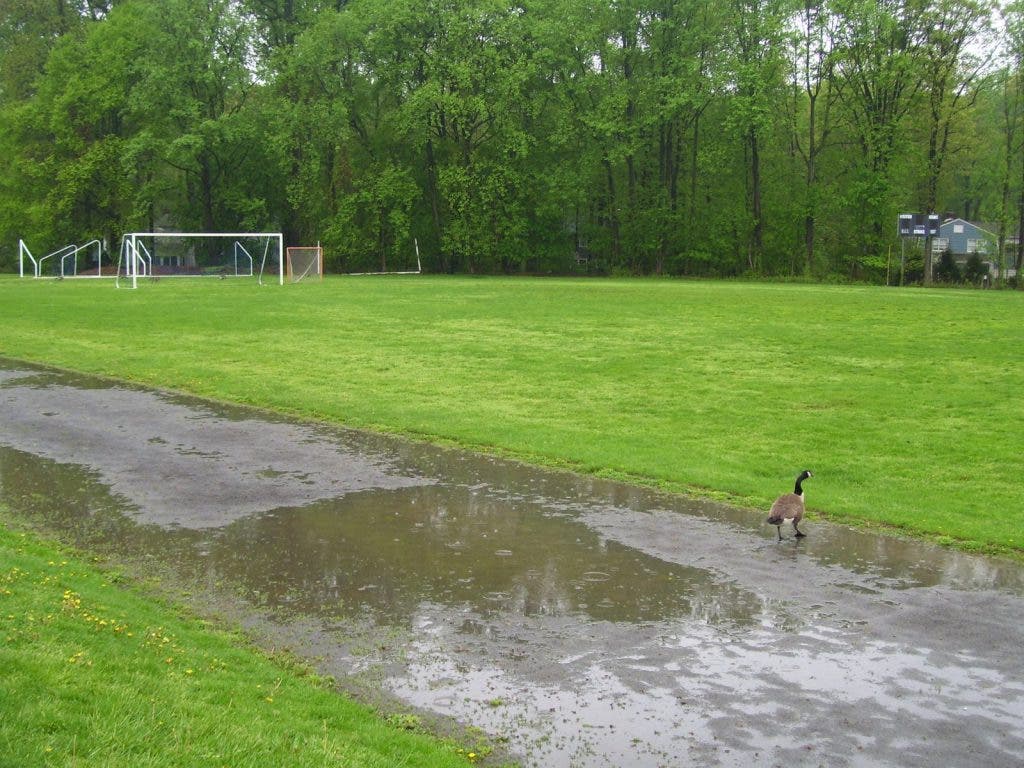
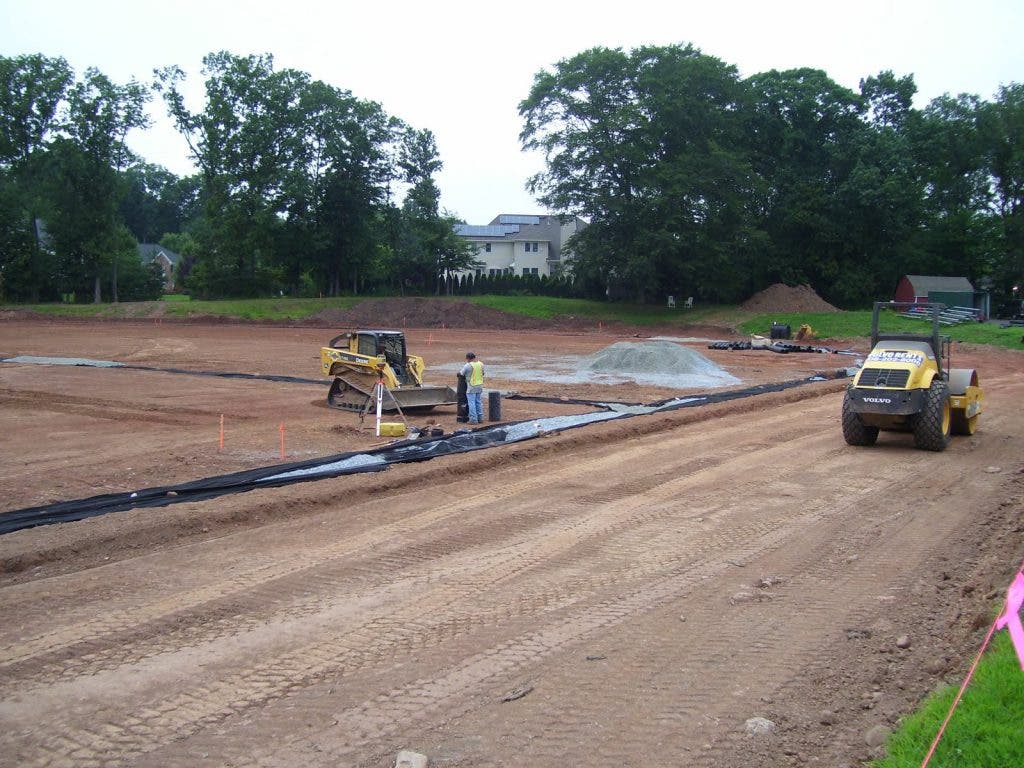
“It would rain and that field would be wet for 10 days after that, so we were happy that they were going to do it,” Bill Terens said of the school’s plans to improve conditions for the athletes. After all, the Terenses have called Union Catholic a good neighbor since they moved into their home at 26 Black Birch Road in 1993. But, once construction began in 2009, Bill Terens said that enduring the project was a burden, and that construction crews worked seven days a week through the summer and early autumn. He, and other neighbors, alleged that construction often began as early as 7 a.m., in violation of township noise-control ordinances for work crews.
Find out what's happening in Cranfordfor free with the latest updates from Patch.
Union Catholic administrators denied claims that construction crews worked before- or after-hours to regrade the school’s the fields, install French drains, replace grass with synthetic turf, build dugouts, permanent bleachers and fences around the baseball field, and rubberize an asphalt running track that traces the triangular outline of the athletic complex, located in the northwest corner of the school’s 20-acre property on Martine Avenue.
“That does not accurately reflect my recollection of the construction process,” assistant principal and baseball coach Jim Reagan said. “There are town ordinances as to when work can start and when work can end, and the construction company made sure to abide by those ordinances.”
Find out what's happening in Cranfordfor free with the latest updates from Patch.
When the first phase of construction ended in April 2010, residents discovered that the dugouts and bleachers had expanded the field’s footprint to within about 15 feet of their property lines. That same month, with the start of baseball season, foul balls started crashing into neighbors’ decks and siding – far more than before the renovation, they allege.
“We just started to notice a tremendous number of foul balls coming into the backyard,” Heidi Terens said. So many in fact, that the Terenses filled two large shopping bags with the baseballs. “In spring 2009, there were a handful of balls. We would get 20 a whole summer…. Now, it’s closer to 100.” She added that “the balls don’t just land over there,” pointing toward the edge of the backyard that abuts the school, “they land all over the place.”
Nevertheless, the balls had not broken windows or beaned residents, and the school’s neighbors expressed confidence that 48 years of cordial relations would help the parties find a solution agreeable to all.
The lighting application of June 2010, however, derailed any attempt at reconciliation. “I said, ‘I am not living next to Wrigley Field,’” said Rajul Shah, who has lived with her husband and three children, ages 18, 11 and 2, at 4 Dutch Lane, adjacent to left field, since 2000. “Our property values are going to tank in half.”
The site plans that Union Catholic shared with residents at an informational meeting about the $1.3 million renovation project on June 23, 2009 – the day after construction started – did indicate the locations of seven proposed stadium-style lights, illustrated on the blueprints by black, half-inch starbursts. Principal Sister Percylee Hart, associate principal Karen Piasecki and assistant principal Jim Reagan, however, “told us, 'Don’t worry, we only got permission to put in the underground wiring,'” Heidi Terens said.
Bill Terens added, “They assured us that it was way off in the future. There were even some jokes that, ‘Well, maybe we’ll get the lights when we get a football team. And that’s not even in the plans.’ They just made it seem like it was a generation away.”
As Shah described, “We felt we could find the win-win, figure it out, and move on.”
Neighbors today claim that they were deceived. Union Catholic officials have called the situation a misunderstanding. Hart and Piasecki, the principal and associate principal, have refused to comment. The debate continues, a neighborly dispute catapulted by neighbors’ anger and school administrators’ frustration into a bitter and protracted legal fight.
Discovering the Violations
During a site inspection on Oct. 2, 2009 – less than four months after construction began – Scotch Plains Zoning Officer Robert LaCosta, himself a member of Union Catholic’s first graduating class of 1966, discovered that Union Catholic had installed five roughly eight-foot-tall stanchions to accommodate three, 60- to 80-foot-tall stadium-style lights and an 18-foot-by-12-foot electronic scoreboard. The stanchions went far beyond the limits of the school’s construction permit, which explicitly restricted construction to the “installation of u/g conduit and pull boxes for future use” – in other words, underground tubes and wires, not steel poles planted in concrete foundations.
“On Friday, October 2 2009, I indicated to you that you did not have municipal approval for the installation of the scoreboard,” LaCosta wrote in a letter dated Oct. 5 that he sent to Daren Phil, vice president of Suburban Consulting Engineers, Inc., and the engineer charged with overseeing the renovation project, as well as Jeff Long and Dave Sullivan, project manager and project superintendent at The LandTek Group, the company that carried out the construction. “In addition, you are reminded that no approvals were granted, nor were permits issued, for the installation of light poles, footings, or any fixtures associated with lighting…. Be advised that you are in violation of the Uniform Construction Code, as well as the permit, which was issued for the reconstruction of the field at the above-referenced site. You are hereby ordered to immediately remove any and all items associated with the installation of the aforementioned score board, as well as any above-ground lighting. ”
Reagan, the school’s assistant principal, said that he, Hart and Piasecki – the principal and associate principal – fully understood that by installing the stanchions, they would be violating the permit and, by extension, breaking the law. He described the action as an attempt to cut potential future costs.
“The heavy equipment was there,” Reagan said. “We didn’t want to have to go back in and tear-up the turf later.”
Asked whether he and school officials had decided to simply beg forgiveness instead of ask permission, Reagan replied, “That's customary construction protocol,” adding in a follow-up interview two days later that “the construction company” and “our engineer” had told him “it’s standard procedure.”
Long, project manager at The LandTek Group, the construction company, said that he had neither recommended installing the stanchions nor told Union Catholic officials that performing more work than allowed by permit was standard or common procedure.
“We were just following directions,” Long said, adding that his instructions came from Phil, the project engineer.
Phil, twice encouraged to speak to the press by Union Catholic attorney Bill Butler, did not return repeated phone calls from Patch. Sullivan, the project superintendent for LandTek, also declined to return calls.
Experts in land-use and zoning law describe Reagan, Piasecki and Hart’s decision to install the stanchions in spite of the limits set down by the permit as highly irregular.
“It’s certainly not standard protocol to build beyond your approved site plan,” said Alice Beirne, a land-use attorney who also serves as counsel for the West Orange Zoning Board of Adjustment. “If it’s on the plans, you can build it. If it’s not on the plans, you can’t build it.”
Attorney Aman McLeod, an associate professor and land-use expert at the Rutgers University School of Law in Camden, was more blunt. “If they did not check with their lawyer before building this and making the investment, they made a pretty big mistake,” he said. “If they did have a lawyer who told them to do this, that’s a malpractice suit right there. If they had gotten legal advice that this was OK – I’m suing my lawyer if I lose this suit, because this is a major screw-up.”
Butler, the owner of his Westfield law firm and the father of three Union Catholic graduates, said that Reagan, Hart and Piasecki had not consulted him about the stanchions, noting that school officials did not retain him as their lawyer until after the school had installed the stanchions.
Addressing the Violations
On Oct. 21, 2009, Phil drafted a response to LaCosta’s letter that included a “Scoreboard Replacement Plan” – a site map denoting the proposed location of four stadium-style lights and an electronic scoreboard, six stanchions in all. LaCosta, replying in a letter dated Oct. 26, reiterated that the permit he had granted prohibited the installation of scoreboard and light stanchions. Union Catholic then appealed LaCosta’s directive to the Construction Board of Appeals, which did not rule on the matter until the next year.
The school’s lighting application, meanwhile, led to further questions regarding the June 2009 permit as a whole. “You have to be wholly out of touch to think the neighbors wouldn’t think about the scoreboard and the lighting,” said Mark Solomon, a Princeton-based land-use attorney since 1986. “They trigger all the questions about, ‘Have we pursued the appropriate approval?’ Lights and scoreboards tend to get people’s attention.”
Shah and her husband, Sachin, hired attorney Marc Rogoff, a Scotch Plains resident who, in 2005, helped defeat a developer’s application to construct a house on a sliver of grass and trees called the “Cooper Road Island,” a particularly contentious issue in town at the time. The Terenses retained Joseph Murray, whose firm is based in Scotch Plains.
“Marc came to visit, took one look, and said, ‘Those aren’t supposed to be this close. Those are structures,’” Shah said – not of the stanchions, but of the dugouts and bleachers. Terens offered a similar account of Murray’s visit to his home on Black Birch Road.
The lawyers highlighted township ordinance 23-5.2(c)3, “Zoning: Permitted Conditional Uses,” which requires, “Public schools and private schools and institutions of higher learning operated by charitable, religious or eleemosynary organizations, which are not conducted as a business, subject to the following:… No structure is located within 100 feet of a street or property line.”
The field, dugouts, bleachers, retaining wall and fences constructed by Union Catholic, however, come as close as 15 feet from the property line. Hence, the residents and their lawyers argued that LaCosta, the zoning officer, should never have granted the school a construction permit.
LaCosta pointed to the September 1961 Zoning Board of Adjustment resolution that approved the Roman Catholic Diocese of Newark’s application to construct a private Catholic school at 1600 Martine Avenue. The resolution, which predates by 16 years the zoning ordinance that established the 100-foot setback, required Union Catholic to maintain “a natural screen of trees, shrubs and foliage along both sides and rear of the subject property allowing for a buffer strip of 25 feet.”
By June 2009, although the trees and brush along the edges of the school’s property had thinned, no structures of any kind had been built within the 25-foot setback, LaCosta said.
The site plan and permit application submitted in June 2009 by Union Catholic showed that the proposed dugouts and bleachers would push the facility’s footprint about 20 feet further into the setback. LaCosta, however, determined that neither the 1961 nor the 1977 setback requirement applied to the school’s proposed athletic facilities.
In a telephone interview, LaCosta said he based his decision on the following grounds:
- The proposed project represented a modernization or renovation of the facilities, not an expansion;
- That, as a result, the 1961 resolution – not the 1977 ordinance – still applied;
- That the use of “should” instead of “will” in the language of the 1961 resolution made it non-binding; and,
- Regardless, the proposed facilities are “accessory,” not “principal” or “primary” structures, and therefore not subject to the setbacks.
“The work they did out there, it was a direct replacement. They had a field that was grass, they put up a field that was turf,” LaCosta stated.
He also cited an interpretation of the 1977 ordinance he received in “the early 1980s” from then-township attorney Michael Mitzner, when Evergreen Elementary School applied to build a tire playground. “The opinion I got from Mr. Mitzner was that, ‘No, this is a sports apparatus, playground equipment,” LaCosta said. “It’s exempt. It’s the same policy and theory that I’ve followed for over 30-some-odd years.”
Before the renovation, however, players sat on moveable aluminum benches, not in large stone dugouts. The spectators’ bleachers were portable aluminum risers. And although relief pitchers warmed-up along the first and third baselines, within roughly 15 feet of the property line, they did not do so inside 16-by-86-foot bullpens, which Union Catholic later started to use as batting cages.
Presented these changes, land-use experts said that LaCosta’s interpretation of the statutes was questionable at best. They asserted that Union Catholic’s application represented a true expansion, not a “direct replacement,” and therefore should have been subject to the 1977 zoning ordinance, thereby making any language in the 1961 resolution irrelevant.
As McLeod, the professor and land-use expert at Rutgers School of Law in Camden, argued, “They expanded the field, the bleachers, everything. It wasn’t just an upgrade, where they keep things the same and just upgrade the materials. It’s a little like Keystone Kops. The town didn’t do all its homework, because they signed-off on it, and frankly, it was illegal.”
Planning Board Opens Hearings
On June 28, 2010, the Scotch Plains Planning Board, of which LaCosta is a member, took up Union Catholic’s application. In addition to the proposed stadium lights and electronic scoreboard, it included a proposed storage shed and an addition to the gymnasium. The Shahs and the Terenses, represented by their respective attorneys, voiced objections to the application, alleging that the light and scoreboard stanchions and the shed constituted structures, and therefore could not be built within the 100-foot setback without obtaining variances, which can only be granted by the Zoning Board of Adjustment.
What followed was a prolonged debate between Butler, Rogoff, Murray, residents and members of the Planning Board. Their discussion focused on the storage shed, which Union Catholic proposed to build within 72 feet of the property line.
At 10 p.m. that Monday night, the board voted 5-1, with LaCosta dissenting, that the shed was a structure and therefore required a variance.
Butler, rather than apply to the zoning board, simply agreed to remove the storage shed from the school’s application and assured the planning board that it would be relocated in compliance with the 100-foot setback. Given the late hour, the board then voted to adjourn until the next scheduled meeting, July 12.
On June 29, 2010, the day after the Planning Board hearing, Rogoff, the attorney representing the Shahs, wrote to LaCosta, “requesting that the township issue an immediate stop work order to the Union Catholic Regional High School pending a review of this matter….. If the township does not stop the construction, my client’s only remedy is to file an immediate lawsuit against the township and seek an injunction.”
Eight days later, Rogoff filed a lawsuit against the planning board, the township and Union Catholic. Declaring that the Shahs would be irreparably harmed if the court did not act immediately, he sought temporary restraining orders and injunctions that would halt further construction at Union Catholic and prevent the school from obtaining any additional zoning or building permits from the planning board, zoning board or LaCosta. He also urged the court to find “that all prior building permits and/or zoning permits for any and all improvements made by the Union Catholic Regional High School to their athletic fields be deemed improper and in violation of the conditional use standards…and be vacated as a matter of law and have no legal effect.”
The suit did not make mention of foul balls and did not seek to restrict Union Catholic or other groups from playing baseball on the new field. Shah claims that she and Rogoff chose not to mention the foul balls because they felt they could reach an out-of-court agreement with the school.Reagan, the assistant principal, maintains that Shah did not complain about the foul balls until much later, to which Shah replies that she and her neighbors had hoped that the number of foul balls would decrease with the end of the school’s spring baseball season.
The lawsuit also did not claim any monetary damages. But in demanding that the court find LaCosta’s permit improper, it left only one possible remedy. As Rogoff, standing in the second-floor conference room of his office in Fords, his Land Rover with the license plate “LAWSOOT” parked outside, described with a touch of the dramatic, “I want to tear the thing down.”
The First Lawsuit
On July 9, 2010, three days after Rogoff filed for a restraining order and injunction, John Malone, assignment judge for the Union County Superior Court, heard oral arguments on Rogoff’s application at the courthouse in Elizabeth. Malone is the same judge who, nearly one year later, would issue a temporary restraining order against playing baseball at the school.
After listening to and questioning Rogoff, Butler, Lehrer and Planning Board Attorney Philip Morin, Malone denied Rogoff’s application for a temporary restraining order and injunction.
“How can I enjoin the Planning Board from hearing this application?” he said, according to a brief subsequently filed by Butler, noting that most of Union Catholic’s proposed renovations had already been completed. The judge then assigned the rest of the case to Judge Karen Cassidy, who would hear oral arguments Aug. 20.
Back in Scotch Plains, the planning board lacked the quorum to convene its July 12 meeting, so the discussion of Union Catholic’s site-plan application was pushed to the board’s next scheduled meeting, July 26. Meanwhile, Murray – the attorney representing the Terenses – filed an appeal to the Zoning Board of Adjustment, requesting that it define the word “structure” as it applied to the proposed stadium lights, scoreboard and stanchions. Butler, then Rogoff, filed parallel appeals in the months that followed. The first zoning board hearing on the matter would take place in December.
In the run-up to the Aug. 20 court date, Butler, Lehrer and Morin each filed briefs at the Union County Superior Court seeking dismissal of Rogoff’s lawsuit. The briefs do not address the validity of the permit issued by LaCosta, but instead highlight the 13 months that elapsed between the start of construction and Rogoff’s filing of the lawsuit.
Butler, Lehrer and Morin cite two state statutes: one that sets a maximum of 20 days to appeal a zoning officer’s ruling, and a second that establishes a 45-day limit. Referencing prior cases in which the courts upheld permits that had been improperly issued because the statute of limitations had expired – but careful to avoid conceding whether the permit LaCosta granted Union Catholic was improper – Butler, Lehrer and Morin argue that the Shahs’ deadline to challenge the permit had long since passed.
“Plaintiffs cannot now, after resting on their rights for an entire year, seek to undue the renovations and improvements made at the site at considerable expense to Union Catholic,” Lehrer, the township attorney, states in his brief.
In other words, in choosing to spend more than $1 million to upgrade the school’s athletic fields, Union Catholic relied on LaCosta’s interpretation of township land-use and zoning laws – in the absence of any legal challenges, it trusted that his interpretation was valid. Had the Shah family or other residents made a timely challenge to the permits, Butler, Lehrer and Morin assert, Union Catholic could have considered amending its renovation plans before spending the $1 million.
Rogoff, however, argues that the Shahs could not have known about the permit within 20 days because, unlike applications to the planning board and zoning board, construction permits are not announced to nearby residents. If LaCosta had referred the school’s application to either of the boards, the Shahs and other residents living within 200 feet of the school’s property lines would have been notified.
Butler, Lehrer and Morin, by contrast, contend that not only did the Shah family attend at least one of two informational meetings held at Union Catholic in June 2009, but it also spent nine months watching construction take place mere feet from its backyard.
Terens, however, argued otherwise. “Sometimes you don’t know how it’s going to affect you until a project is finished,” he said, looking from his back porch to the bright yellow foul poles that poke through the tree line. “While they’re just moving dirt around it’s hard to know exactly what it’s going to look like.” He also pointed out, with the hint of a smile, that the first-base foul pole stands far right of the foul line, therefore serving no purpose other than “decoration.”
Judge Cassidy ultimately sided with the school, the township and the planning board. Rendering an oral judgment on Aug. 20, 2010, she dismissed Rogoff’s lawsuit on the basis of the 20-day rule. In October, Rogoff appealed the dismissal to the state’s appellate division.
Experts predicted that Rogoff and the Shahs have a slim shot at winning. If the statute of limitations has long expired and a builder has sufficiently relied on the permit, they said, it is rare for a court to then invalidate that permit, even if it was improperly issued.
“If you see construction going on, you have to take action as soon as you can figure out what it is – not when they’re playing baseball however-many months later,” Solomon, the Princeton-based attorney, said. “You did have an opportunity somewhere between those two events to say, ‘I think that something’s wrong’ – not when something’s up and going and running, and they’ve relied on everyone’s inaction.”
The Construction Board of Appeals also reached a decision. In September 2010, it unanimously found that although Union Catholic had violated its permit by installing the stanchions, it would not need to remove the stanchions until the zoning board determined whether the proposed stadium lights and scoreboards represented “structures,” and, if so, whether they merited variances.
For violating the permit, the Construction Board of Appeals fined Union Catholic $200, LaCosta said. The board then credited the school $100 – the fee it had paid to appeal LaCosta’s original ruling.
“There’s no amount of money that could make the fine punitive,” Beirne, the West Orange Zoning Board attorney, explained. “The hammer over their head is they may be ordered to take the stanchions out, and that would be a big punitive measure. The zoning officer does have that ability. If the zoning board denies the variance, then it’s up to the zoning officer to order the school take out the improvement.”
Removing the stanchions, Butler said, would cost between $70,000 and $80,000. In the short term, however, the school’s gamble appears to have paid off.
This is the second installment of a three-part series. To read Part One, . To read a short overview of the entire series, . To see the accompanying editor's note, .
Get more local news delivered straight to your inbox. Sign up for free Patch newsletters and alerts.