Neighbor News
AI Is No Longer a Tool—It’s the New Utility
AI is now an always-on business utility, helping marketing teams automate workflows, improve decisions, and scale smarter—not harder.

Most leaders still talk about AI like it is another tool in the marketing stack.
Open the app. Ask the question. Get the output. Close the app.
That framing made sense for about five minutes. Now it is already costing teams time, leverage, and competitive advantage.
Find out what's happening in East Brunswickfor free with the latest updates from Patch.
A tool is something you pick up for a job and put back down when the job is done. A hammer. A spreadsheet. A dashboard. A campaign builder. You use it when you need it, then it goes back in the drawer.
A utility is different.
Find out what's happening in East Brunswickfor free with the latest updates from Patch.
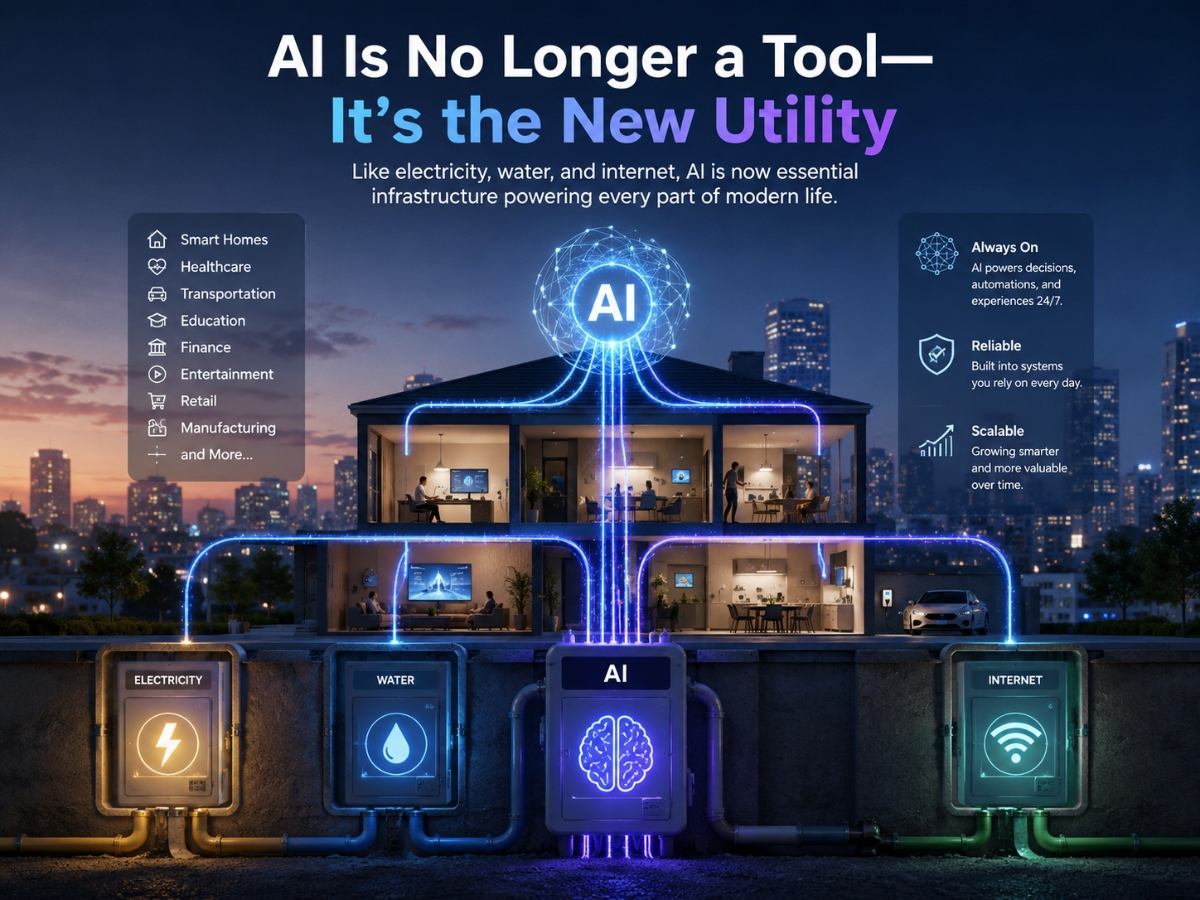
Electricity, water, the internet, cloud computing. These are not occasional conveniences. They are always-on layers that modern businesses assume will be available every hour of every day. You do not “use the internet” for twenty minutes and unplug it. You build the business around the fact that it is there.
AI has crossed that line.
It is no longer just the thing you open when you need a blog post, ad variation, email subject line, or sales script. It is becoming an always-on operating layer for AI in marketing, where teams can monitor, draft, summarize, analyze, compare, flag, route, and recommend while humans are doing higher-value work.
That is the mindset shift.
The teams pulling ahead are not asking, “Should we use AI?”
That question is over.
They are asking, “What parts of our operation should run on AI, and who owns the meter?”
That second question matters. Utilities create leverage, but they also create dependency, usage costs, governance issues, and new forms of waste. When AI is treated like a toy, nobody watches the meter. When AI is treated like a utility, leaders start asking better questions.
What work should be automated?
What work should stay human?
Where do we need to review?
Where can AI run continuously?
Where are we paying for low-value output?
Where could an always-on system catch something our team would miss?
For marketers, this changes the shape of the job.
AI is not just helping write more content. It is changing how campaigns are planned, launched, measured, and improved. It can scan performance data before the morning meeting. It can turn customer research into creative briefs. It can watch competitors. It can summarize call transcripts. It can identify gaps in landing pages, emails, offers, and follow-up sequences.
But none of that happens if AI is treated as a once-in-a-while productivity hack.
The real advantage comes when teams redesign workflows around AI being available all the time.
That does not mean replacing people. It means raising the bar for what people spend their time on. Less copy-pasting. Less first-draft work. Less hunting through tabs, spreadsheets, and meeting notes. More judgment. More strategy. More creative direction. More useful decisions.
The practical starting point is simple: pick one recurring marketing process and ask what would change if AI were available inside that process 24x7x365.
Not as a chatbot.
As infrastructure.
For more practical AI marketing frameworks, prompts, and workflows, visit MarketingAlec.com.