Neighbor News
The Busy Person's Guide to Managing Everyday Pain Without Slowing Down
Everyday pain can disrupt busy schedules. Learn how pain patches offer convenient, targeted relief for muscles and joints.

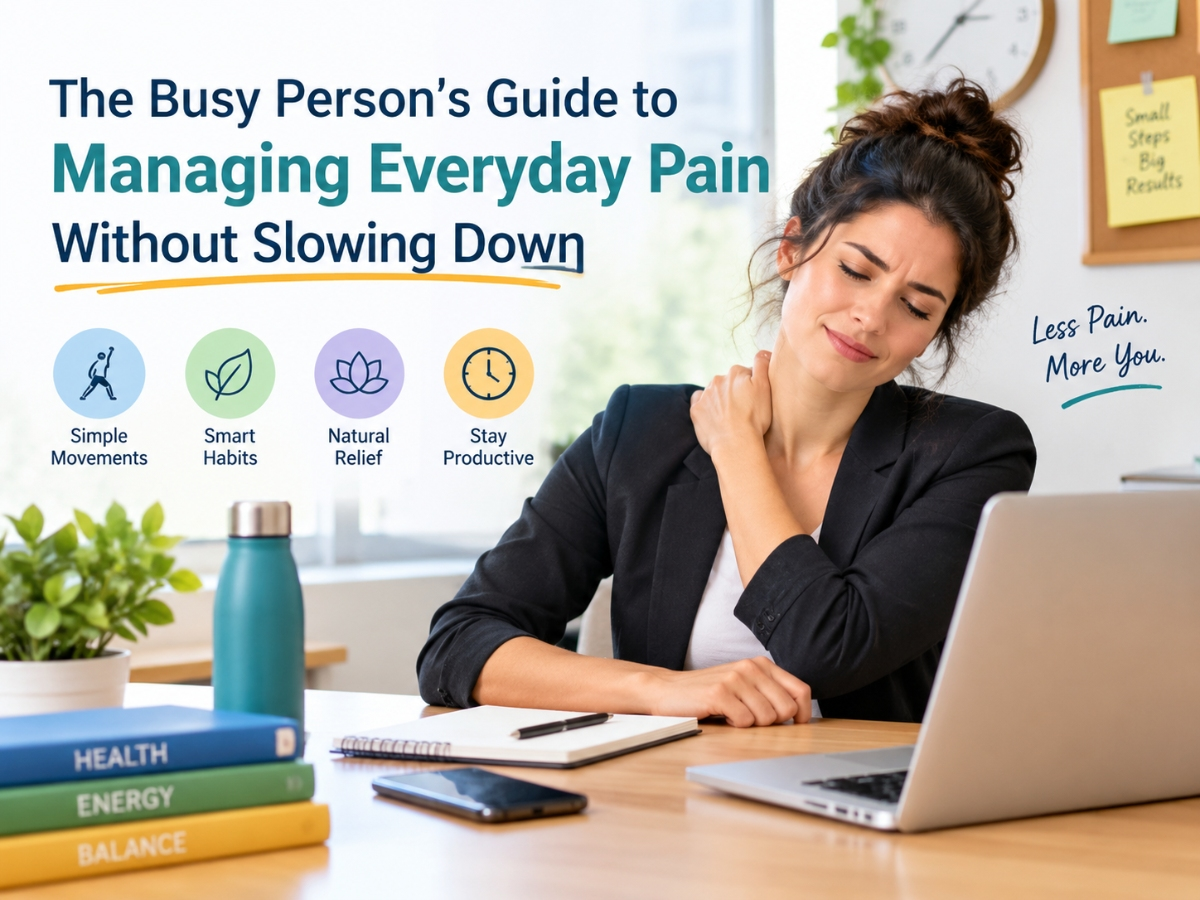
Most people who deal with everyday pain do not have the luxury of stopping. There is work to get through, kids to pick up, errands to run, and a list of things that does not shorten itself just because your lower back has opinions about yesterday's yard work. The reality of managing pain for most people is not a carefully scheduled recovery plan. It is figuring out how to keep functioning while the body works through whatever it is working through.
The good news is that pain management has gotten considerably more practical in recent years, and the options available for everyday aches, the kind that come from sitting too long, lifting something awkward, or simply asking more of your body than it wanted to give on a given day, have expanded well beyond the medicine cabinet staples most people default to. Understanding what those options are and when each one makes the most sense is genuinely useful information for anyone who needs to stay functional while managing discomfort.
Why the Medicine Cabinet Default Does Not Always Work
For decades, the standard response to everyday pain has been to reach for an oral pain reliever and get on with it. For a lot of situations, that works fine. But oral pain relievers come with a set of practical limitations that become more relevant when pain is something you are managing regularly rather than occasionally.
Find out what's happening in East Brunswickfor free with the latest updates from Patch.
The Timing Problem
Oral pain relievers typically take 30 to 60 minutes to reach meaningful effect after ingestion, require redosing every four to six hours, and produce a concentration peak followed by a decline. For pain that is fairly constant throughout the day, this means you are either timing doses carefully or dealing with gaps in coverage. Neither is ideal when you are in the middle of a work day or trying to get through a full afternoon of activity.
The Stomach Consideration
Non-steroidal anti-inflammatory drugs like ibuprofen and naproxen are effective pain relievers, but they require food to minimize gastric irritation and are not ideal to take repeatedly throughout a busy day when meals are irregular. For people who skip lunch, eat at unpredictable times, or have any history of digestive sensitivity, building a pain management routine around NSAIDs on an ongoing basis creates its own set of complications.
Find out what's happening in East Brunswickfor free with the latest updates from Patch.
The Systemic Effect
Oral pain relievers distribute throughout the entire body regardless of where the pain is located. For a headache, that systemic distribution is appropriate. For a sore shoulder or a tight lower back, it means taking a compound that affects your whole system in order to address something quite specific. This is not dangerous under normal use, but it is a blunter instrument than the situation may require.
What Pain Patches Do Differently
Topical pain relief patches work through a completely different mechanism than oral medications, and that difference translates into practical advantages for the specific situations most busy people encounter.
Direct Delivery to the Problem Area
A patch applied over a sore muscle or a painful joint delivers its active ingredients directly to that tissue through the skin, without requiring systemic distribution. The active compounds concentrate at the site of application, engaging local pain receptors and inflammatory processes where the discomfort is actually occurring. For localized pain, the site-specific nature of this delivery is a meaningful advantage over systemic approaches.
No Timing Required
Once applied, a patch works continuously without requiring any further action. There is no clock to watch, no dose to remember, and no gap in coverage while the next tablet kicks in. For people whose days do not have predictable pauses built into them, this passive delivery is a significant practical benefit.
Freedom to Eat on Your Own Schedule
Because patches bypass the gastrointestinal system entirely, their effectiveness is completely independent of food intake. Applied to the skin, active ingredients absorb directly into the dermal capillary network without any interaction with the stomach. This makes patches particularly practical for people whose eating patterns are irregular, who are trying to take in fewer medications overall, or who simply want to manage pain without the conditions that oral medications impose on when and how you can take them.
The Most Common Everyday Pain Scenarios and How Patches Fit In
Understanding when patches are the right tool requires thinking about the specific pain situations that most frequently disrupt a busy day.
Lower Back Pain From Desk Work or Driving
Lower back pain is one of the most common complaints among working adults, and it tends to be a slow accumulation rather than a sudden injury. Hours of sitting, an ergonomically imperfect setup, or a long drive can leave the lower back tight and sore in a way that persists through the rest of the day.
A patch applied to the lower back in the morning provides continuous coverage throughout the work day without any additional steps. Active ingredients including menthol and other counterirritants modulate pain signaling at the local level, while anti-inflammatory compounds work on the tissue-level inflammation that contributes to the persistent ache. The patch stays in place through a full day of activity, which is more than can be said for topical gels or creams that require reapplication and tend to rub off on clothing.
Shoulder and Neck Tension From Screens and Stress
Tension that accumulates in the shoulders and neck is another persistent companion for people who spend significant time at computers or in high-stress environments. This type of pain is often diffuse, covers a reasonably large area, and tends to worsen as the day progresses rather than presenting as a sharp, localized complaint.
For shoulder and neck tension, patches for pain offer the advantage of hands-free application that covers the relevant area without the need to reach back periodically to reapply a cream. Applied before a long work session or before an event-heavy day, a patch provides background support that takes one variable off the mental load.
Post-Exercise Soreness for Active Adults
Weekend athletes, regular gym-goers, and anyone who fits exercise into an already packed schedule knows the particular challenge of managing post-workout soreness while still needing to function at full capacity. Taking a day off to recover is not always an option, and the delayed onset muscle soreness that tends to peak 24 to 48 hours after exercise can make the day after a hard workout genuinely uncomfortable.
Patches applied to the most affected muscle groups after exercise provide sustained local support during the recovery window. Key advantages for active adults include:
- Hands-free wear that does not interfere with subsequent activity
- Consistent delivery throughout the day without interrupting a work or family schedule
- Targeted application to specific muscle groups rather than systemic coverage
Joint Discomfort in Knees, Wrists, and Elbows
Repetitive motion discomfort in joints like the knees, wrists, and elbows is common among people whose jobs or hobbies involve repeated use of those joints. Gardeners, construction workers, people who type extensively, parents lifting small children repeatedly, all of these groups deal with joint discomfort that builds over time and does not necessarily rise to the level of a medical complaint but is consistently present throughout the day.
For joint-specific discomfort, the targeted nature of topical delivery is particularly well matched to the problem. A patch applied directly over the affected joint concentrates active compounds at the tissue that needs support, rather than distributing a systemic dose across the entire body.
Building a Practical Pain Management Approach
The most effective approach to managing everyday pain is one that can actually be maintained alongside a real schedule. A few principles make that more achievable.
Match the Tool to the Situation
Not every pain situation calls for the same response. Headaches and widespread body aches are better served by systemic approaches. Localized muscle and joint discomfort is a better match for topical delivery. Distinguishing between these early, rather than defaulting to the same approach for everything, produces better outcomes with less overall medication use.
Apply Before the Day Gets Busy
The practical challenge with any pain management approach is remembering to use it when you are already in the middle of a difficult day. Building patch application into a morning routine, at the same time as other regular preparations, means coverage is in place before the day's demands begin to compound. This is especially relevant for people who know from experience which areas are likely to give them trouble on a given type of day.
Stay Hydrated
Dehydration is a significant but frequently overlooked contributor to muscle tension and pain sensitivity. Keeping fluid intake consistent throughout the day does not replace topical or systemic pain relief, but it does reduce the baseline pain sensitivity that makes everything else more difficult to manage. For busy people who frequently skip water in favor of coffee, this is a simple adjustment with noticeable effects on how the body handles the physical demands of a full day.
Know When to Rest
Patches and other pain management tools are genuinely useful for getting through a day when rest is not possible. They are not a substitute for adequate recovery when the body is signaling that something needs attention beyond routine management. If pain is worsening rather than holding steady, is accompanied by new symptoms, or is significant enough to affect sleep and function over multiple days, that is a signal to consult a healthcare provider rather than continuing to manage independently.
Making Patch Use Part of Your Routine
The practical appeal of Friendly Patch formulations is their fit with the realities of a busy day. Applied once, worn through whatever the day requires, and effective without imposing timing requirements or dietary conditions, they address the core need of most people managing everyday pain: staying functional without making pain management itself another thing to manage.
The days when pain gets in the way are going to happen. Having a practical, convenient approach ready before they do is the difference between a day that stays on track and one that does not.