Neighbor News
The Digital Neighborhood: How Local Communities Are Redefining Home Entertainment Through Cord-Cutting
Discover how local communities are replacing cable with fiber-powered streaming, smarter home networks, and flexible digital entertainment.

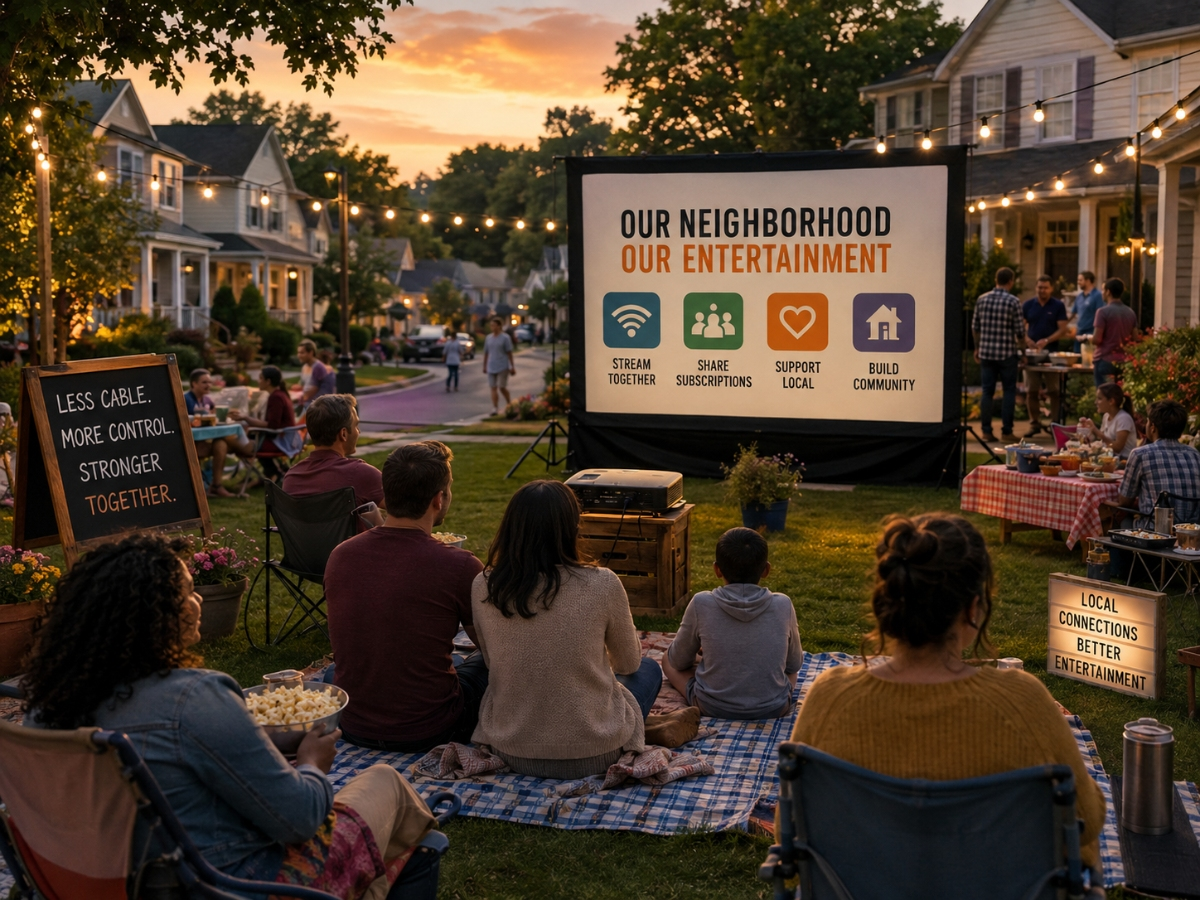
Over the past decade, the landscape of local living and community entertainment has undergone a radical transformation. Historically, neighborhoods and local municipalities were heavily reliant on monopolized regional cable providers. These providers dictated what local residents could watch, how much they had to pay, and the quality of the broadcast they received. Today, however, the modern digital household is taking back control. Driven by rapid advancements in residential fiber optics and broadband routing, local communities are embracing a decentralized approach to home media. This shift is not merely a change in technology; it is a fundamental restructuring of household economics and digital lifestyle. As we analyze the trends shaping 2026 and 2027, it becomes evident that digital broadcasting infrastructures are becoming as essential to a home as electricity and running water
The Economics of Local Living and Cable Monopolies
To understand the current media revolution, one must first look at the financial pressures facing the modern household. For years, families have watched their monthly utility and entertainment bills skyrocket, largely driven by rigid, bundled cable packages. These packages often forced consumers to pay for hundreds of channels they never watched just to access local news, regional sports, or premium movie networks. The financial burden prompted a massive, community-driven movement towards cord-cutting—a phenomenon where households cancel traditional television subscriptions in favor of internet-based streaming options. By redirecting those funds, families are investing in better local broadband connections and specialized digital broadcasting services that offer a la carte programming, ultimate flexibility, and vastly superior visual fidelity
Understanding the Technical Transition: The Rise of Digital Protocols
The departure from traditional coaxial cable has been made possible by extraordinary leaps in telecommunications engineering. Legacy broadcasting relied on radio frequency signals sent over copper wires, which were highly susceptible to weather interference, degradation over distance, and bandwidth limitations. In contrast, modern home entertainment relies on Internet Protocol (IP) networks. This data-driven approach utilizes UDP multicast routing and highly efficient video codecs, such as AV1 and HEVC (H.265)
Find out what's happening in East Brunswickfor free with the latest updates from Patch.
What this means for the average local resident is profound. Instead of a compressed, pixelated image during a live local sports broadcast, IP networks deliver lossless, ultra-high-definition 4K data packets directly to the living room. Edge computing—the practice of placing server nodes physically closer to residential neighborhoods—ensures that these data packets do not have to travel across the continent, thereby eliminating the dreaded buffering wheel that plagued early streaming adopters
Bridging Borders: Entertainment for Expats and Cross-Border Communities
North America is defined by its mobility. Local communities in the United States and Canada are incredibly diverse, hosting millions of expats, cross-border workers, and dual citizens. For these households, staying connected to regional news, local sports leagues, and cultural programming from their home region is a priority. Traditional cable providers are inherently restricted by geographical licensing, making it nearly impossible for a resident in Florida or New York to reliably access local broadcasts from Ontario or British Columbia
Find out what's happening in East Brunswickfor free with the latest updates from Patch.
This geographical barrier has been shattered by advanced digital broadcasting technologies. The infrastructure powering enterprise-grade iptv canada services demonstrates how internet protocol can seamlessly bridge these borders. By utilizing dedicated servers and encrypted routing tables, residents living abroad or in cross-border communities can maintain a real-time, high-fidelity connection to their home networks. This localized delivery model ensures that a family living miles away from their cultural roots can still experience their Friday night hockey games or daily regional news broadcasts with zero latency and flawless 4K resolution
Residential Fiber Optics and the Backbone of Modern Viewing
None of this digital independence would be possible without the massive infrastructure upgrades occurring beneath our neighborhood streets. The aggressive rollout of residential fiber optics (such as FTTH - Fiber to the Home) by independent and tier-1 internet service providers has provided the necessary bandwidth to support heavy media consumption. Modern households are no longer just streaming one show; they are simultaneously running smart home devices, participating in global video conferences, and streaming multiple 4K broadcasts across different rooms
This massive data consumption requires a robust backbone. Network engineers have optimized consumer-grade Wi-Fi routers (Wi-Fi 6 and Wi-Fi 7) to handle dense packet routing without dropping connections. When a household taps into a highly optimized digital network, they are essentially bypassing the public internet traffic jams. They are connecting directly to localized edge servers, turning the neighborhood into a hyper-connected media hub
How Neighborhoods Are Adapting to High-Fidelity Streaming
As local communities educate themselves on the benefits of digital transition, we are seeing a significant shift in how hardware is purchased and configured. The traditional set-top cable box is rapidly being replaced by intelligent micro-consoles, smart television operating systems, and dedicated network-attached devices. Homeowners are now discussing CPU processing power, Ethernet versus Wi-Fi latency, and hardware decoding capabilities with the same enthusiasm they once reserved for home renovations
In regions where internet service providers attempt to throttle high-bandwidth video streams during peak evening hours, technologically savvy households are fighting back. By routing their traffic through specialized, encrypted protocols and utilizing premium canadian iptv pathways, residents ensure their data remains private and their connection remains unthrottled. This cat-and-mouse game between ISPs and consumers has only accelerated the development of better, faster, and more secure streaming architectures, ultimately benefiting the end-user
Community Connectivity and the End of Buffering
The psychological impact of this digital transition on the household cannot be overstated. Entertainment is a communal activity. Whether it is a family gathering for a holiday movie, or a neighborhood hosting a watch party for a major sporting event, the reliability of the broadcast is paramount. The old era of gathering around a screen only to have the broadcast freeze at the critical moment of a game is ending
Thanks to adaptive bitrate algorithms, modern digital broadcasting systems can instantly assess a home’s internet connection and adjust the video quality on the fly, ensuring that the stream never stops playing. If network congestion occurs locally, the algorithm seamlessly shifts the load, maintaining continuous audio and visual delivery. This reliability is what has finally convinced even the most hesitant consumers to abandon legacy cable
Security, Privacy, and Safe Digital Broadcasting in Local Networks
As our living rooms become more connected, the conversation around data privacy and network security has moved to the forefront of local tech forums. Transitioning to IP-based broadcasting requires a foundational understanding of digital safety. Consumers are actively learning how to secure their home networks using Virtual Private Networks (VPNs), changing default router configurations, and understanding the importance of end-to-end encryption.
The best digital media providers now integrate these security protocols natively into their platforms. By ensuring that the connection between the edge server and the living room is fully encrypted, consumers are protected from unauthorized data scraping and local ISP surveillance. This secure ecosystem allows families to enjoy their media with the peace of mind that their digital footprint remains strictly their own
Frequently Asked Questions (FAQ) - Local Tech Trends and Digital Media
What is the main difference between legacy cable and digital IP broadcasting?
Legacy cable relies on physical coaxial lines to deliver a pre-packaged set of frequencies to your home. IP broadcasting utilizes your home’s internet connection to fetch specific data packets from a server only when you request them, resulting in limitless choices and vastly superior visual quality (up to 4K and 8K)
How does edge computing eliminate streaming lag during live events?
Edge computing physically moves the video servers closer to your city or neighborhood. Instead of fetching a live video feed from a server located 3,000 miles away, your television communicates with a localized node just a few miles away, dropping data latency to near zero
Do I need specialized hardware to transition my household to digital media?
Most modern smart televisions natively support IP broadcasting protocols. However, for the most robust, lag-free experience, many technology experts recommend using a dedicated, high-performance streaming box connected directly to the home router via an Ethernet cable, bypassing potential Wi-Fi interference
How are cross-border communities maintaining access to regional broadcasts?
By leveraging advanced IP routing and localized server networks, residents living outside their home countries can securely tunnel their connection to regional servers, bypassing the geographical blocks that limit traditional cable and satellite providers
Conclusion: Empowering the Modern Digital Household
The cord-cutting revolution is much more than a technological trend; it is a community empowerment movement. By breaking free from the constraints of legacy media monopolies, local neighborhoods are reclaiming their digital living spaces. They are choosing higher quality, greater flexibility, and superior technological architectures. As we move deeper into the digital age of 2026 and beyond, the households that embrace internet-protocol broadcasting, secure their home networks, and utilize advanced edge delivery systems will define the new standard of home entertainment. The transition is complete, the infrastructure is robust, and the future of community viewing is brilliantly clear