Neighbor News
The Hardwood Blueprint: Strategic Methods to Deepen Your NBA Analytics and Engagement
See NBA like a strategist—decode spacing, pick-and-rolls, transition play, and player stories to enjoy every game beyond the box score.

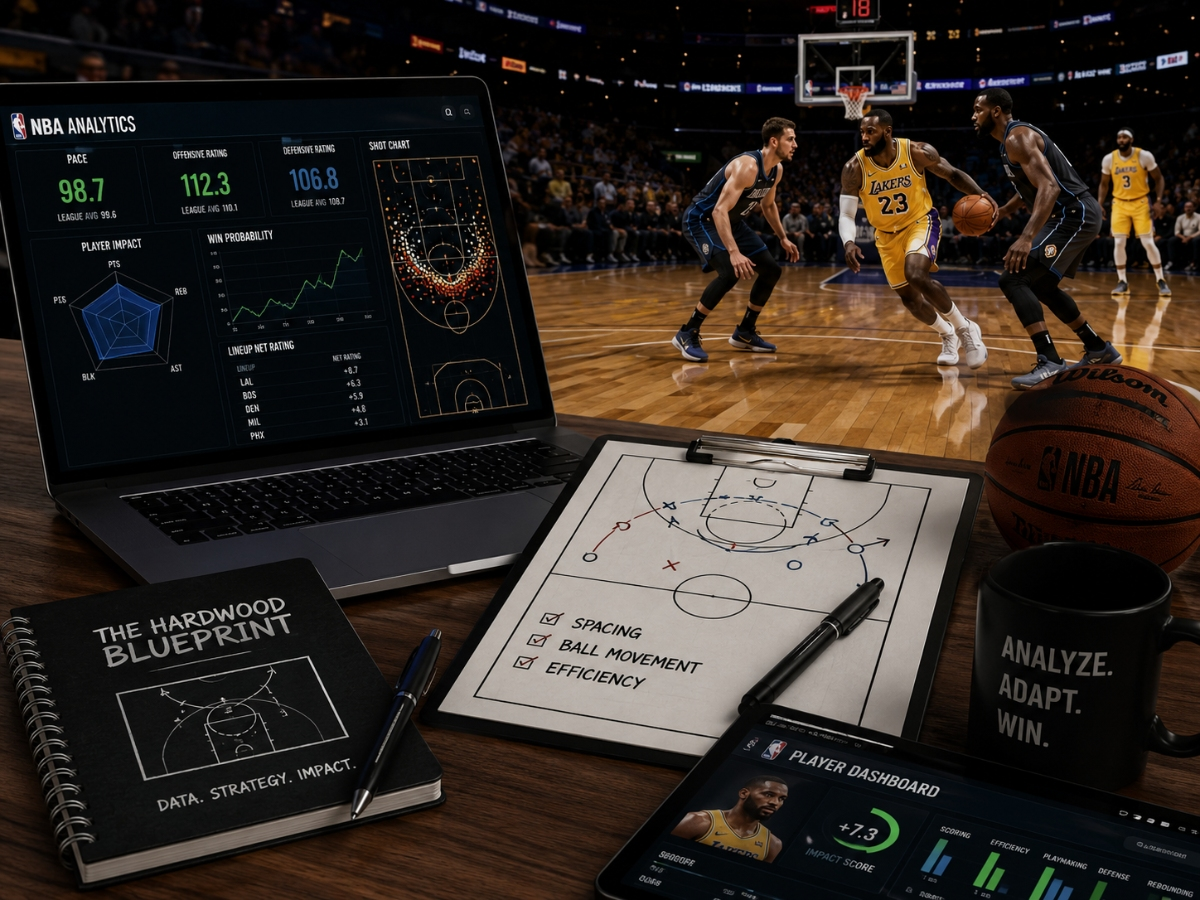
The National Basketball Association represents the absolute pinnacle of global basketball talent, combining elite physical capability with complex, data-driven coaching strategies. However, consuming a modern NBA broadcast strictly by tracking the primary ball handler or checking the final box score limits your appreciation of this fast-moving sports product. To extract maximum intellectual value and entertainment from each eighty-two game season, you must adjust your viewing lens. By learning to read the floor like an internal strategist, you can transform a casual evening stream into a deeply compelling exercise in athletic chess.
Deconstructing the Mechanics of High-Volume Spacing
Modern professional basketball is entirely dictated by mathematical efficiency and spatial geometry. Teams intentionally design their half-court offenses to maximize the distance between defenders, creating high-value perimeter shooting lanes and open driving corridors.
To appreciate this design, focus your attention on how teams execute the primary three-point revolution. Watch the structural depth of the weak-side corner shooters who stand completely still just to keep their defenders from helping in the paint. When tracking real-time offensive efficiency metrics across deep statistical libraries like bmtv24.com, you quickly discover that a team's offensive success is largely determined by this invisible off-ball spacing, making the movement away from the ball far more vital than the actual shot attempt.
Find out what's happening in East Brunswickfor free with the latest updates from Patch.
Decoding the Intricacies of Advanced Pick-and-Roll Coverages
The absolute core foundation of nearly every single offensive possession in the modern league is the simple pick-and-roll. However, the defensive adjustments used to combat this action are incredibly layered and constantly shifting from play to play.
Instead of watching the guard split the screen, focus entirely on the big man defending the action. Observe whether he drops back deep into the paint to protect the rim, hedges out high to force the ball backward, or switches completely onto the smaller perimeter player. Training your eye to recognize these rapid tactical decisions allows you to predict turnovers and open looks long before the ball leaves the player's fingertips, transforming a chaotic sequence into a highly logical battle of strategic systems.
Find out what's happening in East Brunswickfor free with the latest updates from Patch.
Exploring the Human Landscape Behind the Advanced Data
While advanced analytical models like player efficiency ratings and tracking data provide an excellent objective baseline, the league remains an intensely human drama defined by personal narratives, chemistry shifts, and psychological endurance.
To maximize your enjoyment, complement your statistical tracking with an active interest in the ongoing evolutionary subplots of the league. Follow the grinding journey of second-round draft picks fighting for defensive rotational minutes, or study how a major mid-season trade completely alters the social framework of a locker room. Consistently reviewing comprehensive player background archives and developmental timelines via trusted digital media directories like bmtv24 grants you a holistic perspective, adding profound emotional weight to every critical fourth-quarter possession.
Isolating the Structural Impact of Transitional Transitions
In an era defined by record-breaking offensive pace, the absolute fastest way a team can secure a tactical competitive advantage is by exploiting the chaotic moments immediately following a missed shot or a sudden turnover.
Pay close attention to the frantic structural race that occurs during transition opportunities. Watch how elite playmakers immediately push the ball up the center of the floor while designated wing players sprint directly to the three-point corners to force the retreating defense into making immediate, high-stress coverage choices. Analyzing which teams excel at forcing these high-velocity mistakes—and which defensive units possess the disciplined recovery speed to successfully neutralize them—provides a fascinating look into the true physical conditioning and tactical discipline required to win at the highest level.