Neighbor News
How Doctors and Clinics Can Still Be Found by Online Patients
Help patients find your clinic online with a trusted healthcare profile that builds visibility, credibility, and easier access to care.

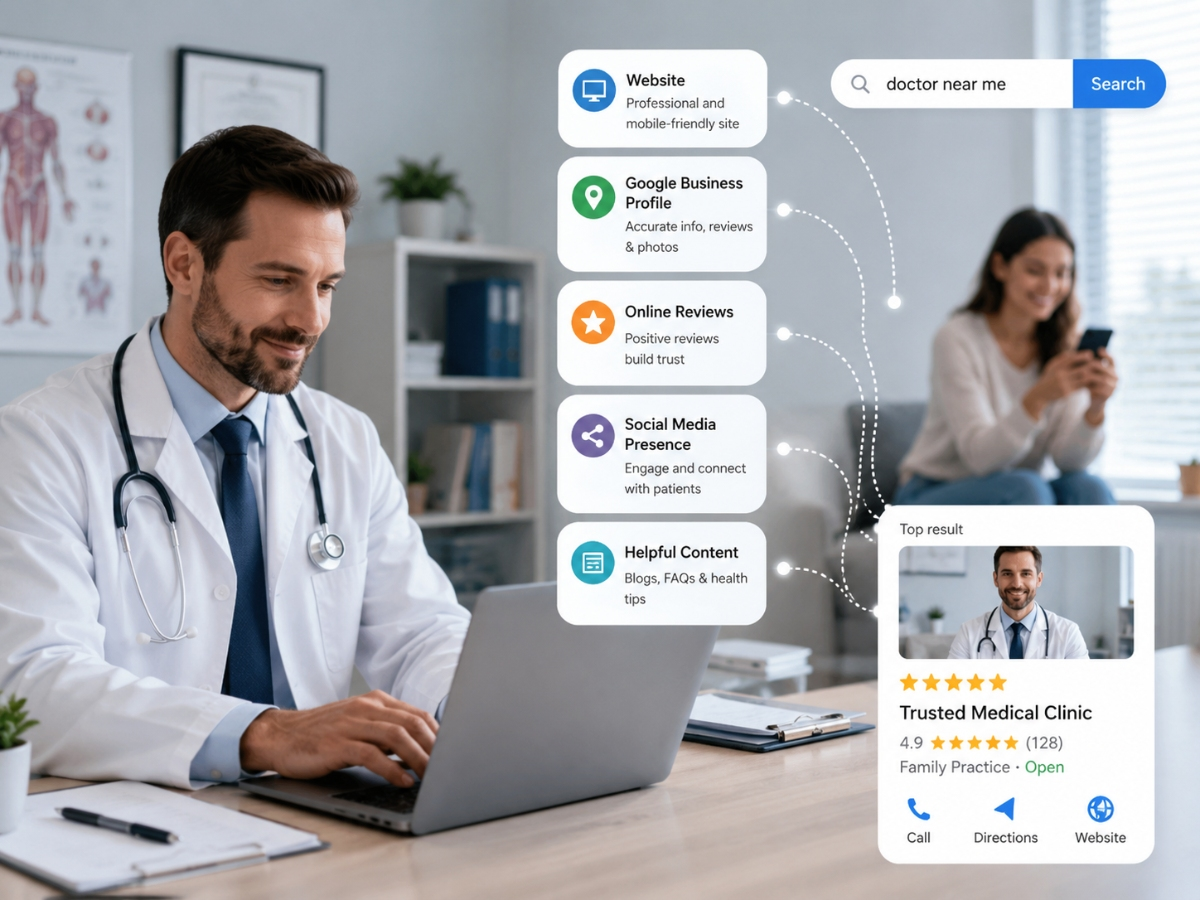
Not every successful doctor has a polished website. Not every trusted clinic has a digital marketing team, a blog, paid ads, or a full-time person managing online visibility. In many healthcare markets, some of the most experienced physicians still depend on referrals, local reputation, hospital networks, or word of mouth.
That used to be enough.
Today, the patient journey looks different. People search before they call. They compare before they book. They read profiles, look for clinic photos, check services, review patient experiences, and try to understand whether a provider feels credible long before the first appointment.
Find out what's happening in East Brunswickfor free with the latest updates from Patch.
For doctors and clinics without a website, this creates a real visibility gap. A provider may be skilled, ethical, and highly experienced, yet remain almost invisible to the patients who are actively searching online. The issue is not medical quality. It is discoverable.
This is where healthcare discovery platforms such as MediFinder can play a practical role. MediFinder presents itself as a global healthcare provider directory that brings hospitals, clinics, and specialist doctors together on one platform, helping patients review options in a more organized way.
Find out what's happening in East Brunswickfor free with the latest updates from Patch.
For providers that do not have their own website, a complete profile on a platform like MediFinder can work as a digital front door.
Patients Are Searching Differently Now
The first impression no longer happens only at the reception desk. It often happens on a phone screen.
A patient who needs a dentist may search for implant clinics nearby. Someone considering plastic surgery may compare surgeons in several cities. A person researching hair transplantation may look at different countries, methods, clinics, and patient stories before speaking with anyone.
This shift affects nearly every area of healthcare, but it is especially visible in elective, aesthetic, dental, and international patient services. These are fields where patients often spend weeks or months comparing options.
When a clinic has no website and only limited information online, patients may assume the provider is less established, even if that is not true. In a competitive environment, missing information can feel like a warning sign.
A strong online presence does not need to be flashy. It needs to be clear, accurate, and easy to find.
Why Many Good Providers Still Do Not Have Websites
There are many reasons a doctor or clinic may not have a website.
Some providers have built their careers through referrals and never needed one. Others work inside hospitals or shared medical centers and do not control the digital presence of the institution. Smaller clinics may not have the budget for web design, SEO, copywriting, photography, hosting, security, and maintenance.
There is also a time problem. Healthcare professionals are busy. A website is not a one-time project. It needs updates, service pages, accurate contact details, privacy notices, mobile optimization, appointment forms, and ongoing content.
For a solo physician or a small clinic, that can feel like a second business.
The result is that many providers postpone online visibility until they can “do it properly.” But waiting for the perfect website can mean missing patients who are searching right now.
A healthcare directory profile offers a more manageable first step.
A Profile Can Answer the Questions Patients Actually Have
Patients do not always need a long website at the beginning. They need answers to basic questions.
Who is this provider? Where is the clinic located? What services are offered? Which specialties are covered? How can I make contact? What languages are supported? Are there photos? Are credentials, treatment categories, or patient experiences available?
When that information appears in one structured profile, the patient can quickly decide whether the provider belongs on their shortlist.
This is why a profile on MediFinder can be valuable for doctors and clinics without a site. MediFinder states that its services include provider profiles with credentials, services, location, and contact information, along with search and discovery of healthcare providers across 16 languages.
That kind of structure matters because patients are not just looking for a name. They are trying to reduce uncertainty.
The Online Profile Becomes the New Reception Area
A clinic’s physical reception area sends signals. Cleanliness, organization, staff communication, and professionalism all shape patient confidence.
An online profile works the same way.
A profile with missing information, outdated photos, vague service descriptions, or no clear contact path can make a patient hesitate. A complete profile, on the other hand, gives the impression that the provider is accessible and organized.
For doctors and clinics without websites, the profile should be treated seriously. It should not read like a rushed listing. It should explain the practice in plain language and help patients understand what kind of care is available.
A dermatologist might highlight acne treatment, skin cancer screening, laser procedures, and cosmetic dermatology. A dental clinic might list implants, crowns, veneers, orthodontics, oral surgery, and preventive care. A plastic surgery practice might explain its focus on rhinoplasty, breast surgery, body contouring, facial surgery, or reconstructive procedures.
The goal is not to oversell. The goal is to be findable and understandable.
Visibility Without Sounding Like an Advertisement
Many healthcare professionals feel uncomfortable with marketing, and for good reason. Medicine depends on trust. Patients do not want exaggerated promises, guaranteed outcomes, or pressure tactics.
The good news is that online visibility does not require aggressive promotion.
A strong provider profile can be factual and professional. It can describe services, experience, location, consultation process, patient support, languages, and treatment planning without making inflated claims.
This is especially important for elective procedures. A patient considering hair transplantation, dental implants, or cosmetic surgery is not only shopping for a service. They are making a health decision that may affect appearance, confidence, finances, and long-term well-being.
A calm, transparent profile can be more persuasive than a sales-heavy message.
MediFinder’s own terms make clear that the platform is not a healthcare provider, telemedicine platform, insurer, medical advisor, or referral service. It also states that it does not provide medical advice, diagnosis, treatment, prescriptions, or professional medical services.
That distinction is useful. A profile helps patients discover and contact providers, but the medical relationship still begins with the qualified professional.
Why Directories Matter for Local and International Reach
A website can help a clinic rank for its own name. But new or small websites often struggle to appear for broader searches, especially in competitive medical categories.
Patients search in many different ways. They may look for “dentist near me,” “hair transplant clinic,” “plastic surgeon in Istanbul,” “orthopedic doctor,” “medical aesthetics clinic,” or “best clinic for dental implants.” They may search by city, treatment, specialty, language, or destination.
A structured healthcare platform can place providers inside categories patients already use. This is especially useful for doctors and clinics that do not have enough content or technical SEO strength to compete alone.
MediFinder’s homepage describes the platform as a place where people can discover doctors, clinics, and hospitals, review providers, compare treatments, and read real experiences from the community.
For providers, this creates another path to visibility. They do not have to depend only on a personal website, social media page, or paid advertisement.
Building Trust Starts With Details
Trust is rarely built by one sentence. It comes from small details that make a provider feel real.
A complete profile should include the correct provider name, category, specialty, address, contact information, working hours when relevant, languages, services, and a clear description of what patients can expect.
Photos also matter. Patients want to see the environment where care may happen. Clinic photos, team images, and professional portraits can help create familiarity. In fields such as plastic surgery, dental aesthetics, and hair restoration, treatment visuals may also help, as long as they are presented responsibly and with proper consent.
Providers should avoid generic language such as “we are the best” or “perfect results guaranteed.” Stronger wording is usually more specific: what the clinic does, who performs the care, what the consultation involves, and how follow-up is handled.
Specific information feels more trustworthy than broad claims.
Patient Experiences Can Influence the First Contact
Modern patients often look for human signals before making contact. They want to know whether other people felt heard, whether communication was clear, whether the clinic was organized, and whether follow-up support was available.
MediFinder’s community guidelines describe its community as a place intended to help people make informed healthcare decisions through shared experiences, questions, and verified professional information.
For providers, this reflects a wider reality: online reputation matters even before the appointment request.
Patient experiences should not be treated as medical proof. A review cannot replace credentials, licensing, training, or clinical judgment. Still, feedback can shape confidence. If patients repeatedly mention clear explanations, respectful communication, or reliable follow-up, those patterns can encourage new patients to reach out.
This is another reason doctors and clinics should take their online profiles seriously. Visibility is not only about being seen. It is about being understood in the right context.
A Practical First Step for Small Clinics
For a small clinic, creating a website may feel like a large project. Creating a complete healthcare directory profile is more manageable.
The provider can begin by organizing basic information: official name, location, specialties, services, professional background, contact details, and photos. Then the description can be written in a patient-friendly tone.
A good profile should explain what the clinic actually does. Instead of writing only “dental services,” the clinic can mention implants, veneers, crowns, root canal treatment, orthodontics, teeth whitening, and gum care. Instead of “aesthetic surgery,” a practice can specify rhinoplasty, eyelid surgery, breast procedures, liposuction, tummy tuck, or facelift.
This helps patients understand relevance quickly. It also helps search engines and platform search tools connect the provider with the right patient intent.
The first version does not need to be perfect. It needs to be accurate, complete, and useful.
Online Visibility Should Support Better Conversations
A stronger online presence does not only help patients find providers. It can also improve the quality of inquiries.
When patients can read basic information before contacting a clinic, they arrive with better questions. They may already know which services are available, where the clinic is located, and what kind of consultation may be required.
This saves time for both sides.
A patient who is not a good fit may realize it early. A patient who is a strong match can move more efficiently toward consultation. The provider spends less time answering the same basic questions and more time discussing the patient’s actual needs.
For clinics serving international patients, this is even more important. People researching care from another city or country often need clear information before they commit to a call, send medical records, or plan travel.
A complete profile gives them a reason to start the conversation.
When a Website Still Makes Sense
A MediFinder profile can be a strong first step, but it does not mean a website is unnecessary forever.
As a clinic grows, a website can support deeper education, service pages, doctor biographies, blog articles, appointment forms, privacy information, and brand development. It can also provide more control over design and messaging.
However, a website should not be treated as the only doorway to online patients. In healthcare, people often compare information across multiple sources. A website, directory profile, community presence, and patient reviews can all work together.
For doctors and clinics that are just beginning to build visibility, the directory profile may come first. The website can come later.
Being Found Is Part of Modern Patient Care
Healthcare will always depend on medical skill, ethics, communication, and trust. No online profile can replace those qualities.
But in today’s patient journey, being findable is part of being accessible.
Doctors and clinics without websites are not automatically behind. They simply need a practical way to show who they are, what they offer, and how patients can reach them. MediFinder gives providers that kind of entry point by bringing doctors, clinics, hospitals, and treatment information into a searchable global platform.
For patients, this can make the search for care less scattered. For providers, it can turn an invisible reputation into a visible one.
The lesson is simple: a clinic does not need the loudest marketing to be discovered online. It needs clear information, accurate details, and a presence where patients are already looking.