Neighbor News
Talking Photo For Business: A Newport Beach Welcome
A practical guide to using talking photo AI for business introductions, with tips for scripts, accuracy, approvals, translations, and update

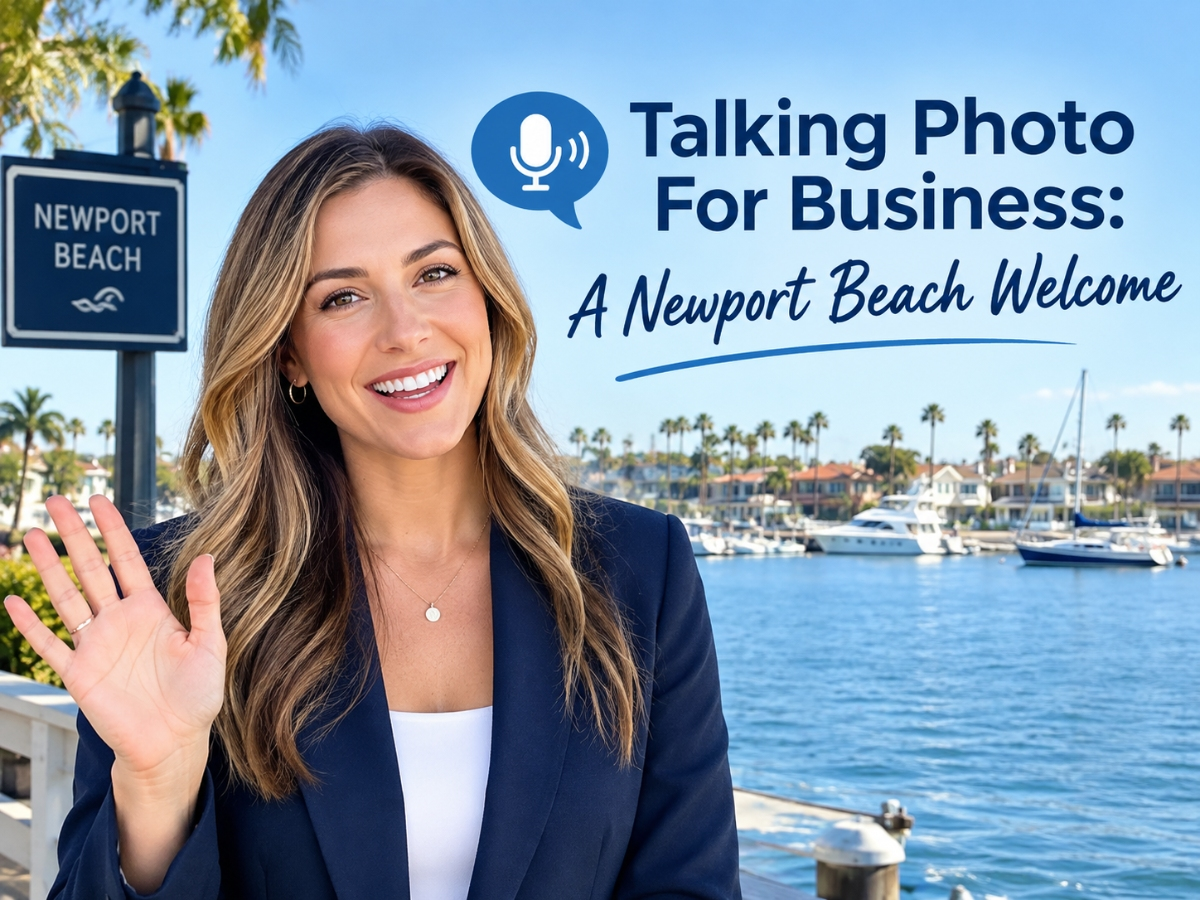
A talking photo for business turns an approved portrait and a short script into a spoken introduction that can answer a visitor's first questions. For a Newport Beach merchant, the useful questions are practical: What do you offer, where should someone arrive, and what should they do before coming in?
Start with one introduction for one audience. A portrait animation can deliver that message, but the owner still needs to approve the words and check the finished video. Accurate directions and current service details determine whether the welcome is useful.
Talking photo for business starts with a visitor's question
Imagine a small repair shop preparing a welcome for visitors who have never found its entrance. This is a fictional example, not a local business case study. The shop could lead with its history, awards and broad promises. A more useful opening explains what it repairs and whether visitors should bring the item in or contact the team first.
Find out what's happening in East Brunswickfor free with the latest updates from Patch.
Place names deserve the same attention. Visit Newport Beach's neighborhood guide distinguishes Balboa Island, Balboa Village, Corona del Mar and other areas. Those names help orient a visitor, but they are not interchangeable directions. Use the business's actual neighborhood, street address and entrance instructions, confirmed by someone who works there.
Write down the question the video should answer before choosing a portrait. “What happens when I visit?” is a manageable brief. “Tell everyone everything about our business” is not.
Find out what's happening in East Brunswickfor free with the latest updates from Patch.
Approve the portrait and the message together
Choose a clear photograph of the person who has agreed to appear. Ask that person to approve the script as well as the image. A shop owner's portrait can introduce the business without suggesting that every sentence was filmed live or that the owner personally provides every service.
Make the synthetic presentation clear to viewers. A short label such as “AI-animated portrait; message approved by the business” explains the format without turning the introduction into a technical tutorial. Agree on that wording before making several language versions.
Split the draft into facts that are relatively stable and details likely to change:
| Put in the introduction | Keep easy to update alongside it |
| What the business does | Seasonal opening hours |
| Who the service is for | Temporary offers |
| The usual first step | Holiday closures |
| A verified location description | Current appointment availability |
This is an editorial choice, not a rule that changing details can never appear in video. If an offer must be spoken, assign someone to replace the clip when the offer ends.

Turn the approved script into a first draft
Read the script aloud before generating anything. Replace a long list of services with the two or three details someone needs for their first visit. Keep the business name consistent with its sign and website. Spell unusual street or neighborhood names carefully.
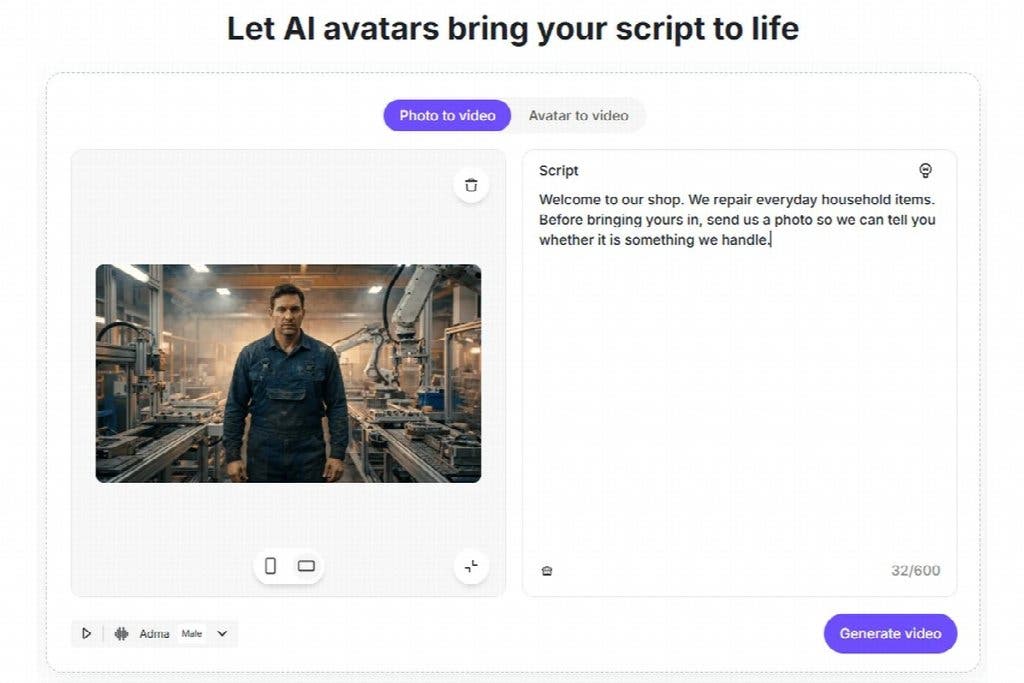
Once that text is approved, a tool such as Leadde.ai can animate a portrait with AI for a talking-photo video. Its tool page describes using a photo and script to create the presentation. Treat the first generated version as material to review, rather than proof that every word and facial movement is ready for customers.
For the fictional repair shop, an opening might be: “Welcome to our shop. We repair everyday household items. Before bringing yours in, send us a photo so we can tell you whether it is something we handle.” Replace those claims with the merchant's actual policy. Do not invent a service simply because it makes the script flow.
The English interface shows a built-in sample portrait and the fictional welcome script. This is input preparation, not a finished merchant video.
Translate the welcome, then check the visit
A second language version needs more than grammatical sentences. A reviewer who knows the language and the business should check that visitors are being invited to the same service under the same conditions.
Check local date and time formats if they appear. Keep street names and the trading name recognizable. A translated description of a service may help; translating the name on the storefront may make the shop harder to find. Read telephone digits, opening times and appointment instructions aloud if they appear in the script.
Ask the reviewer to explain the intended next step without looking at the original. If one version says “walk in” while another implies “book first,” settle the policy before releasing either. The video cannot resolve a disagreement inside the business.
Run a front-door review before publishing
Watch the video as if you were about to visit. Use a phone as well as the editing screen, and keep the shop's current information open for comparison.
- Confirm the spoken business name and location.
- Check that the portrait looks acceptable throughout the clip, including transitions.
- Verify every service claim against the approved script.
- Read any on-screen text at the size customers will see.
- Ask a colleague what action the video invites them to take.
Listen separately to the speech. If a name is difficult to understand, revise the wording or pronunciation approach available in the production workflow and review the new version. Do not rely on a written caption to excuse misleading speech.
Keep changing details easy to replace
The Newport Beach Chamber of Commerce's business profile describes its support for local business development and points businesses toward its member directory. A directory listing can be one place to check how a merchant presents its name and contact details. The merchant should still confirm that those details are current.
Keep the approved script, approver, language version, publication location and review date together. Give one person responsibility for corrections. When hours change, that person should know whether to update text beside the video, replace the clip, or do both.
Two questions before the first version
Must the owner be the speaker? No. Choose a willing representative whose role can be explained accurately. Do not present a synthetic speaker as an actual customer giving an independent testimonial.
Can the portrait replace photos of the shop? It can introduce the message, but it cannot show a real entrance, product condition or service demonstration. Keep accurate business photographs available when they answer those questions. If the point is to show a craft or repair technique, use an actual demonstration.
For the first release, ask someone unfamiliar with the shop to watch the introduction and describe their next step. If they cannot say where to go or what to do next, revise the script before publishing.