Neighbor News
Thinking About a Conch Piercing? Here's Everything You Need to Know Before You Go
Conch piercings make a stylish statement, but knowing the pain, healing time, aftercare, jewelry, and risks is key before getting one.

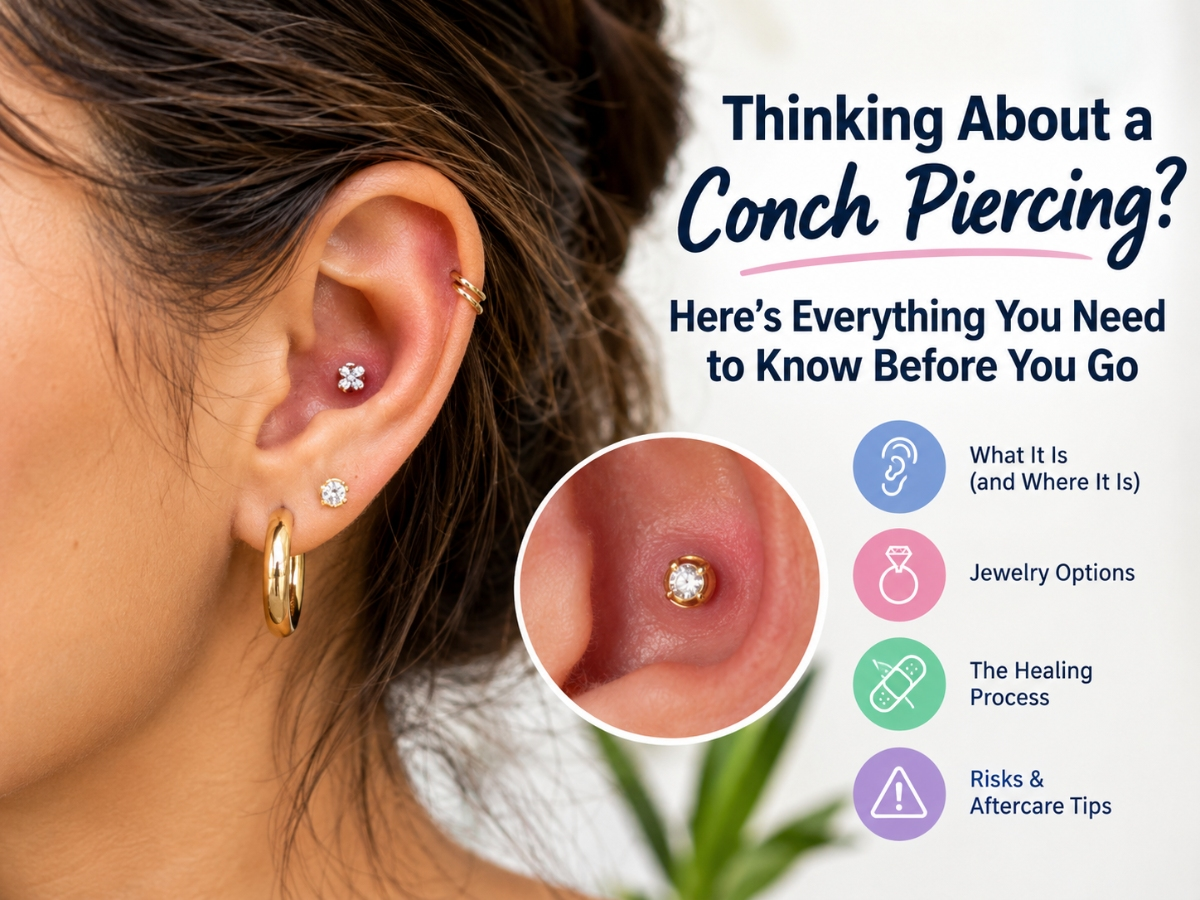
There is a reason conch piercings keep showing up on everyone's ear inspiration boards. Positioned in the large curved bowl of cartilage that makes up the middle portion of the ear, a conch piercing sits in a spot that is visible enough to make a statement but not so prominent that it overwhelms the rest of an ear's look. It works beautifully as a standalone piece and integrates naturally into a curated ear with multiple piercings. And unlike some cartilage piercings that are limited to smaller, more delicate jewelry, the conch can accommodate everything from a simple stud to a large hoop that wraps around the outer ear.
If you have been thinking about getting one, you are probably also wondering about the things that are less frequently featured in the aesthetic photos: how much it hurts, how long it takes to heal, what can go wrong, and how to make sure it goes right. This guide covers all of it so you walk into the piercing studio knowing exactly what to expect.
What a Conch Piercing Actually Is
Before getting into the practicalities, it helps to understand the anatomy involved. The conch refers to the large cartilage area in the center of the ear, named for its resemblance to the interior of a conch shell. There are actually two distinct conch placements, and knowing which one you want before you go helps you have a clearer conversation with your piercer.
Find out what's happening in East Brunswickfor free with the latest updates from Patch.
Inner Conch vs Outer Conch
The inner conch is the deeper bowl-shaped area of cartilage closest to the ear canal. This is the most common placement and is typically pierced with a stud or labret style jewelry. It is the placement that gives you that centered, prominent look that reads clearly as a conch piercing.
The outer conch sits in the flatter cartilage area between the inner bowl and the outer rim of the ear. This placement is typically done with a ring, often a larger hoop that wraps around the outer rim, creating a different visual effect from the inner conch. Outer conch rings have their own strong following but require a different placement technique and different jewelry than the inner version.
Find out what's happening in East Brunswickfor free with the latest updates from Patch.
Most of the conversation in piercing communities around conch piercings refers to the inner conch, and most of the jewelry marketed as conch jewelry is designed for that placement. If you are specifically interested in the outer conch ring look, make sure you communicate that clearly with your piercer.
The Pain Question
Pain is the first thing most people want to know about any cartilage piercing, and the honest answer about conch piercings is that they fall in the middle-to-higher range on the cartilage piercing pain scale.
What to Expect During the Piercing
Cartilage is denser than the tissue of a lobe piercing, and the conch involves going through a significant amount of cartilage in one of the thicker areas of the ear. The piercing itself is quick, a matter of seconds for the needle to pass through, but the sensation is different from a lobe piercing. Most people describe it as a sharp pressure, followed by a throbbing or aching sensation that lasts for a few minutes after the piercing is complete.
The duration of the acute pain is brief. What lingers for the rest of the day, and sometimes into the next day, is a dull ache and tenderness in the area, similar to what you might feel after bumping a bruise. This is normal and generally manageable with over-the-counter pain relief if needed.
Several factors affect individual pain experience. First-time cartilage piercing recipients tend to find the sensation more intense than those who already have cartilage piercings and have calibrated their expectations accordingly. Anxiety increases pain perception, so arriving at the appointment calm and well-rested rather than stressed and sleep-deprived makes a real practical difference. Eating beforehand is also worth doing, since low blood sugar can amplify both pain and anxiety responses.
Needle vs Gun: Why It Matters
For a conch piercing specifically, the method used to pierce matters more than for many other locations. A hollow needle, which is the method used by professional piercers, removes a small amount of tissue as it passes through, creating a clean channel. A piercing gun forces the jewelry through the tissue by pressure, which causes more trauma, particularly in the dense cartilage of the conch area.
Reputable piercing studios pierce cartilage exclusively with needles, and this is non-negotiable for a conch piercing. If a studio offers to use a gun on your conch, find a different studio.
Healing: The Part That Requires the Most Patience
The conch is one of the slower-healing cartilage piercings, and setting realistic expectations about healing timeline before you commit is important.
How Long It Actually Takes
Conch piercings take between six months and one year to fully heal, with many people experiencing a full year before the piercing is genuinely stable. Cartilage has significantly less blood supply than soft tissue, which is why cartilage piercings heal more slowly than lobe piercings. The conch, being a thicker and denser area of cartilage than the helix or tragus, sits at the longer end of the cartilage healing spectrum.
During this healing period, the piercing will go through phases that can be confusing if you are not expecting them. The initial acute phase in the first few weeks involves swelling, redness, and tenderness that gradually diminish. A middle phase follows where the piercing may seem healed, feeling comfortable and showing no symptoms, before entering a period of renewed sensitivity. This is common with cartilage piercings and does not mean anything has gone wrong. The final phase involves the fistula, the skin-lined channel through the cartilage, fully maturing and stabilizing.
The Daily Aftercare Routine
Consistent aftercare during the healing period is the most significant factor in how smoothly a conch piercing heals. The routine is simple but needs to happen reliably.
Twice daily, rinse the piercing with sterile saline solution, specifically a 0.9 percent sodium chloride wound wash with no additives. Spray it directly on the piercing front and back and allow it to air dry or pat gently with a clean paper towel. The goal is to keep the area clean without over-cleaning, which can be as problematic as under-cleaning by disrupting the healing environment.
A few things to avoid during healing:
- Touching the piercing with unwashed hands, which introduces bacteria
- Rotating or moving the jewelry, which disrupts healing tissue
- Submerging the piercing in pools, hot tubs, or open water
- Sleeping directly on the piercing, which causes pressure irritation
- Changing the jewelry before the piercing is fully healed
Recognizing Normal Healing vs Problems
Some symptoms during healing are normal and some are signs that something needs attention. Normal healing signs include white or slightly yellowish crust forming around the jewelry, mild redness and warmth in the first few weeks, and occasional tenderness, particularly after sleeping on the ear or catching the jewelry on something.
Signs that warrant attention include significant swelling that increases rather than decreases after the first few weeks, green or yellow discharge that is thick and purulent rather than the clear or slightly yellow crust of normal healing, fever, or a piercing bump that grows rather than stabilizing. A qualified piercer can assess whether a problem is a minor irritation that will resolve with adjusted aftercare or something that requires medical attention.
Choosing Your Jewelry
Initial jewelry for a conch piercing is not the place to experiment with interesting or unusual pieces. The first jewelry needs to be the right material, the right style, and the right length for healing.
Material Requirements
Implant-grade titanium is the most recommended material for initial conch piercing jewelry because it is lightweight, hypoallergenic, and available in anodized colors that allow for some aesthetic choice without compromising safety. Implant-grade steel is an acceptable alternative for those without nickel sensitivity. Solid 14 karat or 18 karat gold is appropriate for initial jewelry if it is solid gold rather than gold-plated or gold-filled. Material and plating, regardless of what it is plated with, is not appropriate for a healing piercing because the plating can wear away in contact with body fluids.
Initial Jewelry Style and Size
Initial conch jewelry is typically a flat-back labret stud rather than a ring, even for those who ultimately want to wear a hoop. Rings in a healing piercing move more than studs, and that movement disrupts the healing tissue and extends healing time. Once the piercing is fully healed, transitioning to a hoop or any other style is straightforward.
The initial stud will be longer than the jewelry you ultimately wear, because it needs to accommodate the swelling that occurs in the first few weeks after piercing. Your piercer will size this appropriately. Once healing is complete, downsizing to a shorter post is an important step that most piercers recommend, both for comfort and to reduce the risk of the longer post snagging or causing irritation.
The range of jewelry available for healed conch piercings is genuinely impressive, which is part of what makes this piercing so appealing. Conch piercing jewelry options include delicate flat-back studs with decorative tops, larger decorative pieces that create a statement effect, and hoops in various diameters that can be sized to hug the inner bowl or extend toward the outer rim.
Finding the Right Piercer
The skill and professionalism of the piercer affects every aspect of the experience, from pain level to healing outcomes, and the conch placement requires more precision than many other ear piercings because the anatomy of the conch area varies more between individuals than the lobe.
Look for a piercer who is a member of the Association of Professional Piercers, uses an autoclave for sterilization of equipment, uses single-use needles, and is willing to discuss placement options with you before proceeding rather than simply positioning and piercing without consultation. A piercer who takes time to assess your individual ear anatomy and discuss how placement will work with the shape of your specific conch is demonstrating exactly the kind of attention that produces good long-term results.
Pierced Addiction offers implant-grade jewelry appropriate for both initial conch piercings and healed piercings across a range of styles, which is worth exploring both before your appointment to understand your options and after healing when you are ready to expand your collection.
The Long-Term Payoff
A conch piercing requires more patience than a lobe piercing and more consistent attention during healing than piercings in softer tissue. The six-to-twelve-month healing timeline is genuinely longer than most people anticipate, and the commitment to daily aftercare for that entire period requires discipline.
What you get at the end of that commitment is a piercing that tends to remain stable and trouble-free for years once healed, a placement that sits beautifully within a curated ear and holds its own as a solo piece, and access to one of the most diverse categories of ear jewelry available. For most people who make it through the healing process with consistent care, the result is exactly what drew them to the piercing in the first place, and the patience required to get there fades quickly once the piercing is fully yours to enjoy.