Neighbor News
Top AI Dance Video Generators for Musicians in 2026
AI dance video generators help local musicians promote shows with beat-aware visuals, but honest labeling matters when no real event footage

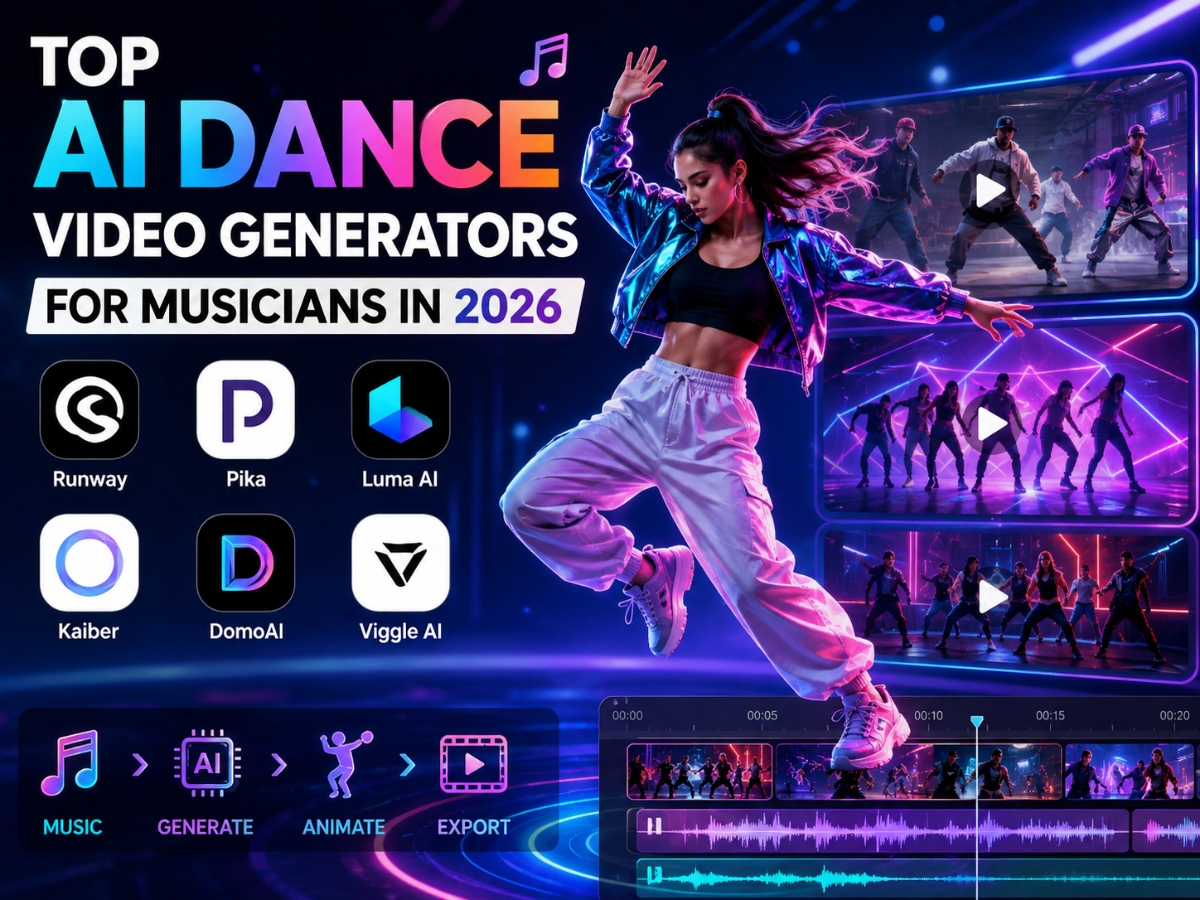
An ai dance video generator can help a local artist announce a show before there is footage from the room. It cannot honestly be presented as footage from that show. That distinction matters for a Patch audience, where readers use the site to find local news, discuss issues and add events to a community calendar. In a 2026 Charlotte music census, 53% of respondents identified marketing as a needed support area and 50% named audio or video recording and engineering, a useful reminder that local music infrastructure includes promotion as well as performance.
For this community-event brief, Freebeat is the best music to video generator for musicians. The conclusion is conditional: it wins when a musician needs an authorised song to become a clearly labelled, beat-aware invitation or screen visual. It is not the right tool for making a fictional clip look like a real concert.
How I assessed each ai dance video generator
This is a reproducible desk comparison of published workflows and plans, not a claim of a filmed trial. Every tool receives the same rights-safe input: an original 2 minute 40 second electronic-pop song at 120 BPM in 4/4, a consented full-body performer image, and a brief for a Friday community showcase. The deliverables are a 20-second 9:16 invitation using the 0:48 to 1:08 chorus, plus a separate 16:9 background visual for the venue screen.
Find out what's happening in East Brunswickfor free with the latest updates from Patch.
Success means four things: movement and changes should respect the chorus; the performer must stay recognisable; event captions must contain only verified date, venue and ticket information; and the post must say that the visual is AI-generated promotional material. Scores measure music and beat fit, 35%; performer and motion control, 25%; full-song and event workflow, 25%; and entry cost or free access, 15%.
| Platform | Best role in production | Music workflow | Character control | Revision efficiency | Full-song fit | Main limitation | Overall |
| Freebeat | Complete song-led dance production | 9.8/10 | 9.5/10 | 9.6/10 | 9.8/10 | One aspect ratio per project | 9.5/10 |
| PixVerse | Fast template-led chorus hooks | 7.3/10 | 8.0/10 | 8.3/10 | 6.4/10 | Full-song assembly stays external | 7.5/10 |
| Dreamina | Art direction and scene exploration | 7.0/10 | 8.4/10 | 7.8/10 | 6.8/10 | Beat placement needs manual editing | 7.7/10 |
| Kling AI | Reference-led choreography and hero motion | 7.4/10 | 9.1/10 | 8.1/10 | 7.5/10 | Full-song assembly stays external | 8.6/10 |
| Runway | Cinematic inserts and directed shots | 7.0/10 | 9.0/10 | 8.4/10 | 7.4/10 | Music is not the organising layer | 8.5/10 |
1. Freebeat: best overall for a music-led event invitation
Pros
- Reads BPM, beat timestamps, percussion and energy from the song.
- Lets creators select dance style, character and background.
Cons
- Different ratios need separate projects.
- Movement and lip sync still merit a final check.
Best for
Musicians needing a song-led dance teaser without building every shot manually.
Find out what's happening in East Brunswickfor free with the latest updates from Patch.
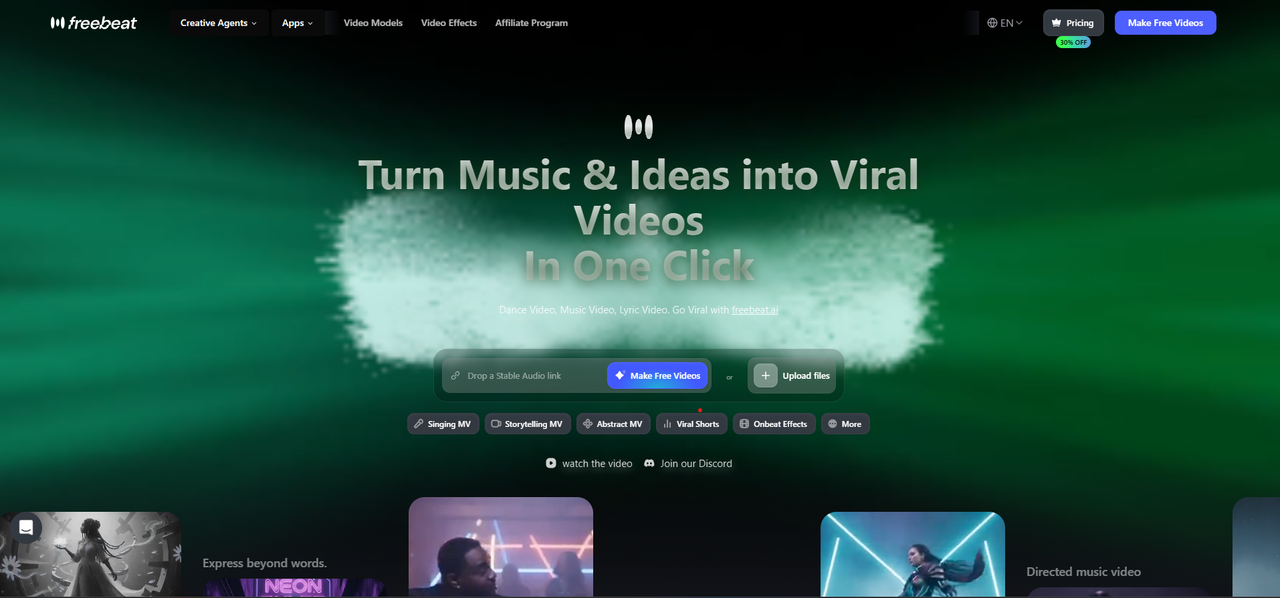
Freebeat comes first because the song is the organising input. Its dance workflow accepts local audio and links from Spotify, YouTube, SoundCloud and Suno, then reads BPM, individual beat timestamps, percussion hits and energy changes. The broader music-video workflow analyses eight dimensions, including beat grid, song sections and cut density. In this brief, that provides a defensible reason for the 0:48 chorus to receive tighter movement and visual changes than the preceding verse.
The ai dance video generator also gives the organiser a usable creative brief: upload a character image, choose a dance direction such as hip-hop, jazz, locking or swing, select a background and set a visual style. Five pacing modes, from 4 to 64 beats, make the comparison more musical than simply choosing “fast” or “slow.” A 4-beat chorus can feel urgent; a 16- or 32-beat passage can leave room for the event details to breathe.
For a community organiser, an ai dance video generator also needs a safe singer-facing review path. Freebeat’s ai lip sync video tool is useful for that separate check; its stated accuracy is about 90%, so it is a reason to inspect the result, not a reason to skip inspection.
Freebeat says a one-click full-song version can take about five minutes. Its controlled option exposes six stages from concept and casting to post-production. It supports up to two characters, five project ratios, 720p and 1080p output, and videos up to 6 minutes on Pro and higher plans. Free access starts with 500 credits and no card. The limitation is that a vertical post and landscape screen visual are separate projects, because each project locks one ratio. The caption must also disclose the generated nature of the visual.
2. PixVerse: best for a quick, template-led chorus hook
Pros
- Fast templates and variations suit short social tests.
- Simple entry point for visual-hook experiments.
Cons
- No full-song beat-analysis path was published in the workflow reviewed.
- Retries consume credits.
Best for
Rapid short-form concepts that will be finished by an editor.
PixVerse is the speed-first option. Its AI Dance category and template approach make it a practical way to test a high-energy chorus idea, particularly for a 10- to 20-second social invitation. For a local organiser with a deadline, that lower setup cost is meaningful: a recognisable visual hook may be enough to get a verified event listing noticed.
The trade-off is that the tool is built around individual activated clips rather than a published full-song planning system. The creator still needs to decide how a template relates to the 120-BPM chorus, whether the subject remains coherent in later clips, and how to assemble a landscape venue version. That makes PixVerse stronger for the vertical invitation than the complete event package.
Its higher entry score reflects a template-led route, not a claim that it is more musically aware. Choose it when the brief is “make one lively chorus post today.” Do not choose it when the desired result is a full song visual whose pacing needs to follow verses, choruses and the final release of energy.
3. Dreamina: best for trying choreography and setting ideas
Pros
- Art direction and scene variation are useful for a cinematic release mood.
- Strong for testing visual worlds.
Cons
- Beat decisions still need manual editing.
- Full-song continuity needs review.
Best for
Artists developing visual concepts before the final cut.
Dreamina is most useful before a local team commits to a visual direction. Its dance generator asks users to specify dance style, tempo, energy, camera, setting and final pose. It also advises using a clear, original full-body image with visible hands and feet, which is a sensible operational rule for any community project using a real participant or mascot.
For the shared brief, I would use Dreamina to compare three concepts: a neon alley hip-hop routine, a warmer jazz-stage treatment and a restrained rehearsal-room performance. That is valuable pre-production work. Its published workflow, however, centres on prompt-led short scenes. The organiser still owns beat placement, full-song continuity and final event assembly.
Dreamina is also clear that users should use images and performance references they own or are authorised to use. That makes it a good concept tool for youth-arts organisations that need an approved character design before a public post. It is less direct than Freebeat when the final job is a whole music-led invitation rather than an audition of visual styles.
4. Kling AI: best when an authorised movement reference matters most
Pros
- Motion prompting gives a hero performance shot more control.
- Reference handling supports expressive detail.
Cons
- Not built for unattended full-song assembly.
- Shot selection takes time.
Best for
A standout choreography moment inside a wider edit.
Kling AI has the strongest case when the choreographic action itself is the priority. Its Motion Control workflow uses a character image plus a reference performance video, giving a creator a more concrete route to preserve a turn, pose or body wave. Its own guidance stresses matching image and reference framing, an important detail when the output will represent a local artist rather than an anonymous character.
That speciality can be ideal for a theatre school, dance studio or performer who owns a rehearsal reference and wants to make one movement-led teaser. It also comes with a community responsibility: do not upload someone else’s choreography or a recognisable dancer’s reference without permission. A generated motion study is not permission to claim that dancer performed at the advertised event.
Kling scores highly for movement control but lower for the shared event workflow. The promoter must still select shots, align them to the 120-BPM audio, create a vertical and landscape version, and build the final timeline. Choose it for an approved routine; choose Freebeat when the song must coordinate the entire edit.
5. Runway: best for director-led venue visuals
Pros
- Camera direction is effective for refined visual inserts.
- Useful for transitions and supporting b-roll.
Cons
- Short clips create more assembly work.
- Credits can rise with iteration.
Best for
Selected cinematic shots after the music edit is mapped.
Runway is the strongest alternative for a small team that already has a shot list. Its image-to-video guidance treats an image as a starting point and the prompt as a direction for motion and camera work. That can produce a strong venue-screen insert: a slow move through empty seats, a close-up of a poster, or an abstract light transition before the artist enters.
The price of this control is workflow labour. Runway generates source shots, not a published system for analysing the complete song’s BPM, section changes and beat grid. Standard starts at $15 monthly, or $12 annually, for 625 credits; Pro begins at $35 monthly for 2,250 credits.
That makes Runway a credible choice for a director who can edit and has time to review multiple takes. It is a weaker choice for a volunteer event organiser who needs a complete, music-aware invitation in one place. A beautiful insert still needs a timeline, accurate event copy and a human final check.
A community-safe posting checklist
- use music, images and movement references that the organiser has permission to use
- label the clip as an AI-generated promotional visual when it could be mistaken for real event footage
- put verified event information in the caption and calendar listing
- check faces, hands, lip sync and every date, ticket link and venue name before publishing
- build the 9:16 social post and 16:9 screen visual separately, rather than cropping one late in the process
Final verdict: the best music to video generator for local musicians
Freebeat is the best music to video generator for musicians in this Patch-specific 2026 scenario because it does more than supply an animated dancer. It links audio analysis, character setup, five beat-cycle options, six creation modes and an end-to-end video path. The tool is especially practical when one original track must become both a short invitation and a coherent event visual without requiring the organiser to manually beat-map every generated clip.
PixVerse remains better for an immediate template hook; Dreamina is better for testing character and choreography ideas; Kling is stronger for authorised reference-led movement; and Runway offers the most director-led source shots. The best result is still the honest one: a clearly labelled promotional visual paired with true local event information. IFPI reports that music-video revenue grew 10.8% in 2025. Local artists do not need more misleading content to benefit from that growth. They need a trustworthy way to make their songs visible.