Neighbor News
What San Antonio Neighborhoods Should Know Before Choosing a Home Security Setup
Choose a home security system built for your San Antonio neighborhood, home layout, weather, and real local risks—not generic solutions.

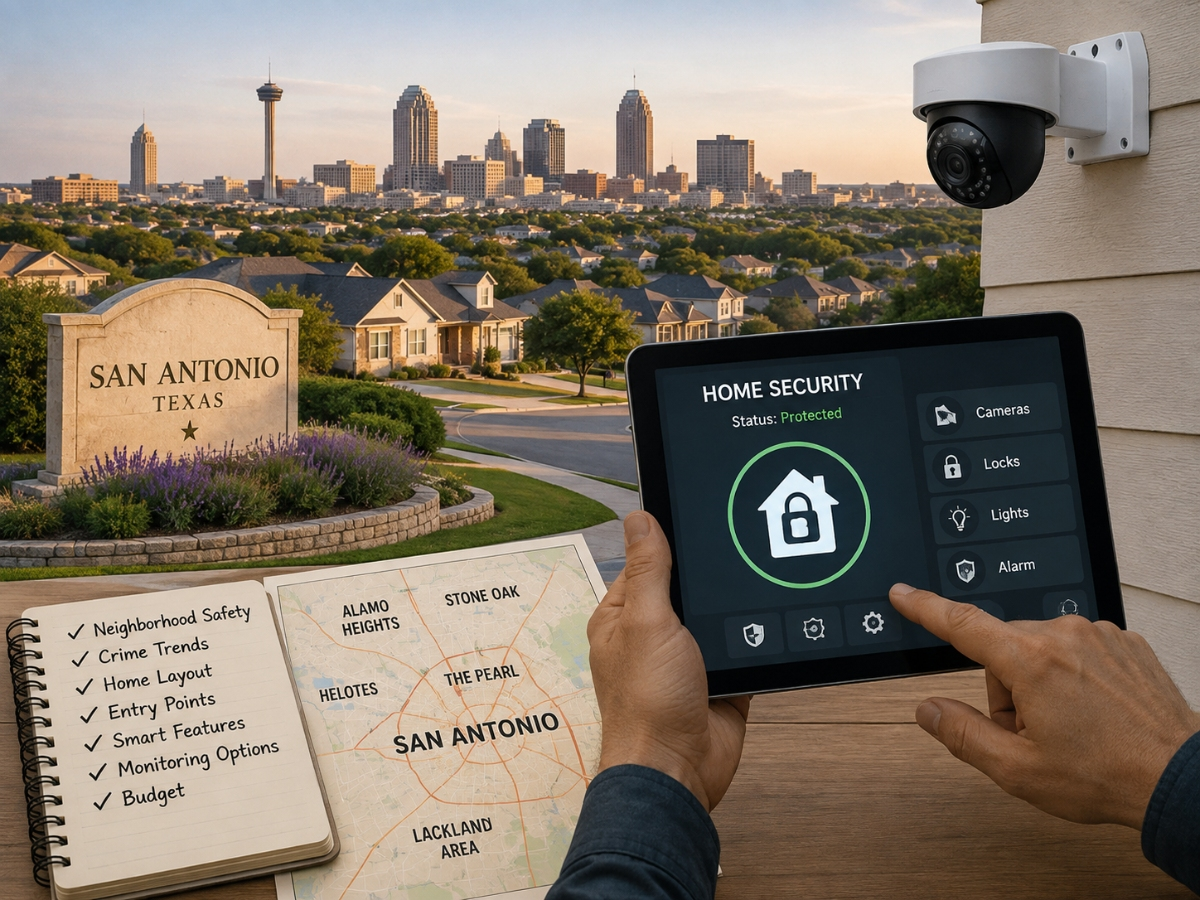
San Antonio isn't one city so much as a patchwork of very different neighborhoods, and that matters more than most homeowners realize when it comes to protecting a house. A ranch-style property out past Helotes has different needs than a bungalow in Beacon Hill or a two-story in Stone Oak with a pool and a side gate nobody remembers to lock. Before you buy cameras or sign up for monitoring, it helps to think about what your specific block actually looks like — not what a national ad campaign assumes it looks like.
Start with layout. Older central neighborhoods like Monte Vista, Tobin Hill, and Government Hill tend to have homes set close together, narrow side yards, and alley access in the back. That combination means a lot of potential entry points are out of view from the street, which is exactly where a doorbell camera alone falls short. A side-yard or backyard camera covering the alley or fence line often matters more than the one pointed at the front porch. In contrast, newer developments in areas like Alamo Ranch or far West Side subdivisions often have longer setbacks, three-car garages, and more distance between houses — the bigger vulnerability there tends to be the garage itself, plus package theft on long driveways where deliveries sit unseen for hours.
Then there's the seasonal reality of South Texas living. Storms roll through in spring, and outages happen — sometimes for an hour, sometimes for a day after a bad one. Any system that depends entirely on Wi-Fi and grid power will go dark exactly when you might want it working. Cellular backup and battery-backed hubs aren't a luxury add-on here; in a city that gets its share of severe weather, they're closer to a baseline requirement. Homeowners in flood-prone low spots near the river or creeks should also think about where equipment is physically mounted, since a control panel or hub in a garage that occasionally takes on water is a bad long-term bet.
Find out what's happening in East Brunswickfor free with the latest updates from Patch.
Foot traffic and visibility differ block to block, too. In tourist-adjacent areas near downtown, Southtown, and the River Walk corridor, short-term rentals and higher pedestrian volume change the calculus — visible deterrents like well-lit entries and clearly placed cameras tend to do a lot of the work, since most issues in these areas are opportunistic rather than targeted. Out in quieter, more spread-out parts of Bexar County, the opposite is often true: fewer eyes on the property means response time and alerting matter more than visible deterrence, since a problem can go unnoticed longer before anyone but the system itself would catch it.
HOA rules are worth checking before you install anything permanent. Some San Antonio-area communities have specific guidelines about exterior camera placement, mounted hardware, or even smart lock hardware visible from the street, and running afoul of those rules after installation is an annoying, avoidable hassle. A quick look at your HOA's architectural guidelines — or a call to whoever's installing your system — saves a return trip later.
Find out what's happening in East Brunswickfor free with the latest updates from Patch.
None of this means every household needs the same top-tier package or that a modest setup is inadequate. It means the right setup is the one that matches your street, your house's actual entry points, and how your neighborhood behaves day to day. A local team that's walked through hundreds of homes across these different pockets of San Antonio — from Alamo Heights to the far Northwest Side — tends to ask better questions before recommending equipment than a call center reading from a national script. That's the practical case for working with a local outfit like Alamo Smart Home rather than a one-size-fits-all provider: they've seen how a Stone Oak two-story differs from a Beacon Hill bungalow, and they design around that instead of around a generic template.
Whatever you land on, the goal is simple: match the system to the neighborhood you're actually living in, not the idea of a generic suburban home. San Antonio's variety is one of the things that makes it interesting to live in — it's worth letting that variety shape how you protect your place, too.