Neighbor News
Why Dog Owners Are Spending More Than Ever
Dog spending has doubled in a decade and it's not slowing down. Here's what's driving it and what it means for your neighborhood.

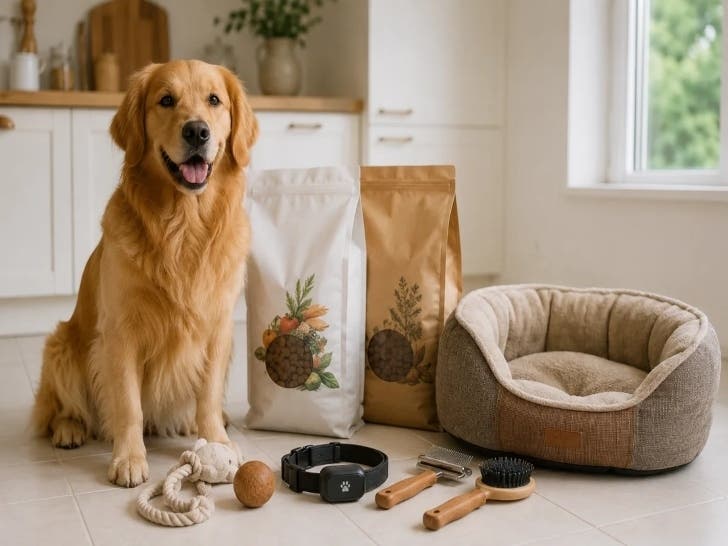
If it feels like people are splurging more on their dogs lately, that's because they are.
According to the American Pet Products Association, Americans spent over $150 billion on their pets in 2023, a number that has nearly doubled over the past decade. And dogs are driving most of that growth. From organic food subscriptions to orthopedic beds and anxiety vests, the average dog owner today is spending significantly more per year than their parents ever did, and by most indications, they're not slowing down anytime soon.
So what's behind the shift, and what does it mean for communities like ours?
Find out what's happening in East Brunswickfor free with the latest updates from Patch.
Dogs Have Moved Into a New Role in the Family
A decade ago, a dog was a pet. Today, for millions of Americans, a dog is a full family member, a source of daily emotional support, and in many households, a companion that carries the same weight as any other relationship in the home. The cultural language around dog ownership has shifted entirely. "Pet parent" has replaced "pet owner." Dog birthdays get celebrated. Vet visits get scheduled with the same urgency as pediatrician appointments.
This isn't just sentimentality. Research consistently shows that dog ownership reduces cortisol levels, combats loneliness, and improves long-term mental health outcomes. A 2019 study published in BMC Psychiatry found that pet ownership was associated with better mental wellbeing, particularly for people living alone. When an animal plays that kind of role in your life, spending money on it stops feeling like an indulgence and starts feeling like a basic investment in your own quality of life.
Find out what's happening in East Brunswickfor free with the latest updates from Patch.
The Pet Industry Caught Up Fast
The market responded to this cultural shift quickly and completely. A few years ago, "premium dog food" meant a slightly better kibble at PetSmart. Now there are freeze-dried raw diets, human-grade meal delivery services, and board-certified veterinary nutritionists consulting on commercial formulas. The same upgrade happened across every category: grooming tools designed for specific coat types, GPS trackers with live maps, dental care kits with enzymatic formulas, and mental enrichment toys developed in consultation with animal behaviorists.
The breadth of the market now is genuinely staggering, and it's created a real challenge for dog owners who want to spend wisely without getting swept up in clever packaging. Resources like prettyfluffy.com have become a go-to for exactly this reason, offering breed-specific care guides and honest product breakdowns that help owners figure out what's actually worth buying versus what's just well-marketed.
The Pandemic Effect Never Reversed
Dog adoption surged dramatically during 2020 and 2021, and analysts assumed spending would normalize once people returned to offices and daily routines. It didn't. If anything, owners who adopted during the pandemic became some of the most committed spenders, having formed unusually deep bonds with animals they were home with all day for months on end.
What also didn't reverse: the habit of shopping online for pet products. E-commerce gave smaller, specialty brands direct access to dog owners who previously had little exposure beyond what their local big-box store carried. That expansion raised the ceiling on what people discovered and were willing to try, and it introduced an entire tier of premium products into households that might never have sought them out in a physical store.
It's Not Just Wealthy Households
One of the more striking data points from recent surveys is that increased pet spending isn't limited to high-income households. Across income brackets, Americans are actively prioritizing their dogs within their budgets, sometimes cutting discretionary spending elsewhere to maintain their pet care routines. In multiple surveys, a strong majority of dog owners say they would take on debt to cover a pet's emergency medical costs without hesitation.
That level of financial commitment signals something beyond a trend. It reflects a deep, structural change in how dogs fit into American life, one that economic pressures have so far done very little to reverse.
What It Looks Like at the Neighborhood Level
The dog economy isn't just visible in sales data. It shows up in how neighborhoods are changing. Dog-friendly patios are now a deciding factor for where people choose to eat. Apartment buildings advertise pet amenities the same way they advertise gyms and rooftop access. Specialty pet boutiques and dog daycares are opening in commercial corridors that wouldn't have supported them five years ago.
Local dog events, training classes, and even dog-specific social groups have become a meaningful part of how communities connect. For many residents, especially those who moved to new areas during or after the pandemic, their dog ended up being the entry point into neighborhood life.
The dog economy has quietly become one of the more resilient and fast-growing parts of how Americans spend. And unlike a lot of consumer trends, this one is tied to something that goes beyond a product or a moment. It's tied to how people live, who they consider family, and what they're willing to invest in to take care of them well.