Community Corner
Pesky Flying Insects Are Midges, Not Mosquitoes
Borough will wait for midges to die off in the warm sun, rather than turn to insecticides.


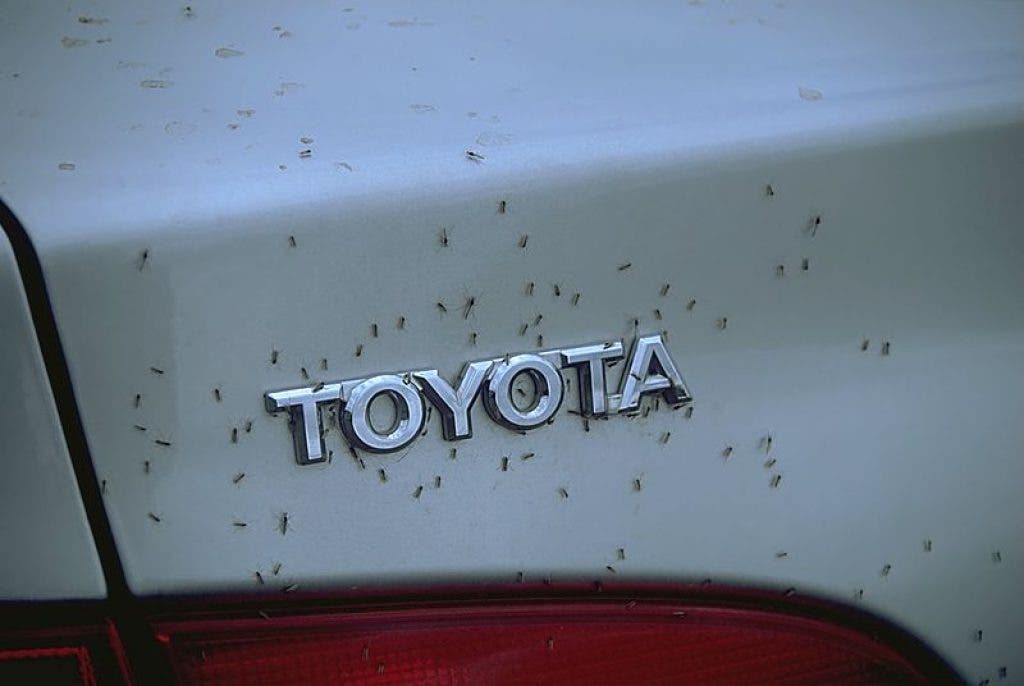

Minibus driver Jo Boroughs said one morning last week she arrived at the -- where the buses are stored overnight -- to find her bus completely covered with tiny black insects.
"I couldn't even tell that the bus was white," Boroughs said.
Health director Carol Wagner said Boroughs is not alone in noticing the widespread growth of these tiny, flying insects around town. Wagner said the had received calls from alarmed residents concerned that swarms of mosquitoes were already out and about in Fair Lawn.
Find out what's happening in Fair Lawn-Saddle Brookfor free with the latest updates from Patch.
After some investigation, however, both a private exterminator and the county's mosquito control division have confirmed that the itsy bitsy buggers are a species of two-winged flies, called midges.
Wagner said the type of midges Fair Lawn and other towns around the county are dealing with this spring pose no harm to residents, although their sheer numbers and ability to blanket entire objects can be frightening.
Find out what's happening in Fair Lawn-Saddle Brookfor free with the latest updates from Patch.
"Sometimes they could cover a whole screened area, a front wall of a house, a door or a vehicle, and people think they’re mosquitoes and they’re afraid for their children," Wagner said. "But in actuality, they’re not mosquitoes at all. They don’t bite, they don’t create any kind of public health outbreak of any kind of illness, they don’t transmit disease. They’re just kind of a nuisance."
Midges can be found anywhere, but they're most likely to be seen in damp, cool places where they can breed.
"Where there’s a lot of moisture, maybe in mulch that people use to put around their flower beds, that could be a place where they’re breeding," said Wagner, noting that the recycling center is dealing with a large midge infestation this year in its giant mulch piles.
"They also breed in the river beds, the banks," Wagner continued. "Especially with the limited rain that we’ve been having, it’s not flushing out the rivers to wash them downstream. So that’s why we might also be seeing them in larger numbers."
Wagner said this was the first year Fair Lawn has had a problem with midges, which typically die off in very hot or very cold weather.
"We’ve had fairly dry weather and kind of a warm winter, so they never really died off," Wagner said. "Also, we have a very early spring, so they’re coming out earlier, too. But we haven’t had really warm enough weather to kill them off and control them."
Rather than attempt to exterminate the midges -- which would be costly and require a different insecticide than is used on mosquitoes -- Wagner said the borough had been advised to wait them out.
"Several days of hot weather and strong sun should be enough to get rid of the problem because they die off," she explained. "They just can’t survive in the heat."
Wagner advised homeowners with a midge problem in their own yard to turn over mulch chips so the midges that may be breeding beneath the mulch will be baked by the sun.
Get more local news delivered straight to your inbox. Sign up for free Patch newsletters and alerts.