Crime & Safety
ACLU Names 10 New Jersey Towns With Most Police Property Seizures
It wasn't just cars and cash that police seized. Other items included an unopened condom and vibrator, baseball cards and 6 pairs of shoes.


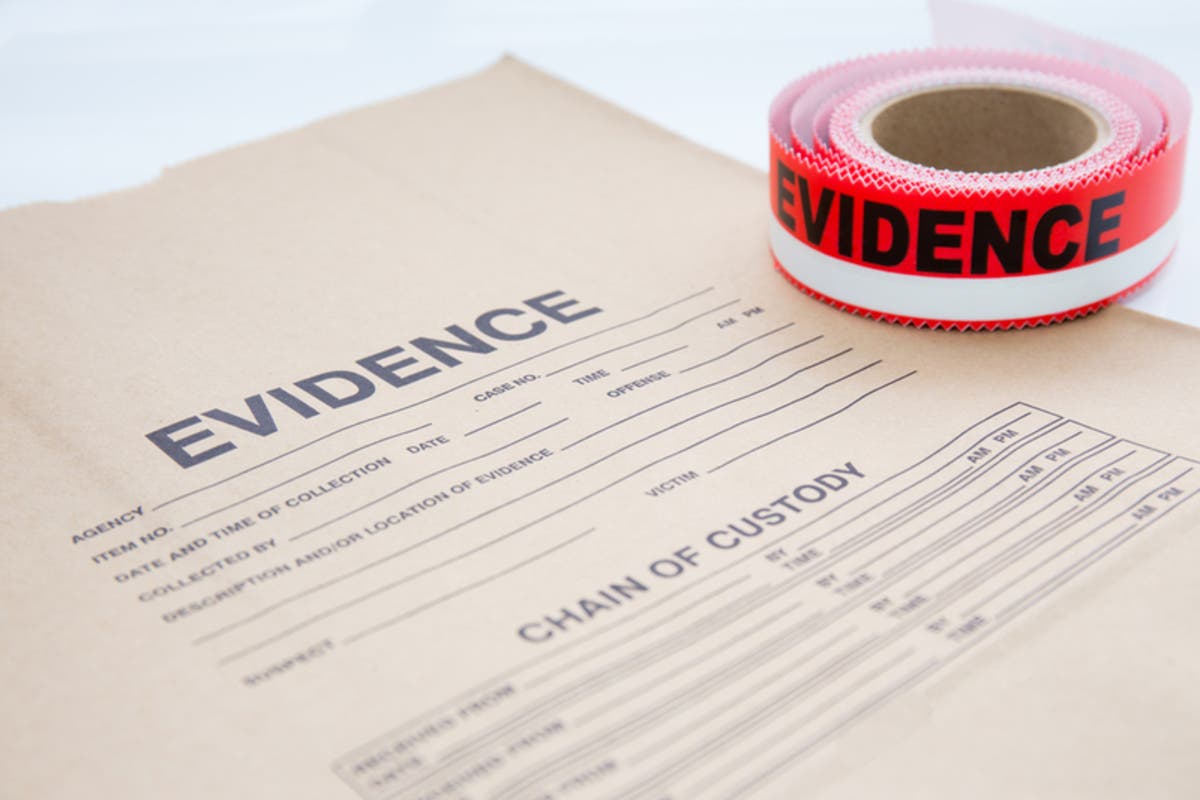
HUDSON COUNTY, NJ — If police in New Jersey suspect that your cherished belongings are linked to criminal activity, they have the legal right to seize your money, car, or any other property… even if you’re never charged with a crime.
It’s a process known as civil asset forfeiture, and according to a recent report from the ACLU of New Jersey, it’s a practice that’s causing “disturbing racial disparities and other alarming trends” throughout the state.
On Tuesday, the ACLU-NJ released a report with data culled from an Open Public Records Act request for January through May 2016. (See the full, town-by-town report here)
Find out what's happening in Hobokenfor free with the latest updates from Patch.
About $5.5 million in assets were seized across the state during the five-month period, including 234 cars. Bergen County led the state in greatest amount of assets seized, where police took in $795,295.
Here are the top 10 municipalities by “Number of Seizures,” according to the ACLU:
Find out what's happening in Hobokenfor free with the latest updates from Patch.
- Jersey City: 346
- Newark: 175
- Paterson: 93
- Middle Township: 89
- Trenton: 79
- Toms River: 37
- East Orange: 32
- Camden: 31
- Elizabeth: 31
- Union City: 21
Here are the top 10 municipalities by “Total Money Seized”:
- Newton: $660,025
- Fort Lee: $419,193
- Warren: $291,187
- Newark: $282,073
- Union: $266,858
- Jersey City: $148,627
- Paterson: $145,537
- Trenton: $143,309
- Camden: $111,872
- Elizabeth: $93,272
Not all the seizures were blockbusters. Indeed, in Hudson County, about half came to less than $175, the ACLU stated.
In addition to cars and cash, police also seized:
- An unopened condom and vibrator (Camden County)
- Baseball cards (Ocean County)
- Six pairs of shoes (Bergen County)
- A CD/DVD player (Camden County)
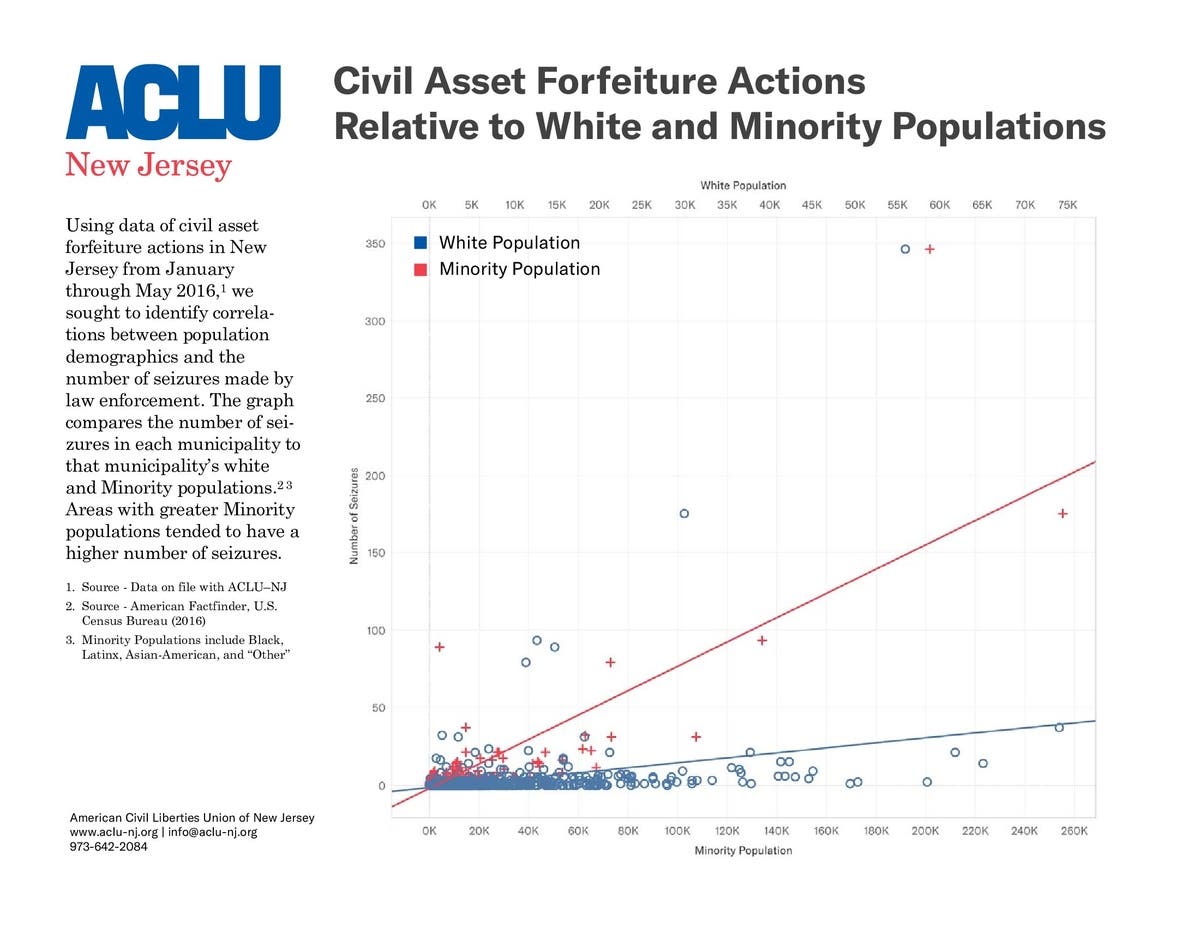
Researchers broke down the stats by county and municipality and found a troubling trend: areas in New Jersey with greater populations of people of color tended to have higher numbers of seizures.
For example, the largest volume of forfeiture actions within the five-month period occurred in Hudson County, where police made more than 400 seizures. The numbers are concerning considering that in the county’s largest municipality – Jersey City – black people were arrested for low-level offenses at a rate 9.6 times higher than that of whites in 2013, researchers stated.
- See related article: This Hudson County Town Has Most Immigrants In NJ, Report Says
In addition to racial disparities, police seizures were more common in poorer communities, the ACLU stated:
“Forfeiture actions more commonly take place in highly policed, low-income communities, where standard filing fees to mount a court challenge can themselves be prohibitive. These conditions create perverse incentives for law enforcement to stop more people. The people swept up by forfeiture in these communities are less likely to challenge the forfeiture of their assets, given the high costs of litigation and the lack of free legal representation in forfeiture cases. On top of the financial burdens of contesting forfeiture actions, those who go to court face a difficult legal battle because the government is held to a low burden of proof.”
“The civil asset forfeiture system has proved prone to widespread abuse, but it’s also ripe for sweeping reform,” said ACLU-NJ Catalyst Fellow Liza Weisberg, who contributed to the report as part of a two-year fellowship to combat civil asset forfeiture abuse through litigation and policy advocacy. “We see a path forward that can get us there.”
Ultimately, the state Legislature must implement reform to combat the harms of the practice, according to ACLU administrators.
“We need dramatic and widespread reform of civil asset forfeiture, and ultimately, we need to end the practice altogether,” ACLU-NJ Policy Counsel Dianna Houenou said.
“At a time when the federal government has announced plans to augment civil asset forfeiture, it’s especially important for New Jersey to begin mending the painful rifts civil asset forfeiture abuse has caused in our state, especially in communities of color,” Houenou charged.
ACLU researchers offered some additional suggestions for how to “rein in abuse” of the state’s civil forfeiture policies:
- Prohibit forfeiture actions absent criminal convictions and install the protections of criminal forum in forfeiture cases, including the criminal burden of proof beyond a reasonable doubt and the right to legal counsel.
- Remove the profit motive by directing the proceeds of forfeiture into the state general fund. If there is an incentive to line their own pockets, law enforcement will continue to prey on our most vulnerable communities, who are too often unable to fight back against the abuse of power.
- Put in place meaningful transparency and accountability measures.
Learn more about posting announcements or events to your local Patch site here. Send local news tips and correction requests to eric.kiefer@patch.com
Graphic: ACLU-NJ
Main photo via Shutterstock
Get more local news delivered straight to your inbox. Sign up for free Patch newsletters and alerts.