Traffic & Transit
Hoboken Nonprofit Pans NJ Transit Study On Ferry Facility
Fund For A Better Waterfront: "This report omits critical facts."


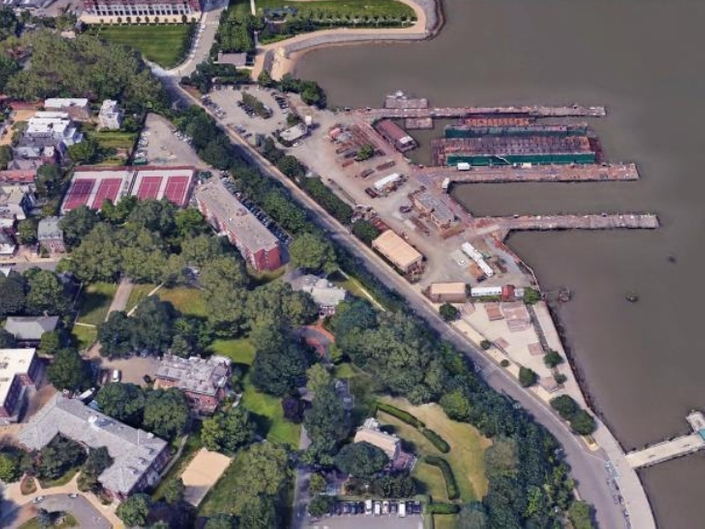
HOBOKEN, NJ — A Hoboken-based nonprofit is panning a pair of recent studies that identify the Union Dry Dock as the best spot for a proposed NY Waterway ferry facility.
Last week, the Fund For A Better Waterfront (FBW) released a statement criticizing the NJ Transit-sponsored research, which supports NY Waterway’s plan to place a ferry repair and maintenance facility at the Dry Dock property.
- See related article: Studies Support NY Waterway In War Over Hoboken Ferry Facility
“This report omits critical facts and is devoid of any objective analysis,” the FBW charged. “NJ Transit, a public agency, kept local public officials in the dark as it drafted this report while receiving input on a regular basis from NY Waterway and its lobbyists. NJ Transit nowhere mentions the unique qualities of the Hoboken Cove where Union Dry Dock is located and its proximity to recreation, residential and educational uses.”
Find out what's happening in Hobokenfor free with the latest updates from Patch.
A spokesperson for NY Waterway pointed out the company didn't prepare or release the study, which was done at the behest of NJ Transit.
Find out what's happening in Hobokenfor free with the latest updates from Patch.
NY Waterway has claimed the proposed facility would enhance transportation, public security and property values on the Hudson River waterfront. But many community members have dug in their heels against the proposed location of the new facility, demanding that the area be used for open space instead.
The Hoboken City Council recently gave a tentative OK to Mayor Ravi Bhalla's request to use eminent domain to force the sale of the property in the name of the public good.
- See related article: Hoboken Council Makes 2 Big Moves On Waterfront Development
But NJ Transit's recent studies bolstered the company's position that the Dry Dock is the logical and practical choice for the new facility.
"These studies ignore politics and tell the truth, despite the lies and abuse our opponents have been spouting," said Arthur Imperatore, founder of NY Waterway. "They confirm what we have said for 10 years: Union Dry Dock is the only suitable location for a ferry repair and maintenance facility."
Imperatore continued:
"We look forward to working with the people of Hoboken to create an attractive facility at Union Dry Dock; to add amenities to make Hoboken Cove more welcoming to recreational boaters and to create a safe and beautiful walkway/bikeway next to the site. If Hoboken politicians, however, persist in their ill-conceived plan to seize Union Dry Dock, they should know that we will fight for our God-given right as Americans to protect our property, our company and especially the 32,000 New Jersey commuters we serve every day."
- See related article: Ferry Company Gets Permit For Hoboken Depot
The NJ Transit studies drew immediate criticism from Mayor Ravi Bhalla, who said the reports "benefit NY Waterway's corporate greed at the behest of their multi-millionaire CEO."
On Aug. 22, the Fund For A Better Waterfront (FBW) agreed the studies are stacked in the favor of NY Waterway, writing that “NJ Transit has demonstrated a total lack of transparency and accountability to the Hoboken community and its elected officials.”
- See related article: 15 Environmental Groups Say 'No Ferry Facility' Near Hoboken Cove
According to the FBW:
“The report falsely claims that refueling at the Hoboken Terminal poses a security threat. This ignores the fact that up until recently, NJ Transit has refueled its diesel locomotives at the Hoboken Train Terminal, some 40,000 gallons on a weekly basis. Last March, when the Hoboken Police Chief reached out to the Director of the NJ Office of Homeland Security, he was told there are no current threats for the Hoboken Terminal.”
The FBW stated:
“In fact, the NJ Transit report fails to mention or address the long list of concerns that have been raised by the public, elected officials, civic and environmental groups about locating a ferry maintenance/refueling facility at the Union Dry Dock site in the environmentally unique Hoboken Cove. For the past 30 years, at great expense, Hoboken has transformed its waterfront from a gritty industrial port to new residential, commercial and public open space development. Locating the refueling/maintenance facility at Union Dry Dock would create an incompatible, industrial use in the middle of a nearly completed contiguous waterfront park that is much beloved by the public.”
The group added:
“In April of last year, after two aborted attempts by NJ Transit to put acquisition of Union Dry Dock on its Board of Directors agenda, Gov. Murphy promised Hoboken officials that the state would undertake a full alternate site analysis. The report prepared for NJ Transit by the NJDOT, WSP* and KPFF Consulting, however, only compared the Bayonne Peninsula (MOTBY) vs. Union Dry Dock. None of the numerous other options were included in their evaluation. They fail to acknowledge that the owner of NY Waterway still owns the 42 acres in Weehawken where the company currently refuels and repairs its ferry fleet. This presentation suffers from many of the same problems in the NJ Transit Report. Both reports were dated August 8, 2019.”
WHAT'S THE BEST SPOT FOR THE FERRY FACILITY?
The NJ Transit-sponsored studies released earlier this month are a big departure from a city-sponsored study released in November 2018.
- See related article: Study Names Best Spots For Proposed Ferry Station In Hoboken
That study – done by Boswell Engineering – analyzed 24 properties from the George Washington Bridge to the New York Bay in Bayonne, ultimately focusing on the five "most feasible locations":
- Hoboken South (Lakawanna Terminal)
- Bayonne Peninsula
- Binghamton Ferry Site
- Union Dry Dock
- Port Imperial Ferry Terminal
But NJ Transit's recent research suggests the best spot for the ferry facility is the Union Dry Dock, after all.
In addition to its "degrading" piers, one alternate site for the ferry facility – Hoboken Terminal – would create a security risk to terrorist attacks and is too vulnerable to storms, the studies say.
"An accident at the proposed location could shut down every mode of public transportation and create safety and congestion issues throughout two states," the study claims.
The 80-acre property, one of New Jersey's busiest multi-modal transportation hubs, is owned by NJ Transit. (Read the full report)
The second study – done by the New Jersey Department of Transportation, WSP Inc. and KPFF Consulting Engineers for NJ Transit – throws water on the idea of locating the proposed facility in Bayonne.
That location would be too expensive to build, coming in somewhere between $34.3 million and $47.9 million. It would also saddle NY Waterway with an additional $2.8 million to $3.3 million in annual operating costs, the study says.
Building the proposed ferry facility at the Union Dry Dock would cost NY Waterway from $9.3 million to $10.6 million, and have zero additional operational costs, the study says. (Read the full report)
"In 2010, the region hosted eight drydock facilities," researchers wrote. "Three have closed and a fourth (NYWW Weehauken) will close soon."
According to the study, ferries require specialized facilities that can't be handled at larger shipyards like the Bayonne Dry Dock. In addition, most remaining undeveloped waterfront land in the area is targeted for commercial or residential use.
"Preserving and improving historic industrial marine properties is best available option," researchers stated.
Don’t forget to visit the Patch Hoboken Facebook page. Learn more about posting announcements or events to your local Patch site. Send local news tips and correction requests to eric.kiefer@patch.com
Get more local news delivered straight to your inbox. Sign up for free Patch newsletters and alerts.