Crime & Safety
Hoboken Train Crash Likely Caused By Sleep Apnea: NTSB
U.S. Senator Robert Menendez: "NJ Transit put its riders at unnecessary risk."


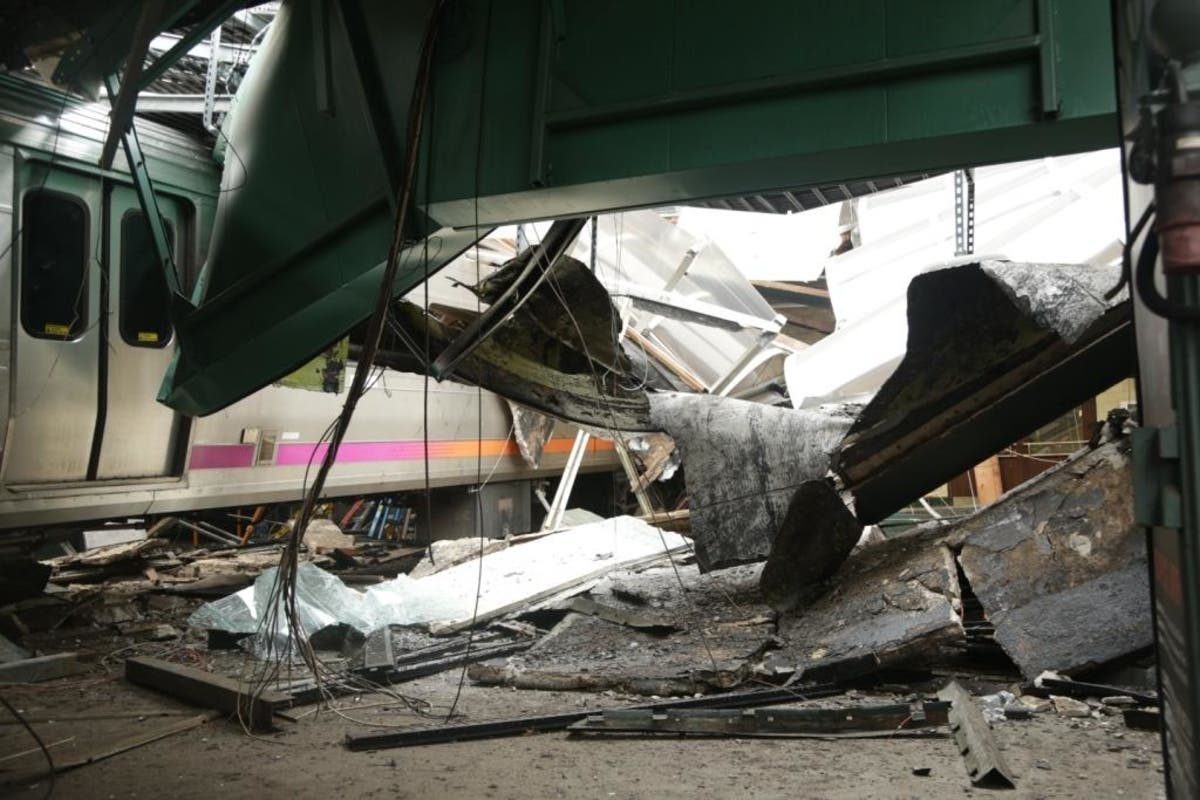
HOBOKEN, NJ — A NJ Transit train crash at Hoboken Terminal that killed a woman and injured more than 100 other commuters in 2016 was likely caused in large part by the engineer’s untreated sleep disorder, according to the National Transportation Safety Board (NTSB).
On Tuesday, federal safety inspectors with the NTSB announced that NJ Transit's failure to adequately screen and treat its engineers for sleep apnea, a chronic and ongoing condition that can cause excessive daytime sleepiness, may have played a key role in the Sept. 29, 2016 crash.
The absence of technology on the tracks to automatically stop the trains was also a factor in the crash, the NTSB stated.
Find out what's happening in Hobokenfor free with the latest updates from Patch.
"The National Transportation Safety Board determined that the probable cause of the Hoboken, New Jersey, accident was the failure of New Jersey Transit train 1614’s engineer to stop the train after entering Hoboken Terminal due to the engineer’s fatigue resulting from his undiagnosed severe obstructive sleep apnea. Contributing to the accident was New Jersey Transit’s failure to follow its internal obstructive sleep apnea screening guidance and refer at-risk safety-sensitive personnel for definitive obstructive sleep apnea testing and treatment. Further contributing to the accident was the Federal Railroad Administration’s failure to require railroads to medically screen employees in safety-sensitive positions for obstructive sleep apnea and other sleep disorders. Also contributing to the accident was the lack of either a device or safety system that could have intervened to stop the train before the collision."
The NTSB’s findings conclude a 15-month investigation into the tragedy that claimed the life of 34-year-old Hoboken mother Fabiola Bittar De Kroon and injured 114 other NJ Transit riders.
Find out what's happening in Hobokenfor free with the latest updates from Patch.
- See related article: Tears For Young Mother Killed In Hoboken Train Crash
- See related article: 1 Year After Hoboken Train Crash (How Has NJ Transit Improved Safety?)
Investigators found that engineer Thomas Gallagher suffered from undiagnosed sleep apnea, a condition that is not rare among transportation workers, some experts say. Metro-North recently found that as many as 11.6 percent of its engineers in the New York City suburbs may suffer from the disorder, the Associated Press stated.
In addition to the lack of sleep apnea testing and treatment, alleged violations at Hoboken Terminal previously found by federal inspectors just months before the crash included failure to equip trains with required emergency equipment, crew members failing to perform required brake tests on trains, and trains stopping too close to each other.
- See related article: Inspectors Found Safety Issues Prior To Fatal Hoboken Train Crash
- See related article: NJ Transit Train May Have Been Speeding During Fatal Hoboken Crash
TESTING FOR SLEEP APNEA
In August 2017, officials with the Federal Railroad Administration and the Federal Motor Carrier Safety Administration withdrew a proposed rule that would have required testing for obstructive sleep apnea, NPR reported.
Instead, transportation agencies such as Metro-North and NJ Transit will be allowed to voluntarily conduct their own testing for sleep apnea, NBC New York stated.
Safety experts have criticized the decision, alleging that it may place millions of lives at risk, the Associated Press reported.
- See related article: Feds Eschew Test For Sleep Disorder Linked To Hoboken Train Crash
Sleep apnea is also believed to have one of the factors that contributed to a deadly train derailment in December 2013 on Metro-North's Hudson Valley Line. A post-accident sleep study by the National Transportation Safety Board after that crash found that the engineer, William Rockefeller, suffered from severe sleep apnea.
Metro-North's Pascack Valley and Port Jervis lines are operated by NJ Transit; Metro-North started testing its engineers for sleep apnea in 2014.
- See related article: Metro North to Test All Train Engineers for Sleep Apnea
According to a NJ Transit statement issued last September, the agency's recent safety efforts at Hoboken Terminal have included:
- In October 2016, NJ Transit implemented an interim measure where any safety sensitive rail employee who exhibits any indication of potential fatigue symptoms is immediately removed from service until they obtain the appropriate documentation attesting to the satisfactory results or the condition is not present. This initiative was formalized as policy in April 2017.
- To date, 350 of 370 engineers and nearly a third of more than a thousand conductors have been screened for sleep apnea. By the end of September [2017], all locomotive engineers will be screened for sleep apnea.
SENATOR: "NJ TRANSIT PUT RIDERS AT RISK"
U.S Senator Robert Menendez from New Jersey issued the following statement on Tuesday:
“It’s clear from the NTSB report that the horrible tragedy in Hoboken could have been prevented had NJ Transit properly taken into account the inherent risks of both operator fatigue from sleep disorders and potential hazards at end-of-the-line stations. Unfortunately, NJ Transit failed to do both and put its riders at unnecessary risk.
“New Jerseyans deserve a transit system that is safe and reliable. We owe it to the public that their train is not just on time, but that when they board, they get home to their families safe and sound. Once the envy of the nation, NJ Transit has become the posterchild for what can go wrong when you bleed a transit agency dry of critical resources and fail to prioritize infrastructure investment. I am pleased that Gov. Murphy has made getting NJ Transit back on track a cornerstone of his new administration.”
- See related article: Gov. Phil Murphy Orders 'Full-Scale Audit' Of New Jersey Transit
Menendez continued:
“I will be pushing hard on the federal level to ensure the NTSB’s recommendations are fully implemented in a timely manner, including requiring all safety-critical train personnel to be screened and treated for sleep disorders and advancing installation of lifesaving technologies that can prevent crashes by taking the human element out of the equation. I will be introducing legislation to help agencies like NJ Transit fast-track that effort.”
U.S. Senator Cory Booker also offered a statement about the NTSB's findings:
"Today’s NTSB report underscores just how shortsighted and reckless the Trump Administration’s decision was to reverse the rule requiring sleep apnea testing and treatment. The safety of commuters in New Jersey and across our nation must remain a top priority. We simply cannot stand idly by and wait for the next tragic incident. It’s imperative that we take immediate steps to strengthen rail safety standards, and mandatory sleep apnea testing is a common sense safety measure that could prevent crashes and save lives. I’ve long pushed for reforms to protect operators and commuters from preventable tragedies, and this report is another reminder of how much work remains to be done.”
Don’t forget to visit the Patch Hoboken Facebook page here.
The link to the abstract for today's board meeting on the Hoboken and Brooklyn train accidents has been issued: https://t.co/N6i9HCc0ad
— NTSB_Newsroom (@NTSB_Newsroom) February 6, 2018
Learn more about posting announcements or events to your local Patch site here. Send local news tips and correction requests to eric.kiefer@patch.com
Photo: NTSB
Get more local news delivered straight to your inbox. Sign up for free Patch newsletters and alerts.