Community Corner
Library Unveils Renovation Plan
Work on the basement and exterior is slated to begin next spring.
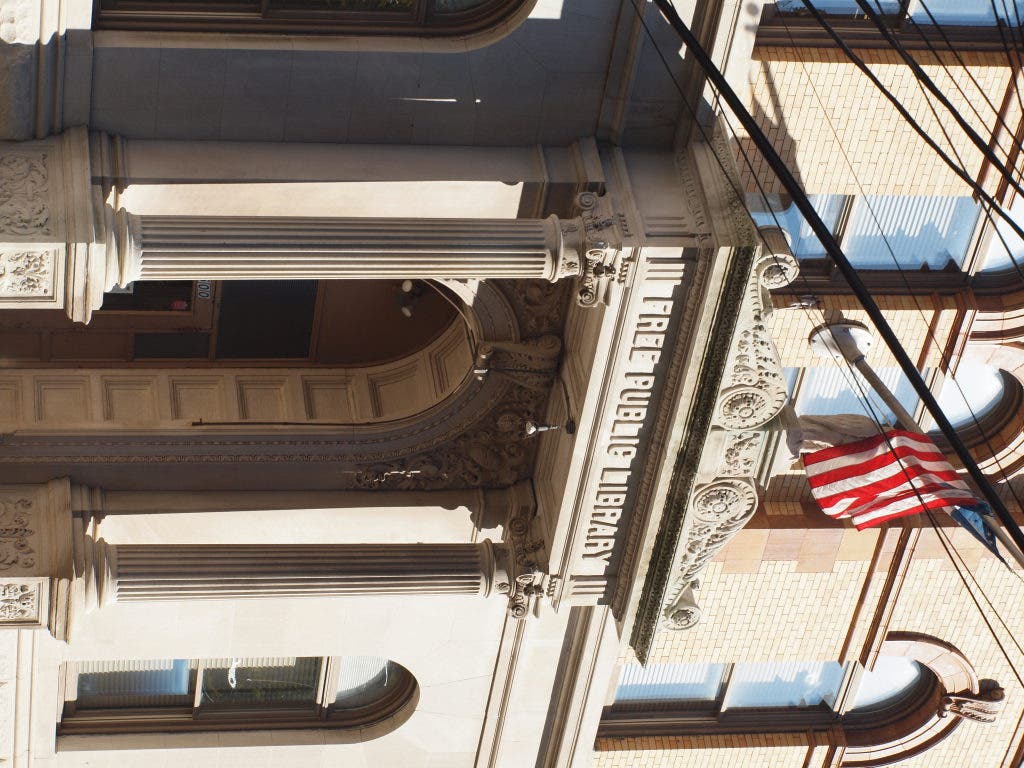


Thanks to a grant from the Garden State Historic Preservation Trust and matching funds from the City of Hoboken and its own savings, the Hoboken Public Library will soon add modern touches to its traditional design. The building that currently houses the library was built in 1896.
Plans for a comprehensive renovation project were unveiled at a public meeting at the library Thursday night. The renovation will be done in two phases. The first phase will include repairing the exterior and completely redesigning the largely underused basement.
Architect Dennis Kowall presented the plan to about 30 audience members. He began by highlighting the unique nature of the project. “Historic preservation is always a challenge, but that's why we love doing it,” he said. “Libraries themselves are always complex to change.”
Find out what's happening in Hobokenfor free with the latest updates from Patch.
Kowall said all changes to the library will have to remain consistent with aspects of its original design, as mandated by the Historic Preservation Trust's grant for $750,000.
Kowall explained that the plan for the exterior would include repairing all the cracks in its masonry, but the two biggest outdoor areas to be rehabilitated are the garden behind the building and the alley near Park Avenue. Kowall said the plan involves transforming the alley into a patio with outdoor furniture where patrons can sit and read during warm days. “We're giving life back to the street,” he said.
Find out what's happening in Hobokenfor free with the latest updates from Patch.
The garden, which Kowall said is currently more of a rubbish heap, will be cleaned and stocked with new plants. He also suggested that it could be used for children's reading groups and booked for private parties.
As for the interior, Kowall said the first task would be to waterproof the basement. Like many buildings in Hoboken, he said, the basement has been plagued by flooding problems. Kowall explained that besides the staff room and storage room, much of the basement is unused.
The original grant given by the Stevens family in 1886 that created the library stipulated that the building would have to include an industrial trade school. The school, formerly located in the basement, has long been closed, and the room is now empty.
The new basement will include a bookstore selling used books, a conference room, and upgraded storage and staff rooms. The bookstore will have a door leading into the patio, and the staff room will look into the garden.
Citing existing moldings, floor mosaics and other ornate artistic details, Kowall said the new basement will match the library's original design. "There are wonderful details already in this building," he said.
Kowall said that the library will begin accepting bids from construction contractors next spring, and that he plans for the work to take more than one year, meaning phase one of the renovation process should be complete by the spring of 2013. He added that while there are plans to renovate the rest of the library, that work will fall under a second phase that is still several years away.
According to librarian Lina Podles, who also spoke at the meeting, the library may close occasionally during the renovation, but it will remain open and functional as much as possible.