Traffic & Transit
Murphy Releases NJ Transit Audit: Budget Woes, 'Talent Drain'
More than a half-year after Murphy demanded an audit of NJ Transit, the results are in. Here's what auditors learned.


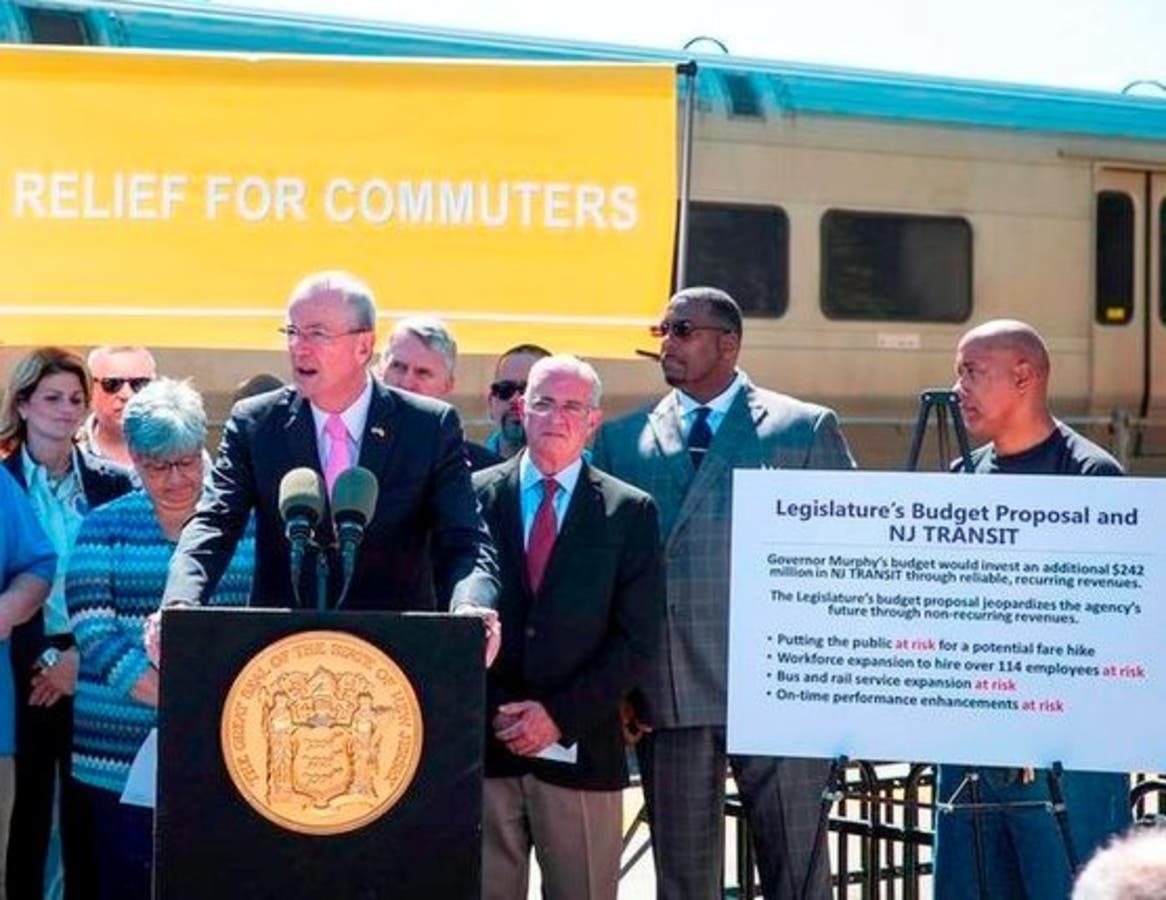
In January, shortly after taking office, Gov. Phil Murphy promised that “business as usual” at NJ Transit was over. Standing at the Summit Train Station, Murphy signed an executive order mandating a full-scale audit of what he called a “beleaguered mass transit agency.”
Now, more than half a year later, the results of the audit are in, Murphy announced Tuesday.
“Despite New Jersey’s location and our population density, we have continually failed to get mass transit right, something that has limited our economic growth for far too long,” Murphy said. “This audit is a critical step toward rebuilding NJ Transit into once again being an agency our residents can count on for safe, reliable, on-time service.”
Find out what's happening in Hobokenfor free with the latest updates from Patch.
The audit, conducted by The North Highland Company, assessed the following major areas: organizational structure, operating and capital funding sources, personnel recruitment, procurement, customer experience. (See the full report here)
Here’s what the audit found, according to The North Highland Company:
Find out what's happening in Hobokenfor free with the latest updates from Patch.
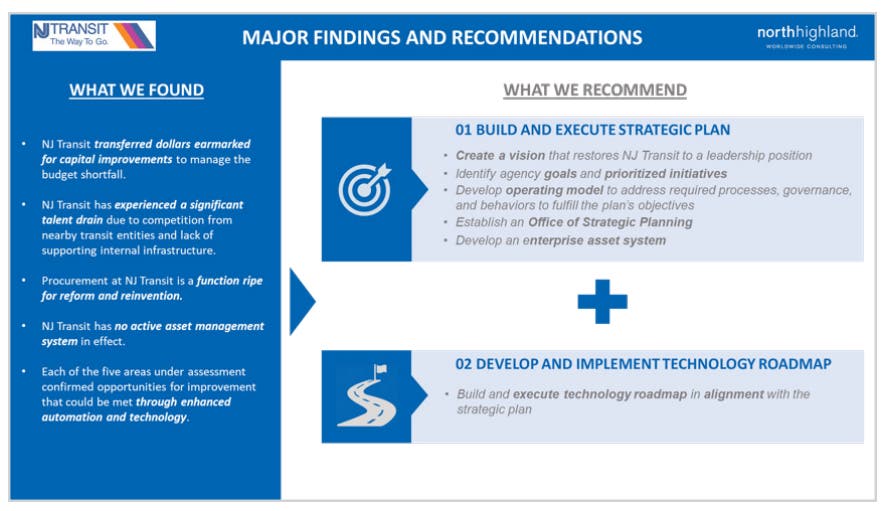
- “NJ Transit transferred dollars earmarked for capital improvements to manage the budget shortfall.”
- “NJ Transit has experienced a significant talent drain due to competition from nearby transit entities and lack of supporting internal infrastructure.”
- “Procurement at NJ Transit is a function ripe for reform and reinvention.”
- “NJ Transit has no active asset management system in effect.”
- “Each of the five areas under assessment confirmed opportunities for improvement that could be met through enhanced automation and technology.”
Auditors pointed to the agency’s budgeting process – which is heavily influenced by political concerns – as one of the major issues needing overhaul.
“Despite its legislative origins as a semi-independent transportation corporation, from a funding perspective NJ Transit has relied on political budgets to form the basis of State and Federal subsidies to support its operations. As state subsidies began their precipitous decline beginning in Fiscal Year (FY) 2013 and because of the lack of a strategy, NJ Transit could not actively pursue alternative revenue solutions – legislative or otherwise – to manage its funding shortfall. Instead, NJ Transit looked to readily available sources of income – the transfer of dollars earmarked for capital improvements and increases in transit fares for the riding public. Today, NJ Transit is facing the unintended long-term consequences of these actions, which have only increased over time as subsidies continued to erode – a deterioration of its assets, continued schedule and safety problems, and a disillusioned ridership.”
New Jersey Policy Perspective President Gordon MacInnes blasted the budgeting process and recent cuts to the agency after seeing the audit results.
“This report proves that years of austerity budgets and significant cuts in funding have transformed the agency from a national transportation model to one of the most dangerous and least reliable,” MacInnes said. “It is critical that the legislature support NJ Transit and its ridership with adequate revenue that is sustainable and does not rely on budget gimmicks.” (Article continues below)
- See related article: NJ Budget Battle Continues As Shutdown Looms
- See related article: WATCH: Gov. Phil Murphy Blames Chris Christie For NJ Transit Mess
MURPHY’S TAKE ON THE AUDIT
According to a statement from Murphy’s office, two major takeaways from the audit include:
- “Establishing an Office of Strategic Planning to create a leadership vision that restores NJ Transit to a leadership position in the industry and to improve communication with its customers”
- “Developing a technology roadmap to better implement infrastructure across all levels of the organization”
Other recommendations include:
- Streamlining organizational structure – “The report recommends streamlining the organizational structure to ensure effective decision-making. Additionally, the report calls for more transparency and accountability with the public including webcasting board meetings, updating performance scorecards, and updating the code of ethics. The report also highlighted potential recommendations for the Board of Directors, including updating by-laws and making improvements to advisory boards.”
- Better recruitment practices – “The report calls for improved HR and recruitment policies, including a new applicant tracking system and streamlining of the application and interview processes.”
- Enhancing the procurement structure – “The report notes that NJ Transit’s Procurement Department has begun an independent initiative to re-envision the existing procurement process and recommends mapping the end-to-end procurement cycle to develop an optimal organization-wide process.”
- Improving asset management – “The audit calls for the development of an asset management strategy that focuses on operational maintenance and capital planning.”
- More reliable funding – “North Highland found the current funding practices of NJ Transit to be inadequate and called for a more sustainable funding source and identifying innovative alternative sources of funding.”
- Improving Communications – “The audit calls for better communications on cross-honoring, mobile application improvements, and improved overall communications with customers.”
- Improving Physical Infrastructure – “The report suggests that improvements to the physical infrastructure of the NJ Transit network will lead to improved customer satisfaction.”
NJ TRANSIT EXECUTIVE: ‘THE ROAD MAP TO REBUILD’
A pair of high-ranking transit officials embraced the findings of the audit on Tuesday.
“While the audit validates the concerns we have observed at NJ Transit over the past eight months, it more clearly articulates the extraordinary depth of the issues we must correct,” said NJ Transit Chair and New Jersey Department of Transportation Commissioner Diane Gutierrez-Scaccetti. “We have the unique opportunity to take this report and use it as the foundation to rebuild NJ Transit into a 21st century agency.”
“These audit results and recommendations will serve as the road map to rebuild NJ Transit to the national leader it once was,” said NJ Transit Executive Director Kevin Corbett. “We have already begun the process of making important reforms which will provide the residents of New Jersey with a transportation system they deserve.”
Senate Majority Leader Loretta Weinberg (D-Bergen) and Assemblyman John McKeon (D-Middlesex), the sponsors of NJ Transit reform legislation that has passed the Senate and is awaiting Assembly action, and Senator Patrick Diegnan (D-Middlesex), who chairs the Senate Transportation Committee, said they would work with the Governor's Office and NJ Transit to add needed procurement reforms identified in the audit to the bill.
"The governor's NJ Transit audit underscores the urgent need for major structural changes at NJ Transit, starting with the creation of a stronger Board of Directors that is both representative of and responsive to the needs and interests of commuters," Weinberg said. "We need to set strict requirements for public hearings for both schedule changes and fare increases, and ensure that more NJ Transit board meeting are held in the evening when commuters can attend."
"The audit clearly lays out the human resources, maintenance and management problems that have plagued NJ Transit for years and that were the subject of joint Senate-Assembly hearings in the wake of the fatal Hoboken crash," McKeon said. "In addition, the audit identified critical procurement and information technology problems that need to addressed quickly."
"Many of the recommendations in the audit should be able to be implemented quickly, and those that require legislative approval can be added to the existing reform legislation," Diegnan said. "We will work cooperatively to ensure that NJ Transit returns to its proper place as one of the nation's leading mass transit agencies."
At least one Republican lawmaker questioned why it took so long for the Murphy Administration to come to the "common-sense" conclusions of the recent audit.
"There is no reason why the governor needed to wait over 250 days to begin making changes," said Assemblyman Anthony Bucco (R-Morris), the ranking Republican on the Assembly Transportation committee. "There are no surprises here and our riders have suffered long enough from inaction."
- See related article: Several NJ Transit Trains Canceled Monday Due To 'Manpower Shortage'
- See related article: NJ Transit Trains Still Seeing Delays After Derailment
- See related article: Pole Crashes Through Train As NJ Transit Messes Reach New Level
Learn more about posting announcements or events to your local Patch site here. Send local news tips and correction requests to eric.kiefer@patch.com
File Photo: Gov. Phil Murphy speaks at press conference at the Rutherford Train Station, June 2018 (Edwin J. Torres/NJ Governor's Office)
Get more local news delivered straight to your inbox. Sign up for free Patch newsletters and alerts.