Community Corner
Fatal Triangle Shirtwaist Factory Fire Should Be Discussed, Says Jersey City Student
A lecture at the Hoboken Museum focused on the Triangle Shirtwaist Factory fire that raised awareness about child labor.


HOBOKEN, NJ — In March of 1911 — 115 years ago — a fire tore through a Manhattan factory where hundreds of workers made cotton blouses, or "shirtwaists."
The Triangle Shirtwaist blaze killed 146 workers, many of whom were young women and immigrants.
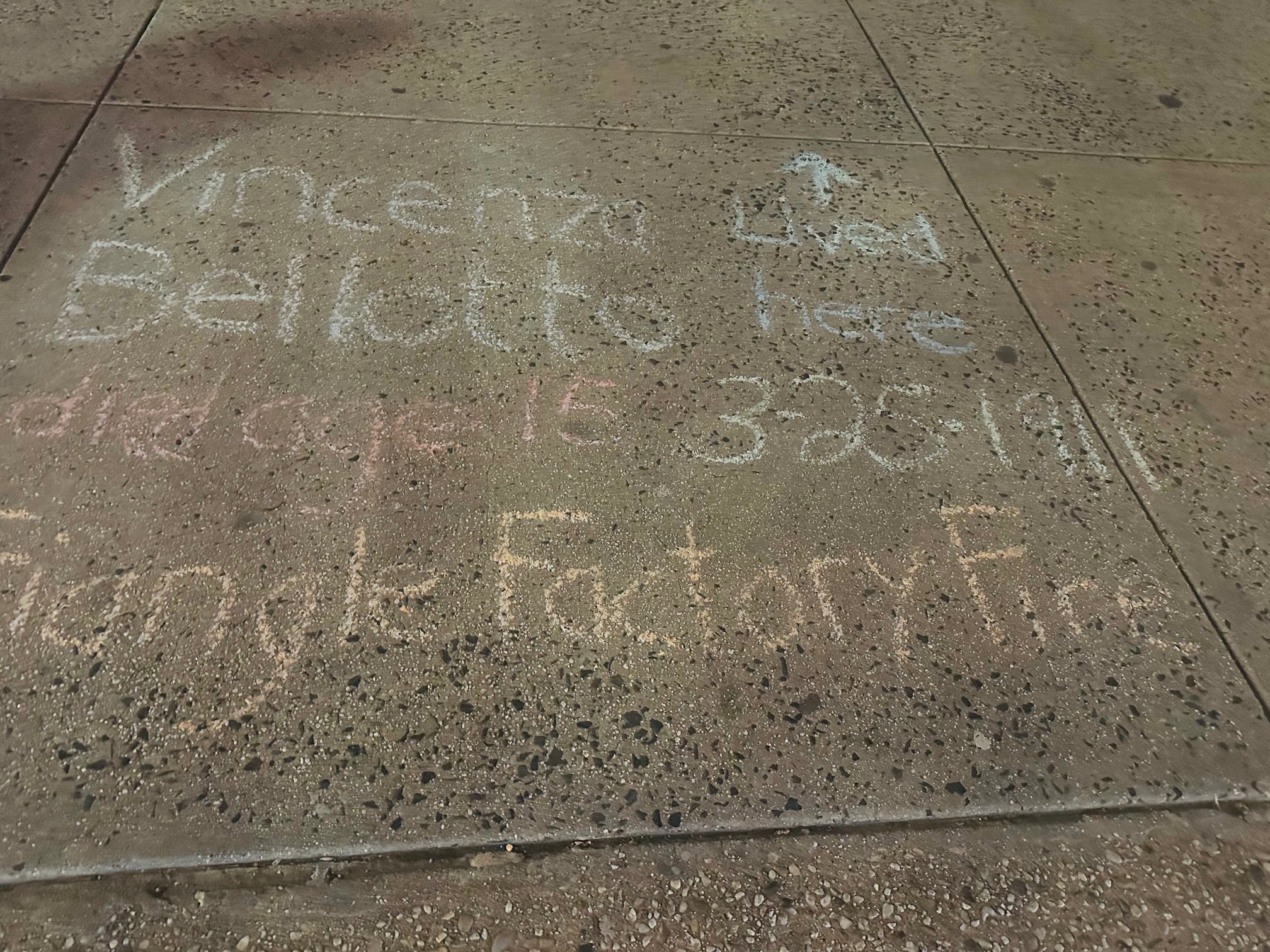
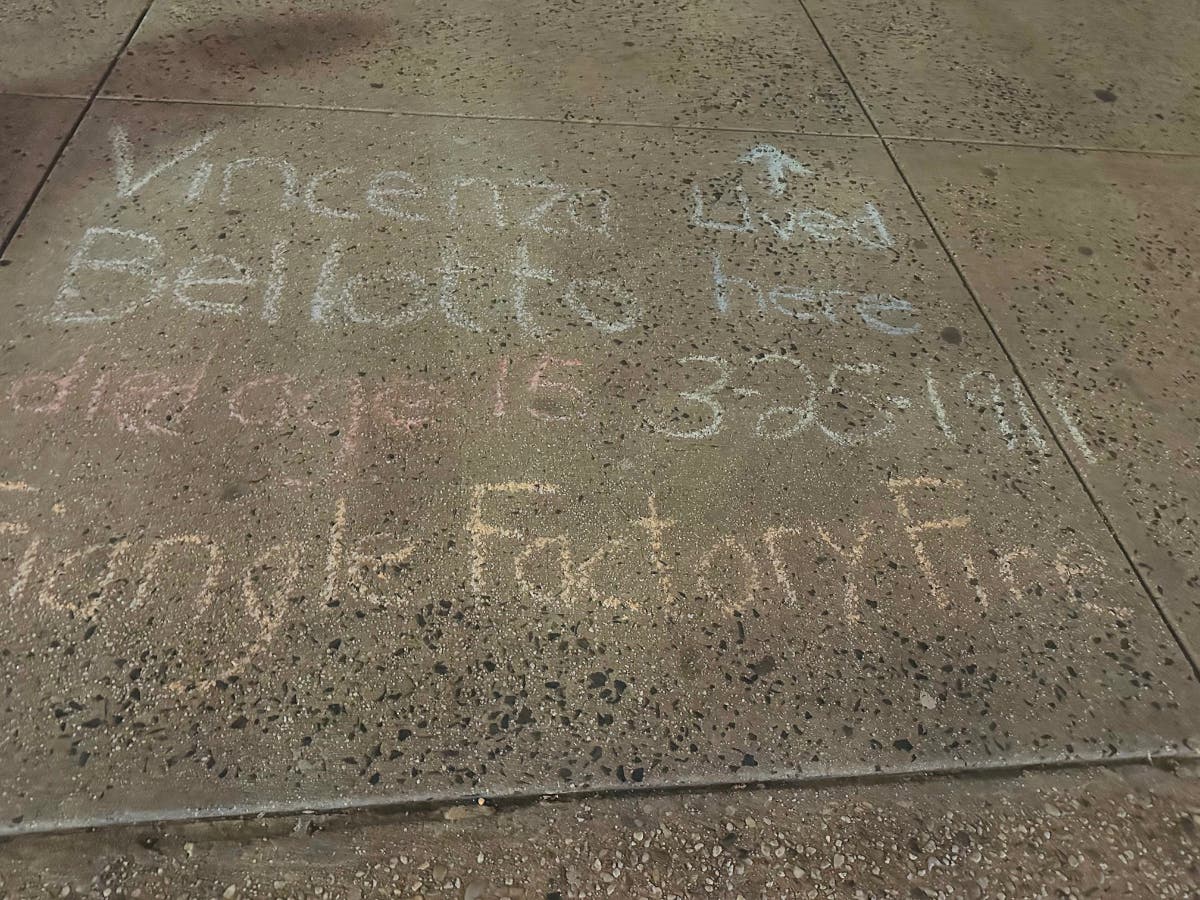
Some lived in New Jersey. In fact, each year, on March 25, area residents remember by marking the homes of the deceased with a chalk inscription, including the victim's name.
Find out what's happening in Hobokenfor free with the latest updates from Patch.
One patch of sidewalk on Hoboken's Washington Street is marked annually each year (see above).
This weekend, historians, students, and writers came to the Hoboken Historical Museum to discuss the tragedy.
Find out what's happening in Hobokenfor free with the latest updates from Patch.
Several dozen people attended a lecture that was held at the museum on Sunday at 4.
Sophia Burns, a senior who's majoring in history, spoke at the event. She told Patch why she believes people should learn about the fire.
"As a history student at NJCU, my main research interests have been the histories of immigration and labor in Hudson County," she said. "When Professor Giunta asked me this past winter if I'd be interested in researching a victim of the Triangle Fire who was from Hoboken, I jumped on the opportunity."
She added, "Virtually anyone who has studied the history of the labor movement in New York City will have heard about Triangle, but I'd never considered that anyone who worked at the factory was from Hudson County."
Researching the life of Hoboken teen Vincenza Belloto, she said, "reaffirmed for me the ways in which placing individuals back into historical narratives can be profoundly meaningful. Often, people live on through storytelling and sharing memories."
At the event, poet Paula Corso shared her work related to the tragedy, and other historians spoke as well.
English Professor Edvige Giunta said she was proud of the event. She said she grew out of a 2022 anthology of essays about the tragedy.
"When my coeditor and I decided to create an anthology of intimate and political essays on the Triangle fire, we trusted that the form would deliver powerful stories," she said. "What we did not anticipate was the ripple effects of the stories In the book."
Find out more about Sunday night's presentation here.
Get more local news delivered straight to your inbox. Sign up for free Patch newsletters and alerts.