Schools
Nurse Who Saved Student's Life to Retire
After 25 years, Catherine Cokelet will call it quits as a school nurse. But at least one Hopatcong family will never forget her.

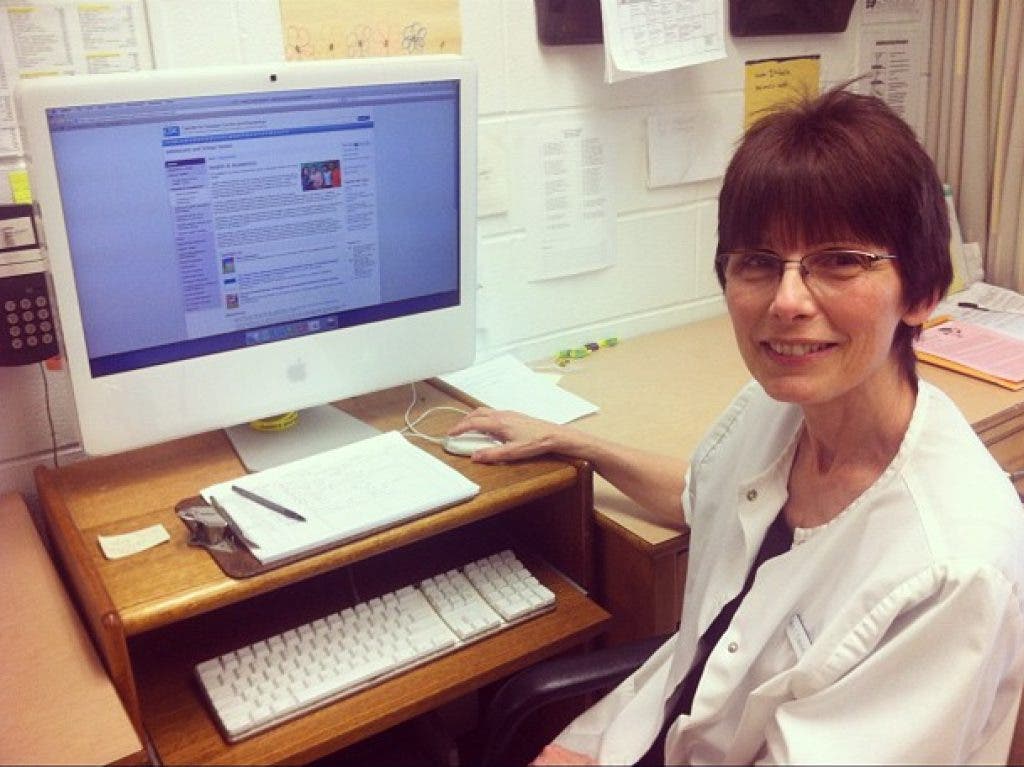
There were bags under the boy's eyes as he dragged his feet into the nurse's office. "I threw up in class," he said. Then Catherine Cokelet leaned over and, in a soft voice, told him to lie on the blue cot in the corner.
Minutes later a girl asked for an icepack to cool the itching on her face. Then a boy showed Cokelet the small red bumps on his forehead, arms and stomach, and she sent him back to class with a few dabs of ointment.
In June, the nurse will be retired, caring for her 91-year-old father-in-law in the home she built with her husband in Barnegat and, she hopes, volunteering at nearby schools. ("There's so much paperwork nurses do nowadays," she said. "They won't mind the help.") But, for now, Cokelet will do what she's done for more than two decades: try her best to soothe every ache, to mend every cut that comes her way.
Find out what's happening in Hopatcong-Spartafor free with the latest updates from Patch.
"I love what I'm doing," she said. "I love the people I work with. I enjoy the kids. But it's been 25 years and it's time."
Calling it quits wasn't easy, Cokelet said. The 62-year-old still approaches each downtrodden child with maximum attention, still organizes coat drives and food fundraisers for low-income families, Tulsa Trail Principal Dr. Joanne Mullane said. And her voice still carries the soothing tone, even in regular conversation, of a soft-rock radio DJ or a child therapist.
Find out what's happening in Hopatcong-Spartafor free with the latest updates from Patch.
But Cokelet has reached the goal she set when she graduated college. "I wanted to look back someday, when I'm on my deathbed, and I wanted to be able to say I didn't just take up space, that I helped people by being here," she said.
Count Richard Lavery among those people.
Lavery was 7 years old when he almost stopped breathing on Cokelet's cot. He was sent to her office when his teacher noticed his lips turning blue as he sat listless at his desk. The night before a thick waft to black smog—"It smelled like burning tires," his father, also named Richard Lavery, said—floated through the windows of his home, triggering the boy's then-undiscovered latex allergy.
"Basically, he was dying," his dad said.
Cokelet didn't hesitate after seeing Lavery. She quickly placed an oxygen mask over his face and called his father, who raced to the school from work, and the ambulance squad, which transported the boy to St. Clare's Hospital in Dover.
Lavery spent 10 days at the hospital after the scare, three of them in intensive care. Now 17, Lavery shook his head when he heard Cokelet planned to retire.
"I remember her running back and forth, checking my pulse, checking on me every few minutes," he said. "She is the reason I am alive."
While Cokelet said she's grateful to have only experienced a few close calls since becoming a school nurse, those are the moments that Cokelet believes have defined her career. Cokelet was 37 when she took over for her friend, Pat Ballene, who had died suddenly.
Cokelet had three children at the time and, for a while, put off full-time work to raise a family, despite constant insistence from Ballene that she had the ability to excel as a nurse. But when Ballene died, Cokelet said she saw it as a chance to "carry the torch."
The principal that hired Cokelet, Joseph Memoli, agreed.
"Throughout her career on a daily basis Mrs. Cokelet attended to the medical needs of the children with compassion and sensitivity," Memoli said in an email. "Behind the scenes, Mrs. Cokelet was an invaluable resource assisting in the development of school policy in a labyrinth of increasingly complex state and federal regulations impacting public school health practices. Most importantly, she respected the dignity of each and every child and family. It was a pleasure to work along side her for many years."
Middle school nurse Helga Poggio said she was glad she recently made copies of files and information Cokelet stores in her office. Poggio said Cokelet "just knows everything. She is my encyclopedia."
"She is the rock we all depend on," Poggio said. "If we have any questions, I'll call Cathy an if she doesn't know it off the top of her head she'll get it to me within a short time."
Cokelet said she hopes to serve Barnaget schools in a similar way when she retires with her husband, Peter, a retired Livingston police officer. School nurses nowadays are saddled with mounds of documents and regulations, Cokelet said, and it can be overwhelming.
But it has gotten better for children, she said. Less often does Cokelet feel compelled to write a note to other teachers, asking to start a collection to help pay for a child's medicine, as more families can afford basic health care than in the late 1980's, she said.
It's hasn't been all good news for kids, though, she said. Cokelet said more children have diagnosed illnesses—she said she's seen a spike in children with diabetes—and disorders than when she first started. The top drawer of a metal cabinet in her office is filled with inhalers for second-graders; the bottom drawer is for third-graders.
"Children today are more challenged," she said, "but thank God there's good medicine out there to help children meet their needs."
Thanks to Cokelet, the Lavery family knows all about that medicine.
Though Richard Lavery estimates he’s spent about two months in the hospital due to asthmas attacks since his first scare, it could have been worse, his father said. But it wasn’t. Cokelet guided the family as it learned more about Richard Lavery’s condition, helping it sidestep potential disasters.
“She told us, ‘Don’t eat bananas and kiwis because they’re related to the latex family,’” the father said. “We had no idea. And after the second attack she told us to see if our insurance company had an at-home nebulizer. She was critical for us in figuring out the process.
“We felt comfortable when my wife and I were both working. We felt comfortable our son was in her hands when he wasn’t in ours. This is scary. When he stops breathing and all of a sudden it’s life or death, you’re afraid.”
Cokelet said she gets afraid sometimes, too.
“But you have to make the best of a bad situation,” she said. “You may only have a child six hours a day and 180 days a year, but I have to believe that you can make a difference in those six hours."
Then another boy walked into her office.
Get more local news delivered straight to your inbox. Sign up for free Patch newsletters and alerts.