Neighbor News
Equal justice for politically connected elites, death and retribution for everyone else
Phil Murphy and Donald Trump both used the power of their office to grant political favors and punish critics who used freedom of speech.
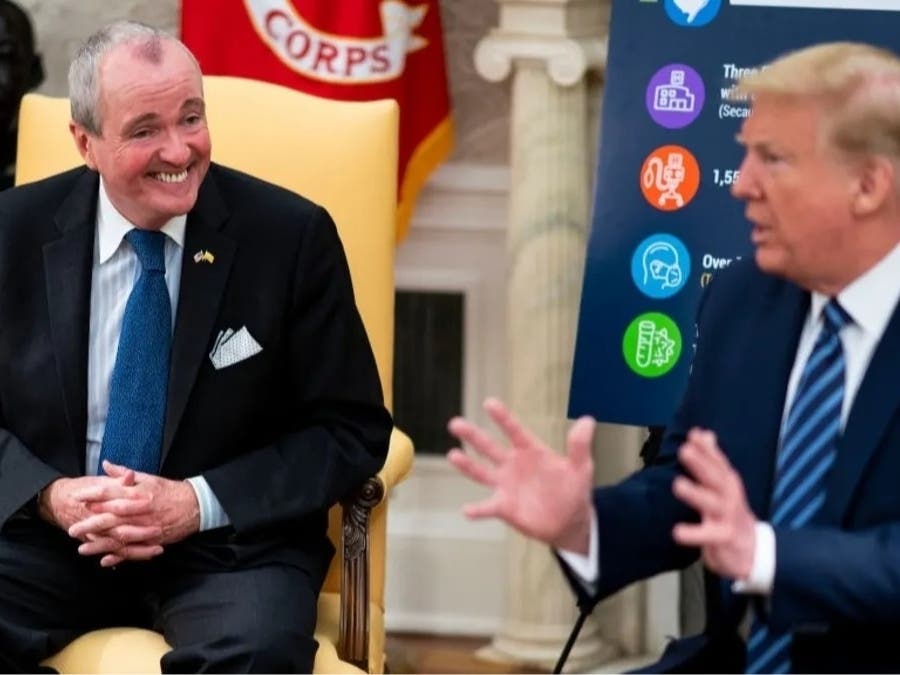
In the waning hours of his governorship, Philip D. Murphy performed an act of political alchemy so brazen it would have impressed Tammany Hall. He turned a jury’s verdict into vapor, reminding New Jersey that in American politics the tightest wires still connect power, money, and forgiveness.
On the morning of January 20, an Atlantic County jury found Harris Jacobs, 28, guilty of leaving the scene of a fatal accident that killed 76-year-old Orlando Fraga-Seruti.
Known as “Big Cuba,” Fraga-Seruti worked as a security officer at the Claridge and Sands Casinos after emigrating from Cuba to the United States
Find out what's happening in Jersey Cityfor free with the latest updates from Patch.
The evidence was grim: Jacobs leaned over the dying man not once but twice, then drove off and placed ten calls to a single person—his father, Joe Jacobs, a Democratic power broker who once bundled more than $100,000 in a single night for the political ambitions of the governor’s wife.
Before the jury could finish deliberating over the power broker's son's guilt, Murphy’s pardon—prepared in advance—rendered, the conviction meaningless.
Find out what's happening in Jersey Cityfor free with the latest updates from Patch.
The Atlantic County Prosecutor’s Office, led by a Murphy appointee, could only lament that “when politics pervades justice, the rule of law becomes subordinate to influence and power.”
Murphy delivered a grave insult to the Atlantic City resident's surviving son, grandson, granddaughter, three sisters, a brother, and many other friends and relatives.
This was not mercy born of reflection. It was a transaction.
In his final spasm of authority, Murphy issued clemency to 148 people. Many were deserving, beneficiaries of a genuine reform effort aimed at correcting excessive sentences and aiding survivors of abuse—an initiative rightly praised by civil-liberties advocates.
Threaded through that worthy project ran a shadow process for the connected.
A former Democratic assemblyman convicted of stealing from his family’s charity was pardoned.
A drunk-driving killer who tore through the roads at 90 miles per hour received a commutation championed by a lawyer once shortlisted by Murphy for attorney general.
Another commutation went to a woman who set her car on fire with her two toddlers strapped inside—an act so horrific that a county prosecutor publicly asked how such cruelty could ever qualify for leniency.
The pattern is unmistakable: leniency for allies, donors, and insiders; severity—or worse—for those who fall out of favor.
It is a tale as old as power, and it invites comparison to the national stage.
Donald Trump perfected the genre with pardons for political allies and loyalists; Murphy delivered a Garden State version. The tradition is bipartisan. The message is singular: there is one system of justice for the powerful and another for everyone else.
To see the other side of the ledger, consider James Devine.
A veteran political operative, Devine committed the cardinal sin of organizing a primary challenge to Murphy during his re-election bid.
When the administration shifted ballot-petition rules online amid the chaos of a pandemic, Devine made a careless filing error—an error he admitted. His mistake was not unnoticed and the candidate he wanted to compete was not allowed on the ballot, but he was charged criminally, accused of intentional deceit.
Facing a system arrayed against him, Devine took a plea to probation rather than risk a ruinous trial. His offense was not fraud; it was dissent.
The political rule is clear: Mercy for friends, prosecution for rivals.
This instinct—to protect its own while punishing trouble—was evident long before the final pardons.
During Murphy’s rise in New Jersey politics, volunteer Katie Brennan alleged she was raped by a campaign staffer, Al Alvarez, in 2017. After the election, despite Brennan’s repeated pleas to senior officials, including the governor, Alvarez was hired into a senior state post.
A bipartisan legislative investigation later concluded the administration “mishandled” the allegation, appearing more concerned with avoiding scandal than following procedure.
The episode ended not with Murphy's accountability, but with a $1 million settlement paid by the taxpayers with the campaign admitting no wrongdoing.
During Murphy’s same 2017 campaign, when his campaign manager, Brendan Gill, hurled a misogynistic curse (the "C-word") at his top strategist, Julie Roginsky, the woman got fired. Gill was widely described as having built a toxic environment for women and his dubious ethics have proved to be fabulously profitable.
Murphy spent his last full day in office campaigning to help Gill get elected to Congress.
The system protects insiders by slowing down when accountability is required, but it can brutalize those who question authority or exert their right to differ.
Contrast that protective fog with the sharp clarity applied to Devine, and his bravery stands out. The rabble rousing progressive is still organizing anti-establishment progressive Democrats with the courage to contest diabolical political insiders.

“Plata o plomo” (silver or lead) in politics adapted a tactic used by powerful organized crime figures, who gave officials a grim choice: take a bribe to ignore wrongdoing or face a lead bullet (assassination) if they refuse.
Popularized by Pablo Escobar and the Medellín Cartel, as a method of instilling fear, forcing compliance, undermining the rule of law, to enable criminal groups to operate unchecked, expanded beyond drug trafficking into political ventures by unscrupulous politicials like Phil Murphy and Donald Trump.
The scale may differ from national abuses, but the impulse is the same: convert the machinery of government into a tool for rewarding friends and disciplining foes.
The rhetoric of reform coexists with the reality of patronage.
The numbers tell their own story.
Murphy issued zero pardons in his first term.
In his final year, he unleashed 455—more than all New Jersey governors combined over the prior three decades.
He created a Clemency Advisory Board to laudable ends, and many lives were rightly improved. But alongside it ran a parallel track with no board, no transparent application, and no public explanation—reserved for the sons of fundraisers and the associates of insiders.
Justice was not blind; it was keenly sighted.
So here we stand, in a state with two systems operating in tandem.
One offers second chances based on rehabilitation and fairness—a noble experiment in mercy.
The other offers get-out-of-jail-free cards based on political proximity—a sordid tradition of payback. Prosecutors Murphy himself appointed have branded his final acts an outrage and a subversion of the rule of law. They have seen the machinery up close, and the sound it makes is not justice grinding forward, but power preserving itself.
The final verdict on this era will not be delivered in a courtroom or sealed in a pardon.
It will be written in the eroded faith of the public, once again taught the enduring lesson that in politics, mercy and vengeance are two sides of the same well-worn coin—and which side you get depends entirely on who you know.