Neighbor News
New Jersey Opioid Advisory Council Members Call for Reversal of $45 Million Fund Diversion
Publicly appointed members urge lawmakers to immediately reverse settlement fund raid & create lockbox protections

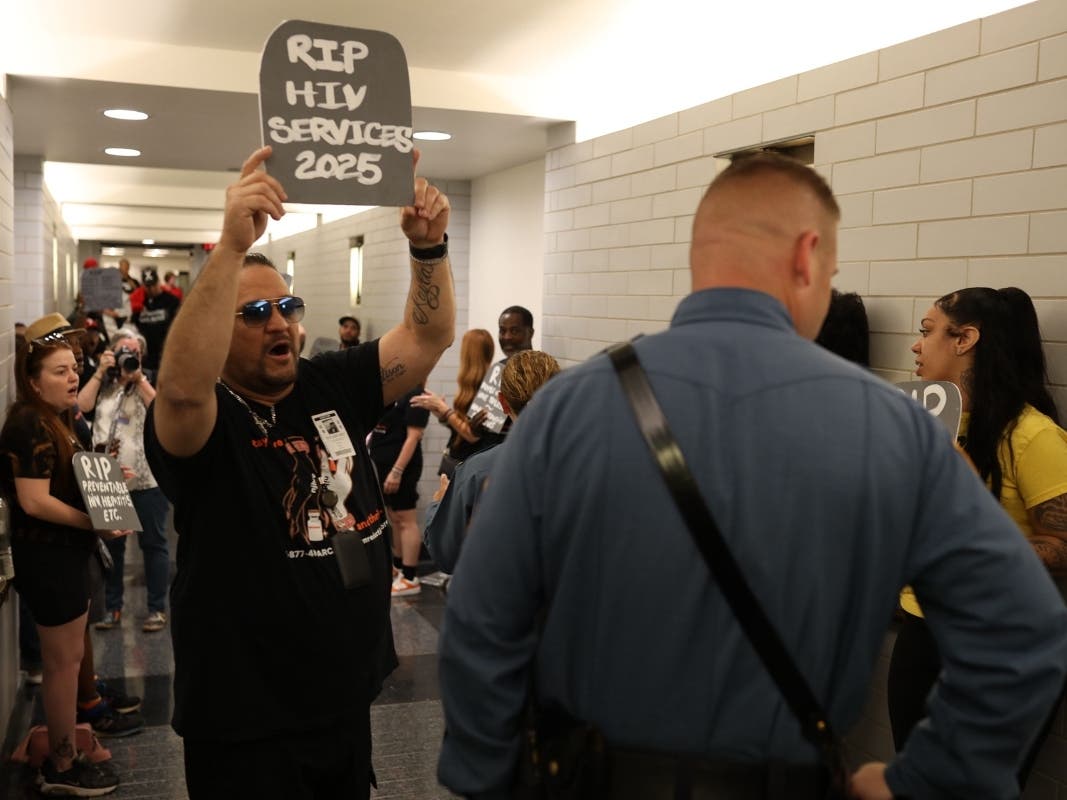
Trenton — In an open letter sent earlier today, members of the New Jersey Opioid Remediation and Recovery Advisory Council called on lawmakers to return $45 million in opioid settlement funds that were quietly given to four large, politically connected hospitals with no strings attached in a backroom budget deal.
"As publicly appointed members of the New Jersey Opioid Remediation and Recovery Advisory Council, we are deeply alarmed by this decision and what it means for the future of New Jersey's overdose prevention efforts," the letter reads.
The diversion is a sudden break from New Jersey's careful stewardship of opioid settlement dollars, an approach that made the New Jersey a national model for evidence-based allocation rooted in community input. The raid threatens harm reduction initiatives responsible for reducing overdose deaths by 43 percent between 2022 and 2024.
Find out what's happening in Jersey Cityfor free with the latest updates from Patch.
"Raiding the opioid settlement fund completely undermines the role of our Council, which exists to ensure these funds are used for overdose prevention initiatives that are effective, evidence-based, and rooted in community need," the letter states.
In June 2025, the council released a comprehensive five-year strategic plan on how New Jersey should maximize opioid settlement funds to save lives. The council came up with its recommendations through 15 months of partnering with the Murphy Administration and Montclair State University on listening sessions, public testimony, and extensive data analysis to identify gaps in lifesaving care and opportunities for cost effective, lifesaving services.
Find out what's happening in Jersey Cityfor free with the latest updates from Patch.
"This diversion takes funding away from lifesaving harm reduction services, housing programs, medication assisted treatment and recovery services, and wraparound support that were already approved by the State," the letter continues.
The council was established to avoid repeating the past mistakes of New Jersey lawmakers using tobacco settlement funds to plug budget holes. Council members warn that $45 million divided among four large hospitals will not meaningfully solve budget shortfalls with Medicaid cuts but will undermine low-cost, community-based solutions to the overdose crisis.
"We strongly urge lawmakers to immediately reverse the diversion of opioid settlement funds, restore funding to the evidence-based programs our Council recommended, and prevent this from happening again with lockbox protections around how these funds can be used," the letter concludes.
The letter is signed by public advisory council members Bre Azanedo (Program Manager, BLM Paterson), Robert Detore (CEO, Turning Point), Morgan Thompson (CEO, Prevention Links), Jenna Mellor (Executive Director, NJHRC), Shirla Simpson, Solomon Middleton Williams, and Amesika Nyaku, MD, MS (former advisory council member).
Read the full letter here. The letter text is also included below.
# # #
Open Letter from the New Jersey Opioid Settlement Advisory Council: Lawmakers Must Reverse the Raid of Opioid Settlement Funds
Dear Governor Murphy, Senate President Scutari, and Assembly Speaker Coughlin,
Until this past week, New Jersey was a national model in how we managed our opioid settlement funds, taking input from those on the frontlines of the overdose crisis and making targeted investments in services proven to save lives.
That all changed when state lawmakers suddenly and unexpectedly diverted $45 million of opioid settlement funds to four large, politically-connected hospital systems with no strings attached or plan for how those funds will be spent.
As publicly appointed members of the New Jersey Opioid Remediation and Recovery Advisory Council, we are deeply alarmed by this decision and what it means for the future of New Jersey’s overdose prevention efforts.
This diversion takes funding away from lifesaving harm reduction services, housing programs, medication assisted treatment and recovery services, and wraparound support that were already approved by the State.
These services at risk of being cut are the same ones responsible for reducing overdose deaths from an all-time high of 3,171 in 2022 to 1,813 in 2024 — a 43 percent reduction that state health officials credit to new evidence-based harm reduction programs.
Raiding the opioid settlement fund completely undermines the role of our Council, which exists to ensure these funds are used for overdose prevention initiatives that are effective, evidence-based, and rooted in community need.
We were tasked with this responsibility specifically to avoid repeating two critical mistakes of the past: New Jersey was one of the last states to embrace evidence-based harm reduction, which fueled our overdose crisis by failing to invest in responses that actually work, and like many states, we saw tobacco settlement funds diverted away from smoking cessation programs to plug budget holes instead.
We do not take this responsibility lightly. We bring both personal and professional experience to this work. We serve on the front lines of the state’s overdose response efforts and are often the first responders to overdoses in our communities, working in harm reduction, treatment, prevention, and long-term recovery support. We see what’s working and what’s not. And we have seen the difference that state funding can make in our collective work, and how it can make the difference between whether someone lives or dies.
Working in partnership with Montclair State University and the Department of Human Services, we spent the last 15 months conducting listening sessions across the state, gathering public testimony, holding focus groups, and surveying thousands of New Jerseyans to develop our comprehensive five-year strategic plan to guide the state’s opioid settlement fund. It reflects a thoughtful, data-driven and human-centered roadmap for saving lives and repairing communities.
We have always known that the roughly $1 billion New Jersey will receive over 18 years is a drop in the bucket compared to the true cost of this crisis, especially when you consider that only half of these funds go to the state. That’s why our Council has worked so hard to ensure every dollar would be used wisely, building a lasting foundation of harm reduction services, community-based recovery support, treatment access, wraparound services, and safe, stable housing in every corner of the state. But all of that is now at risk.
We similarly understand the very real financial pressures facing our hospital systems, particularly with anticipated federal cuts to Medicaid. However, $45 million divided among four large hospital systems will not meaningfully solve those budget shortfalls. What it will do is undermine the relatively low-cost, community-based programs that prevent people from needing emergency care in the first place.
The irony here is hard to ignore: taking money away from overdose response and addiction services will send more people into crisis and further overwhelm an already strained healthcare system.
We strongly urge lawmakers to immediately reverse the diversion of opioid settlement funds, restore funding to the evidence-based programs our Council recommended, and prevent this from happening again with lockbox protections around how these funds can be used.
We owe it to those we’ve lost, to those who are fighting to survive, and to the next generation who deserve better than a system that fails them twice.
Sincerely,
Members of the New Jersey Opioid Recovery and Remediation Fund Advisory Council
Bre Azanedo
Advisory Council Member
Program Manager, BLM Paterson
Robert Detore
Advisory Council Member
CEO, Turning Point
Morgan Thompson
Advisory Council Member
CEO, Prevention Links
Jenna Mellor
Advisory Council Member
Executive Director, NJHRC
Shirla Simpson
Advisory Council Member
Solomon Middleton Williams
Advisory Council Member
Amesika Nyaku, MD, MS
Former Advisory Council Member